The Bachelors — Acceptance of Singles in Housing Societies
A system intervention that enables respectful integration of single tenants into family-oriented housing societies through new communication loops, clear norms, and low-friction participation touchpoints.
- Year :
- 2022
- Course :
- Systems Thinking Design (Academic)
- Role :
- Research, systems mapping, insight synthesis, concept + prototyping
- Project Duration :
- 3–4 weeks (studio sprint)
1)Brief & Objectives
Team
Studio team — Siya Parmar (research, mapping, synthesis, prototyping)
Deliverables
System intervention concept, service blueprint, lo-fi artifacts, micro-pilot playbook
Tools
Stakeholder interviews, causal loop diagrams, service blueprint, lo-fi print prototypes
The ask
How might we replace blanket gatekeeping with transparent norms and feedback loops that make expectations clear and fair, create early low-stakes contact between singles and neighbors, and give the society confidence that issues will be addressed quickly and calmly?
Objectives
- •Make expectations clear and fair before move-in.
- •Create early, humanizing contact between singles and immediate neighbors.
- •Shorten issue-report → resolution loops so small frictions don't escalate.
- •Give responsible singles a way to signal reliability beyond paper ID.
Success signals
- •Fewer rejections and faster onboarding.
- •Fewer complaints escalating to committee conflict.
- •More casual, positive interactions in common areas.
- •Small issues resolved within 24 hours in pilot contexts.
1)Problem Space & Why It Matters
Context
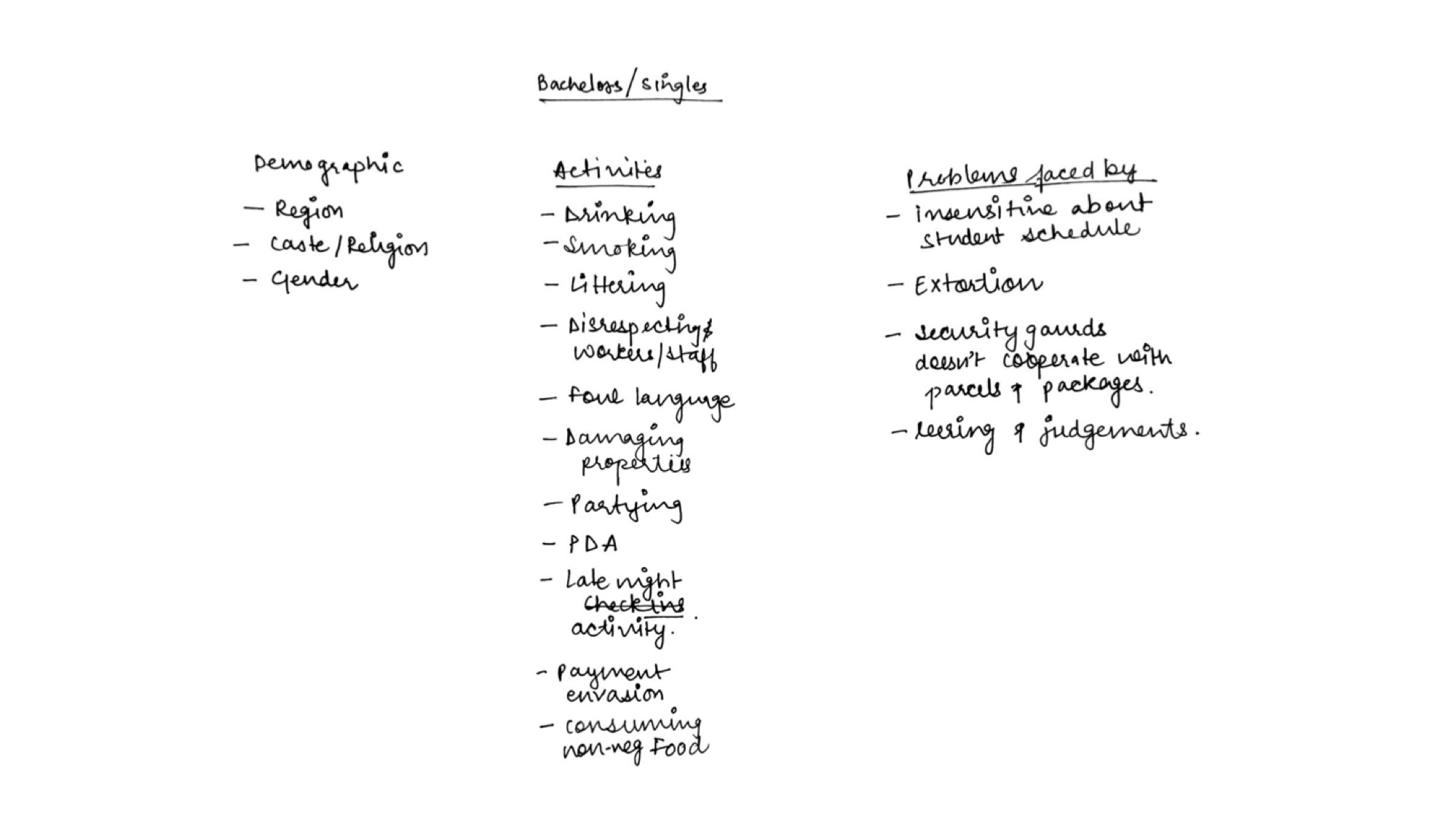
Many Indian housing societies resist renting to singles due to perceived risks — noise, parties, safety, values. At the same time, cities are seeing a rise in migrating students and young professionals who need flexible housing. The result is a trust deficit: societies generalize a few bad incidents; singles feel judged and excluded; committees default to blanket bans.
Design challenge
Replace blanket gatekeeping with transparent norms and feedback loops that front-load clarity, start contact early, and close feedback fast.
Success looks like
- •Fewer rejections and faster onboarding.
- •Fewer complaints escalating to conflict.
- •More casual, positive interactions on the floor and in common areas.
2)Stakeholders & System Boundaries
Singles (tenants)
Students, interns, early-career professionals. Needs: clarity, dignity, predictable process, affordable options, basic belonging.
Society committee
Chair, secretary, security. Needs: safety, quiet hours adhered to, accountability for issues.
Families & elderly neighbors
Safety, hygiene, courteous use of shared spaces.
Owners, landlords & brokers
Low friction, quick approvals, reduced vacancy.
Local service providers
Delivery, housekeeping — impacted by gate rules and parcel policies.
System boundary
From first listing inquiry → move-in → first 90 days (crucial trust-building window) plus issue-report → resolution loop.
3)Research Approach & Key Insights
Methods
Quick interviews (tenants, owners, committee members, guards), hallway observation, policy scan of society by-laws and WhatsApp rules, incident timelines.
What kept showing up
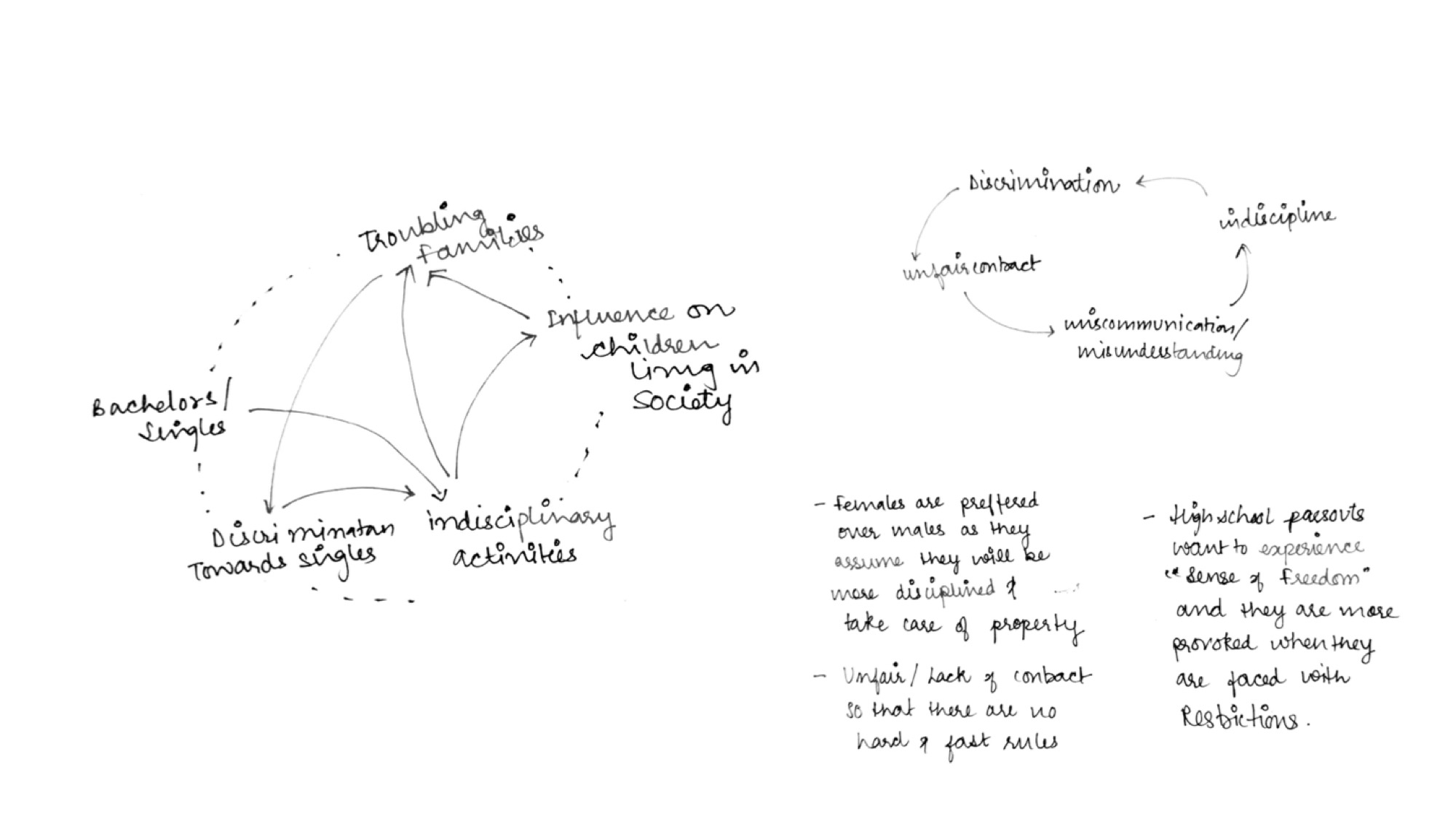
- •First impression gap — most interaction happens only after a problem. No early humanizing contact.
- •Ambiguity tax — rules exist but are informal, inconsistent, or buried in notices.
- •One-to-many spiral — complaints jump straight to a committee broadcast; tenants have no lightweight channel to respond quickly.
- •Silent majority — many families are neutral or supportive, but the most anxious voices dominate decisions.
- •Good actors lack proof — responsible singles have no way to signal reliability beyond a paper ID.
Design principles distilled
Front-load clarity. Start small and human. Default to reversibility (trial). Close feedback fast. Make good behavior visible.
4)System Map, Loops & Leverage Points
Current loops (problematic)
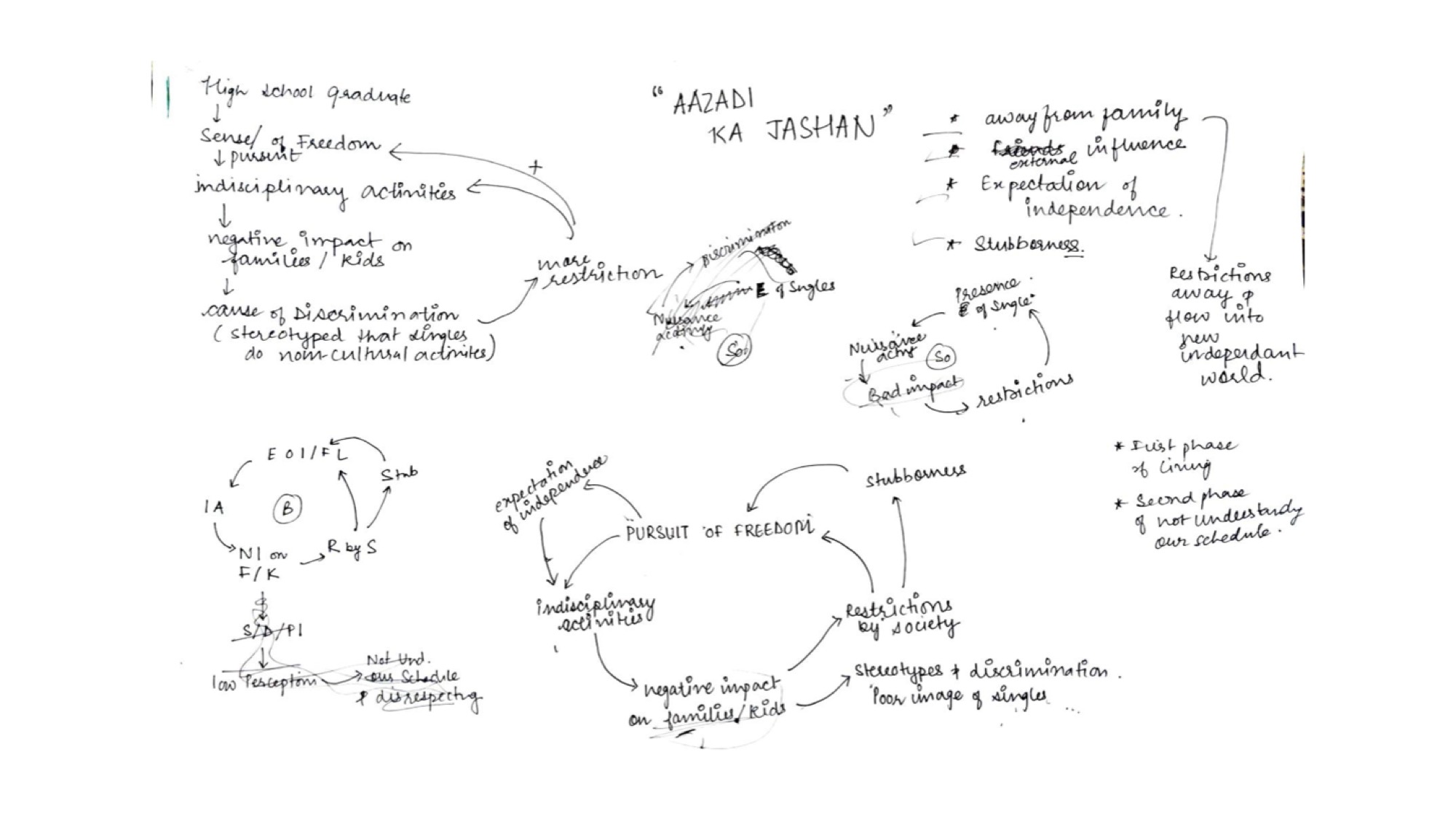
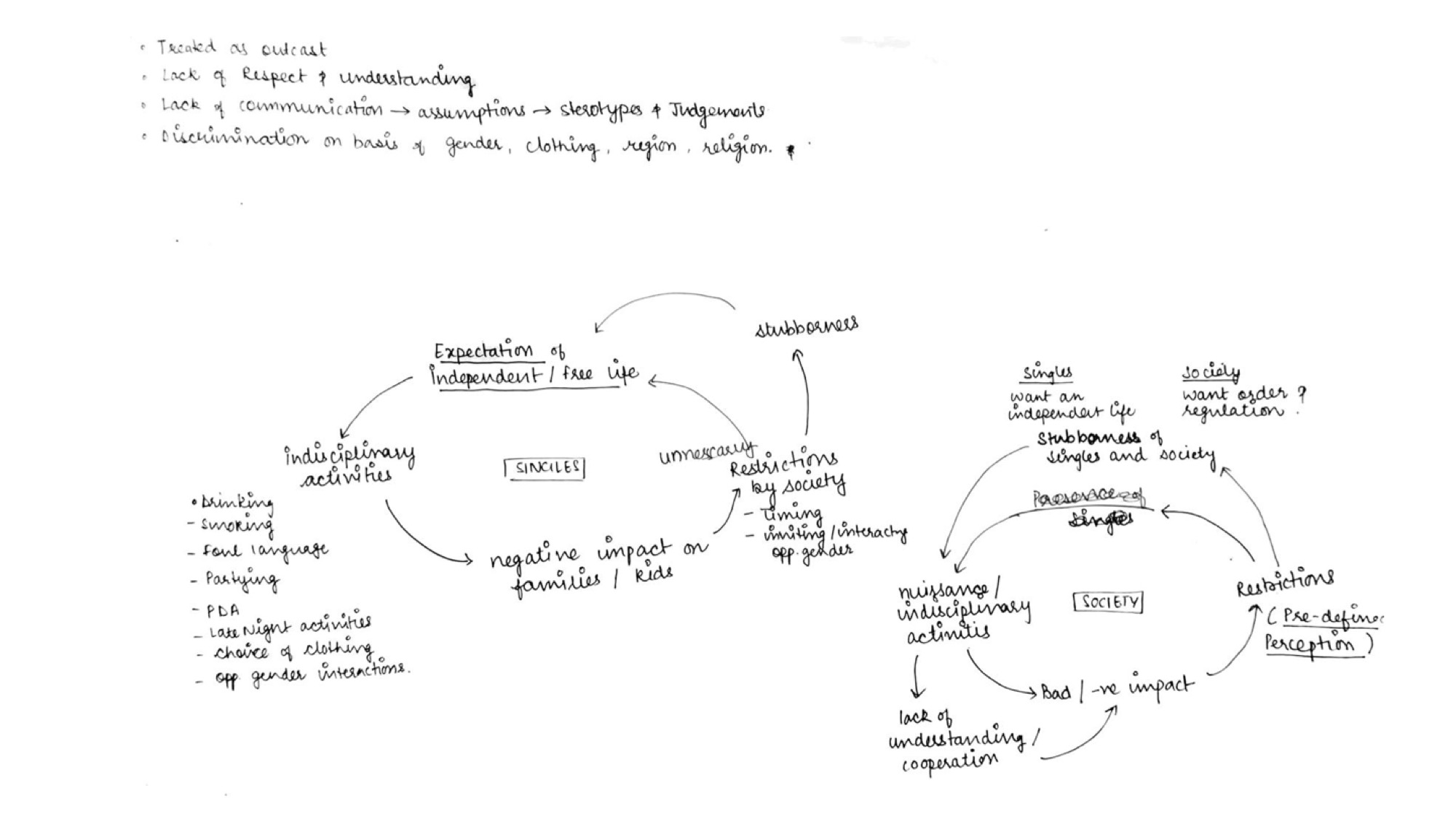
- •Fear → blanket rule → no contact → stereotypes harden (reinforcing loop).
- •Ambiguity → minor friction → group escalation → adversarial stance (reinforcing).
Leverage points introduced by design
- •L1 — Transparent Norms Pack: single-page society norms + contact sheet shared before application.
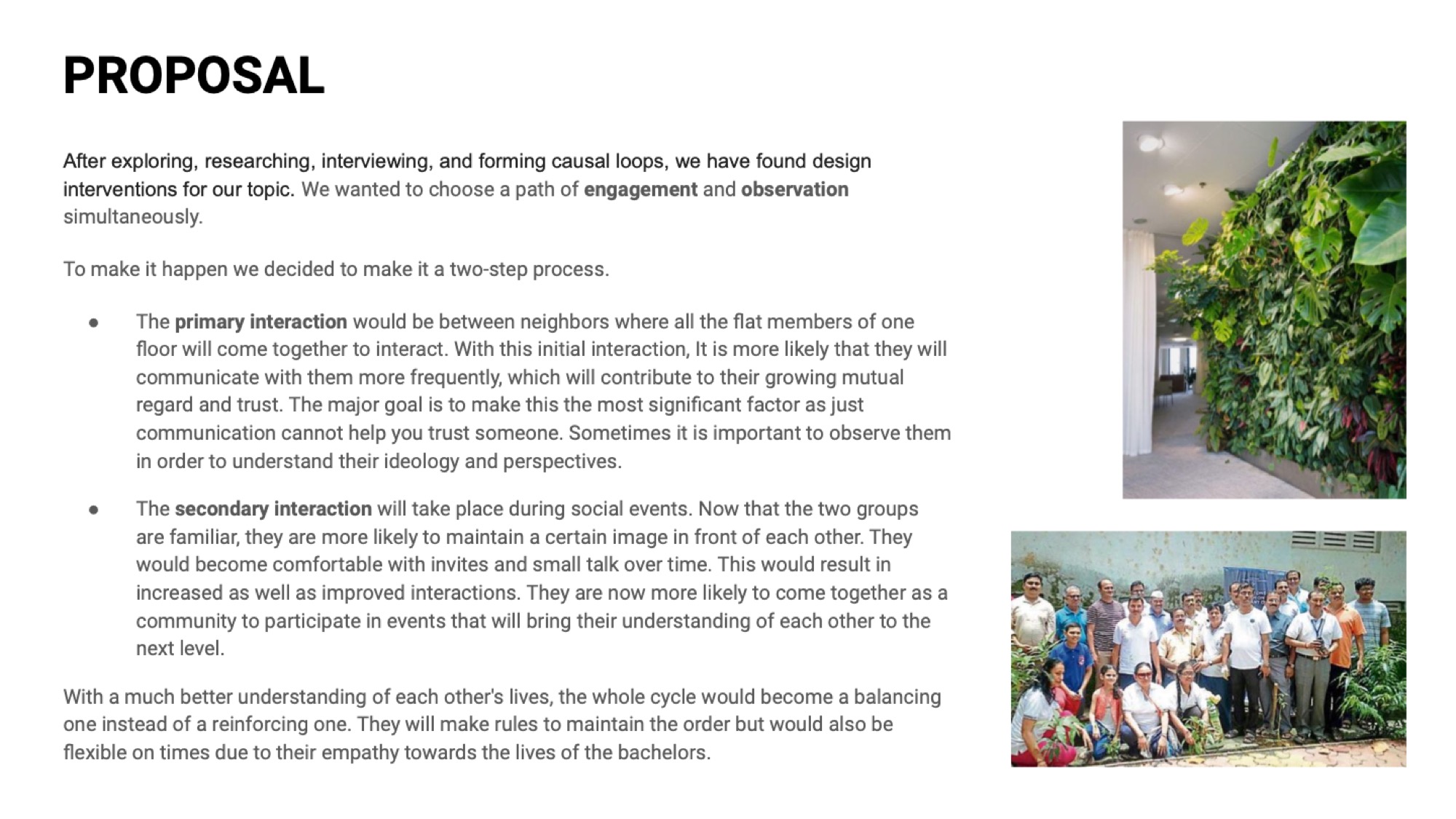
- •L2 — Neighbor Hello: 10-minute corridor intro with immediate neighbors within 72 hours of move-in.
- •L3 — Two-Step Trial: 30-day probation with clear check-ins instead of yes/no gatekeeping.
- •L4 — Rapid-Resolution Channel: moderated floor chat + one committee member; small issues resolved within 24 hours.
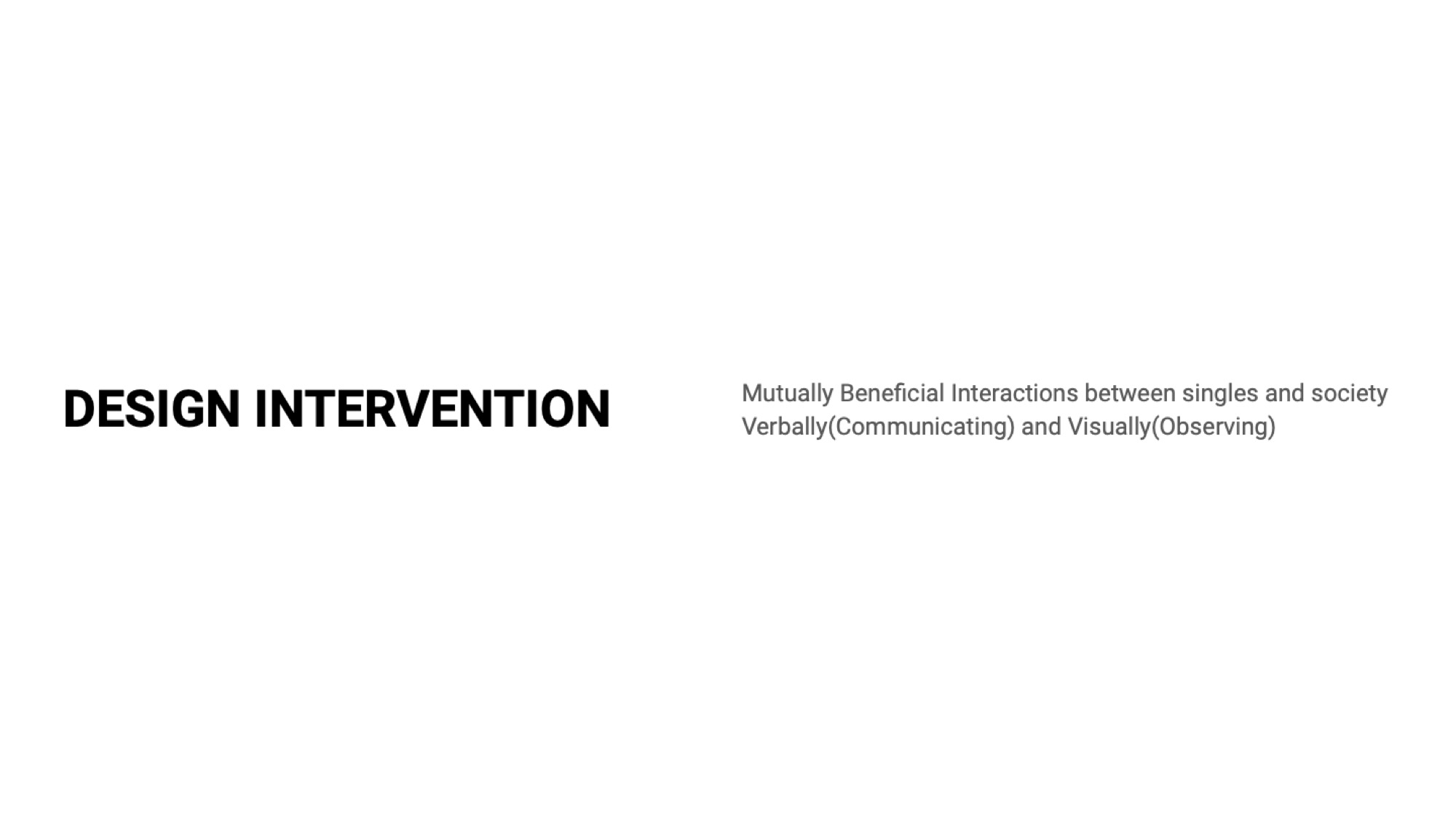
- •L5 — Visible Prosocial Signals: opt-in Good Neighbor Board and monthly Shared Chores/Help board.
5)Intervention Concept — First-90: Living Well Together
Listing stage
Owner shares the Norms Pack PDF; singles submit a one-page Tenant Snapshot (work hours, guests policy acceptance, emergency contact).
Move-in (Day 0–3)
Neighbor Hello micro-meet (introduced by security/secretary). Provide Quiet Hours fridge magnet + Waste & Parcel cheat-sheet.
Trial (Day 1–30)
Two-Step Trial with mid-point check-in; floor WhatsApp has one moderator; any complaint logged with time-boxed resolution.
Integration (Day 31–90)
Invite to one low-stakes micro-event (chai at lobby, plant corner set-up, noticeboard task).
Accountability
Simple strike/resolve log (private, not public shaming). Two resolved strikes = coaching; unresolved escalates to committee.
Why this works
- •Reduces uncertainty for everyone.
- •Converts strangers to acquaintances quickly.
- •Creates small, visible wins (parcels received, lift kept clean).
- •Ensures issues don't snowball.
6)Prototype, Pilot & What We Measured
Low-fidelity prototypes
- •Printed Norms Pack and Tenant Snapshot (one page each).
- •Corridor Hello script + fridge magnet.
- •WhatsApp group ground rules card (pinned).
- •Lobby Good Neighbor cork board mock.
Micro-pilot (1 staircase, 8 flats, 2 single tenants, 30 days)
- •Participation: both tenants attended Neighbor Hello; 6/6 immediate neighbors participated.
- •Incidents: 3 minor issues (parcel mix-ups, late music, wet corridor) — all resolved within 24 hours in the moderated chat.
- •Sentiment shift (quick poll): 5/8 neighbors moved from skeptical to neutral/positive.
- •Continuation: group voted to keep the board + rules; committee asked to scale to two more floors.
7)Outcomes, Playbook & Next Steps
What changed
- •From bans to norms: committee now starts with trial + clarity, not default rejection.
- •From escalation to resolution: time to resolve small issues dropped (target ≤24h).
- •From invisibility to signals: small good deeds surfaced (receiving parcels, helping elders with groceries).
Playbook (reusable templates)
- •1-page Norms Pack template (PDF).
- •Tenant Snapshot template (PDF).
- •Neighbor Hello script + checklist.
- •Moderated Group Rules pin-card.
- •Strike/Resolve log sheet (private, committee only).
Scale & risks
- •Works best when one committee sponsor and one floor moderator commit 15–20 minutes/week.
- •Avoid public leaderboards for strikes to prevent stigma. Keep recognition opt-in and positive.
Personal learnings
- •Changing timing and tone of first contact can be more powerful than adding more rules.
- •Make the right behavior the easiest behavior — tiny props (magnets, pinned cards) do the reminding.
What I'd do with 3 more months
Scale the pilot across multiple floors, formalize moderator training, and test digital Tenant Snapshot submission with owner-side pre-approval workflows.