Exploitation of Interns — Poster Design
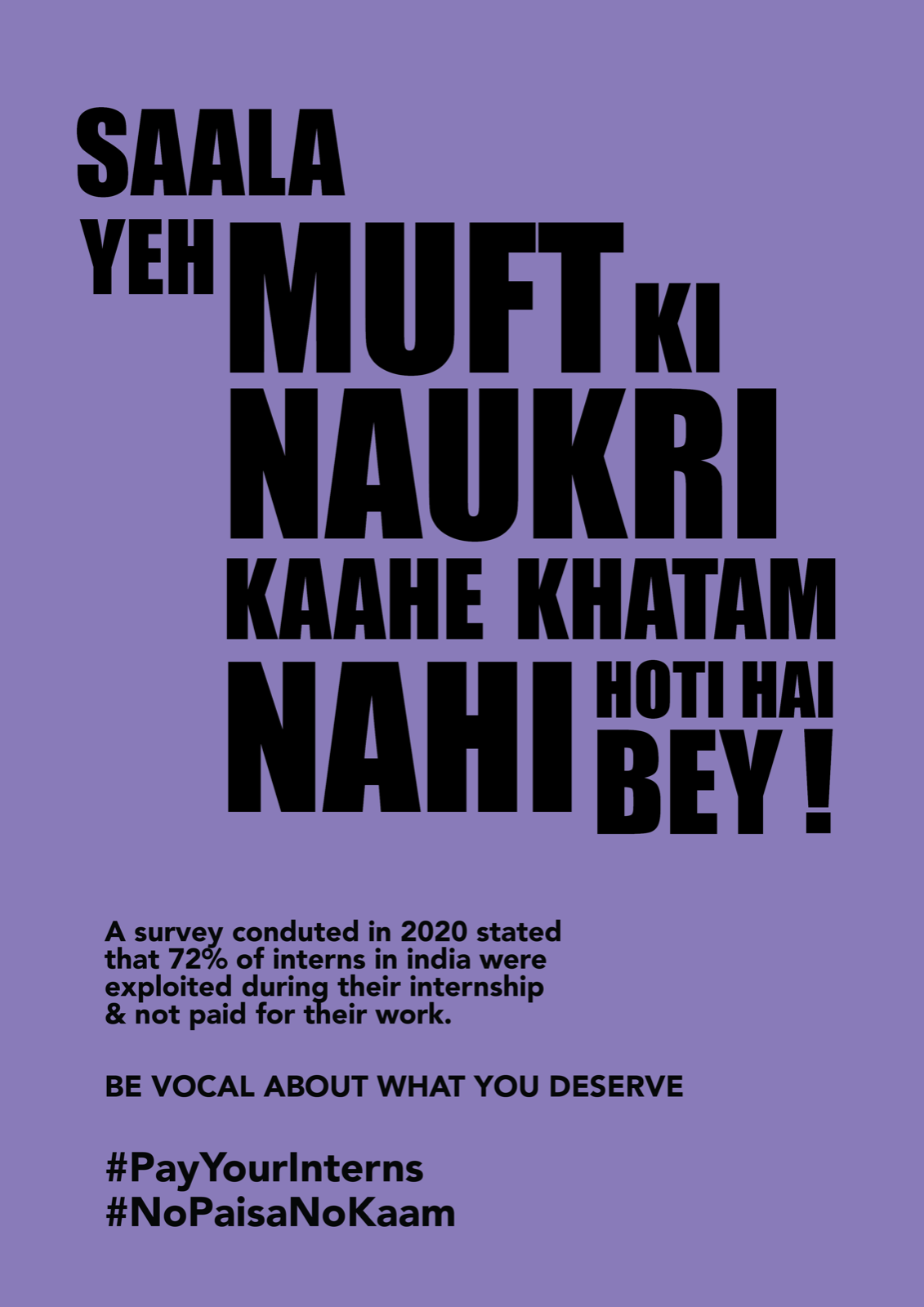
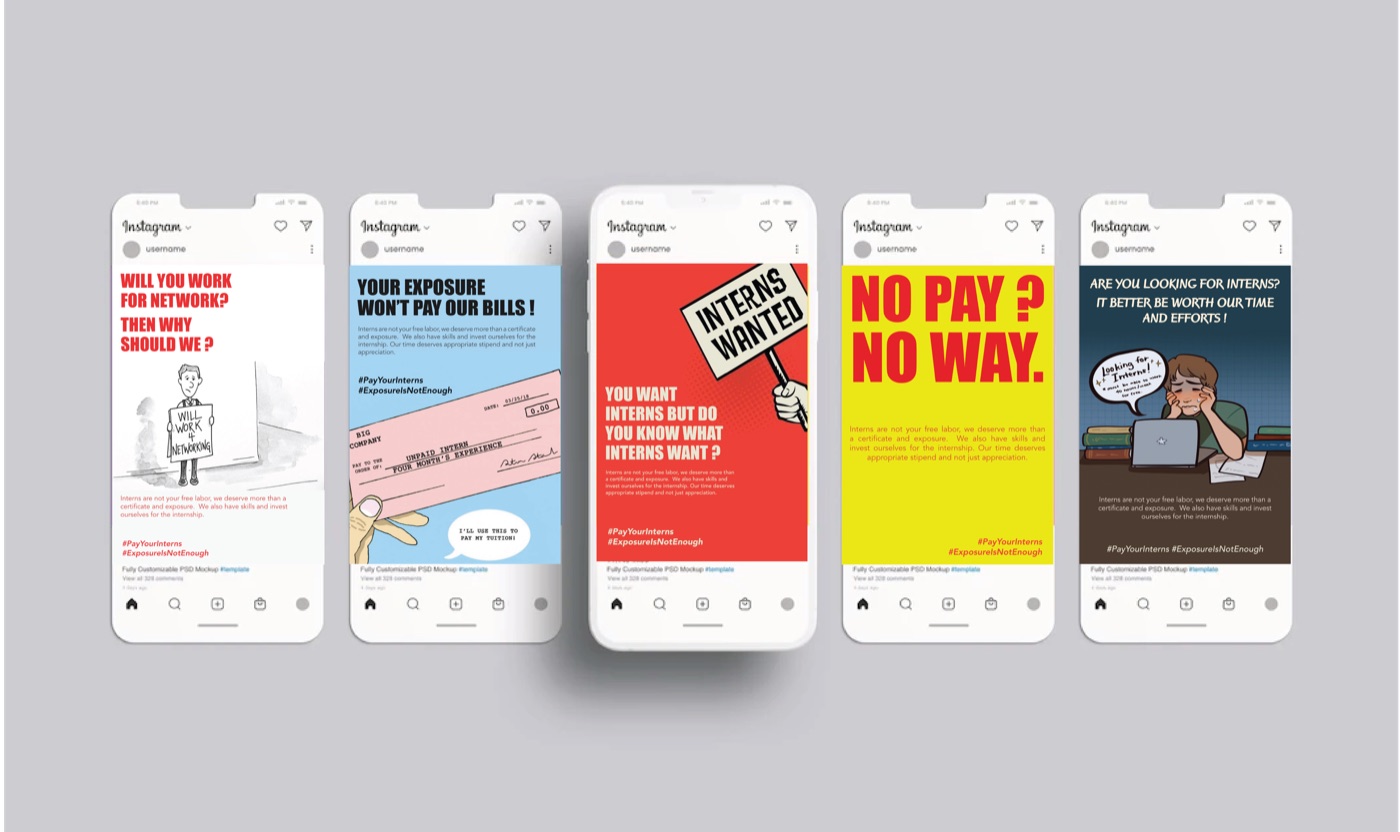
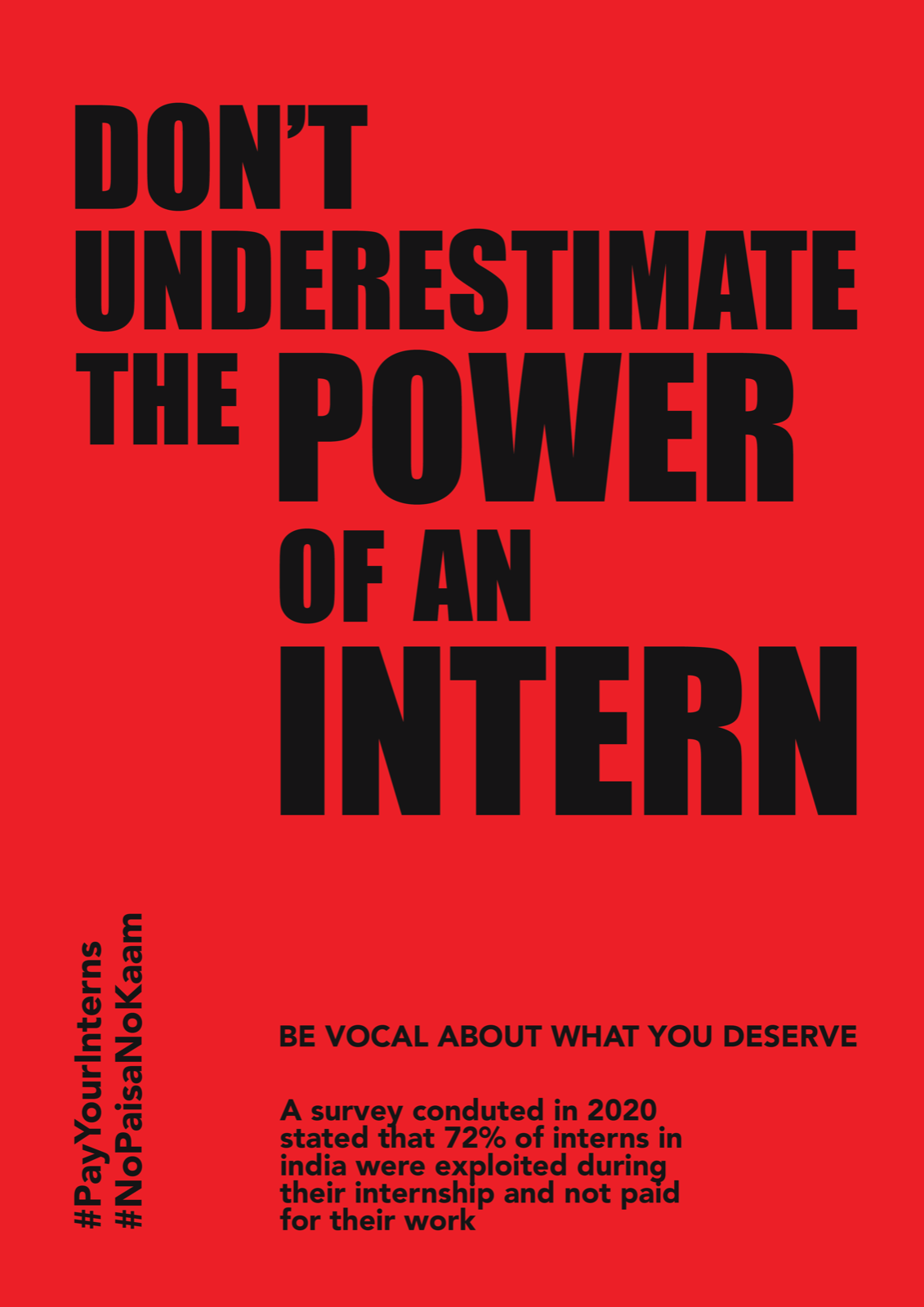
Create an awareness campaign that challenges the normalization of unpaid / underpaid internships and the overwork culture around them.
- Year :
- 2023
- Course :
- Understanding Public Communication Systems (Academic Project)
- Role :
- Research synthesis, message architecture, punchlines, visual language, poster series, social roll-outs
- Project Duration :
- 2 weeks
1)Brief & Objectives
Team
Siya Parmar — concept, copy, punchlines, poster design
Deliverables
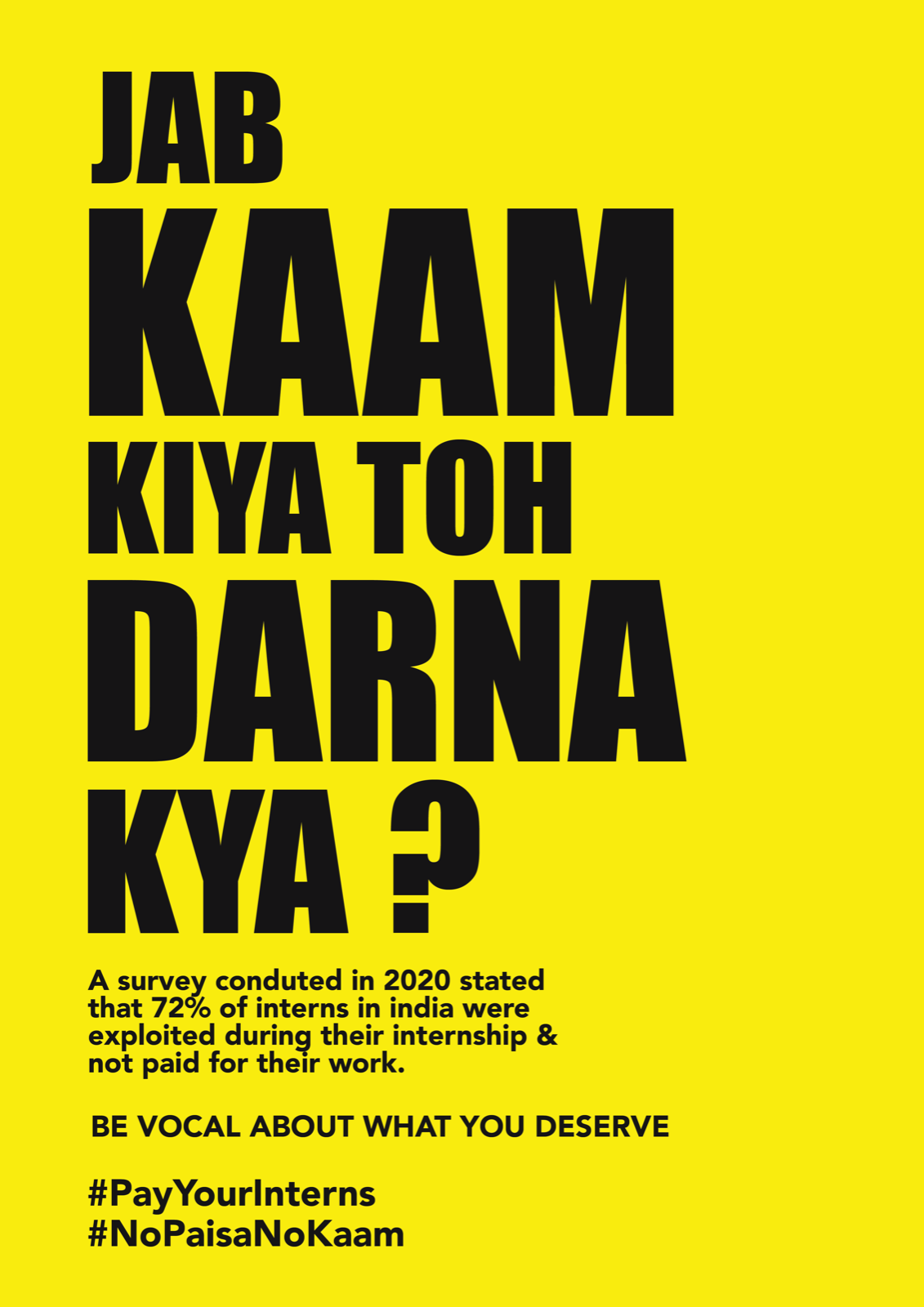
Poster series (print + OOH), social assets (IG, LinkedIn, FB), message playbook, rollout plan
Tools
Adobe Illustrator, InDesign, Photoshop
The ask
The brief was to study how public communication systems influence behavior and design a small but sharp intervention that could travel through everyday media. We chose the topic “Exploitation of Interns”—the widespread practice of unpaid/underpaid internships, excessive workloads, and the blanket defense of “experience/exposure.”
Objectives
- •Make interns recognize their labor value and speak up.
- •Nudge MNCs/organizations to examine exploitative practices.
- •Seed a conversation in college networks and professional platforms where internships are sourced.
Success signals
- •Saves, shares, and comments that echo lived experience.
- •Student clubs and placement cells re-sharing assets.
- •Inquiries for using the posters during campus drives.
2)Research Approach
Primary research
20–25 intern interviews across law, design, media, engineering, architecture, CA, content—probing pay, workload, recognition, and mental health.
Pattern found
The industry vocabulary of “experience” and “exposure” is used to rationalize no stipend/credit and long hours.
Secondary research
- •Landscape scan on prevalence of unpaid internships, legal gray areas, and international contrasts.
- •Noted the demand–supply gap and socio-economic barriers (unpaid work excludes those who can’t afford it).
What this told us
The issue is systemic (policy + culture), but the communication gap is immediate: interns often feel isolated, guilty for asking, and unsure what “fair” looks like.
3)Insights → Message Strategy
Key insights
- •Normalization: “This is how the industry works” quiets dissent.
- •Language trap: “Exposure” is used as currency to replace wages.
- •Equity gap: Unpaid roles filter out less-privileged students.
- •Mental load: Overwork + no pay = burnout + cynicism early in career.
Strategic choices
- •Audience split: Primary — Interns & final-year students (empowerment, vocabulary, solidarity). Secondary — HR/managers & placement cells (reflection, reputational risk).
- •Message north star: “Interns are not free labor.”
- •Tone: Direct, shareable, a bit uncomfortable—short lines built for feeds and corridors.
- •Call-to-action: Know your worth. Ask for stipend. Document hours. Push for written terms.
4)Concept & Visual Language
Concept pillars
- •Value inversion: Replace “exposure” with “exploitation” to reframe the norm.
- •Receipts of labor: Headlines that sound like invoices and time logs.
- •Collective voice: First-person plural (“we”) to break isolation.
Visual system
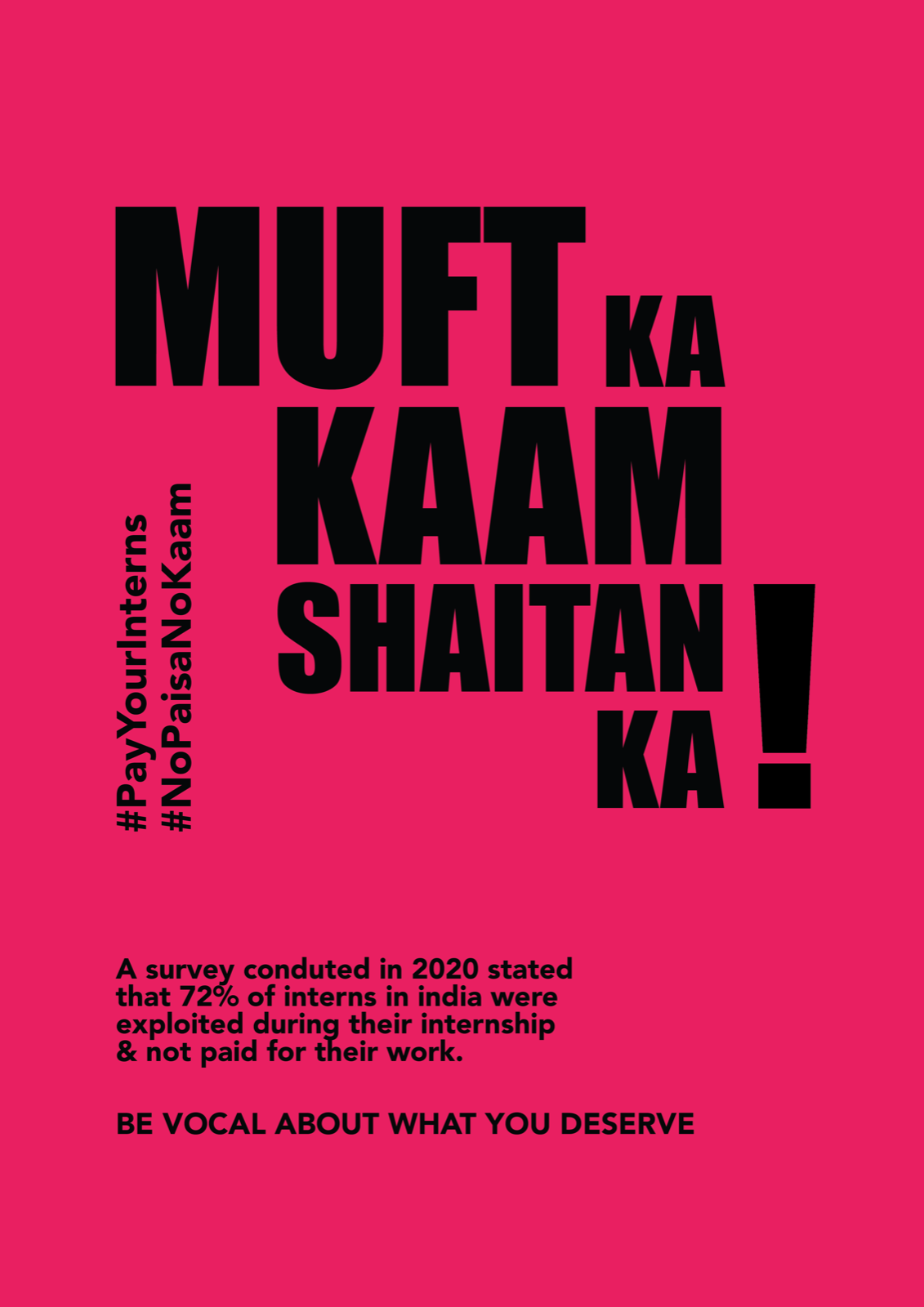
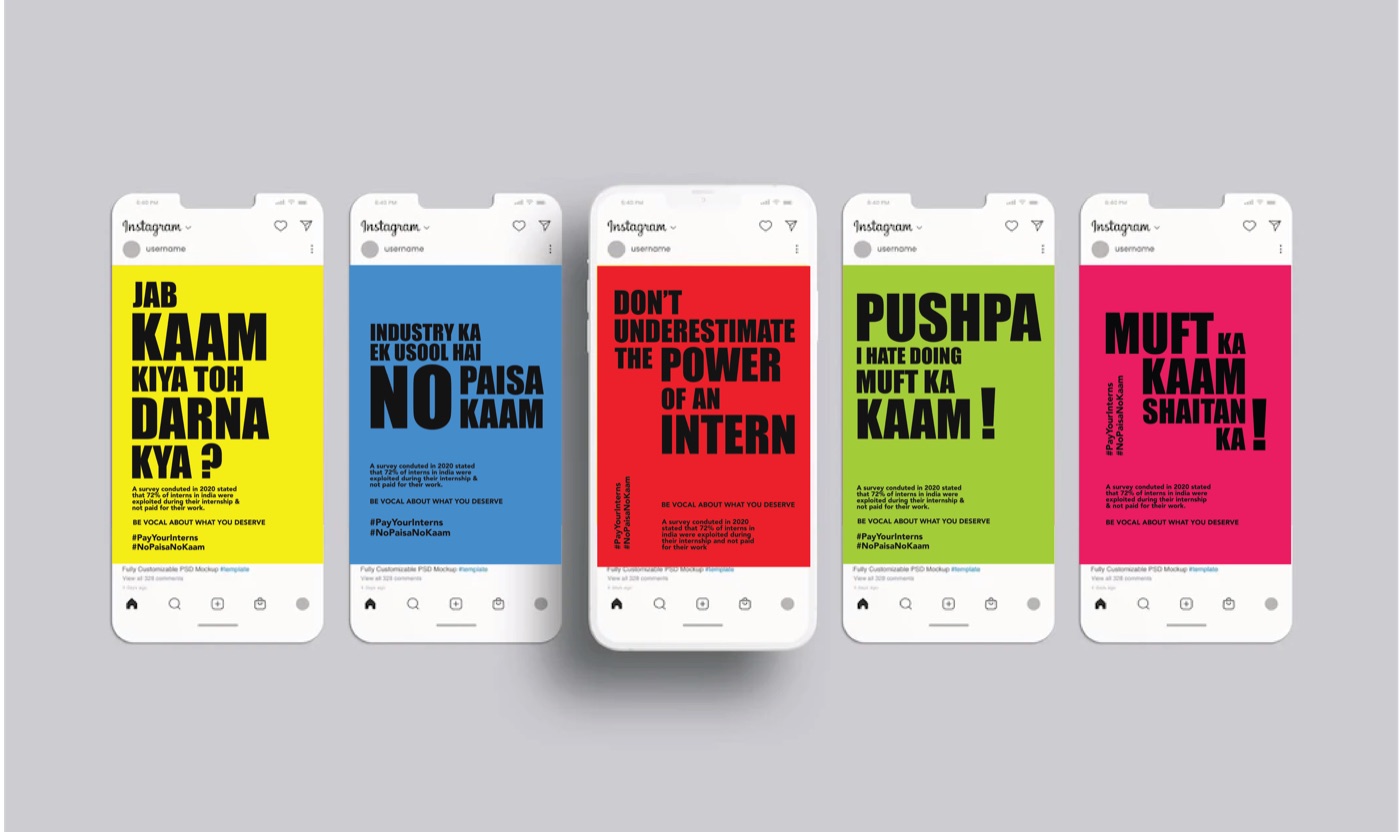
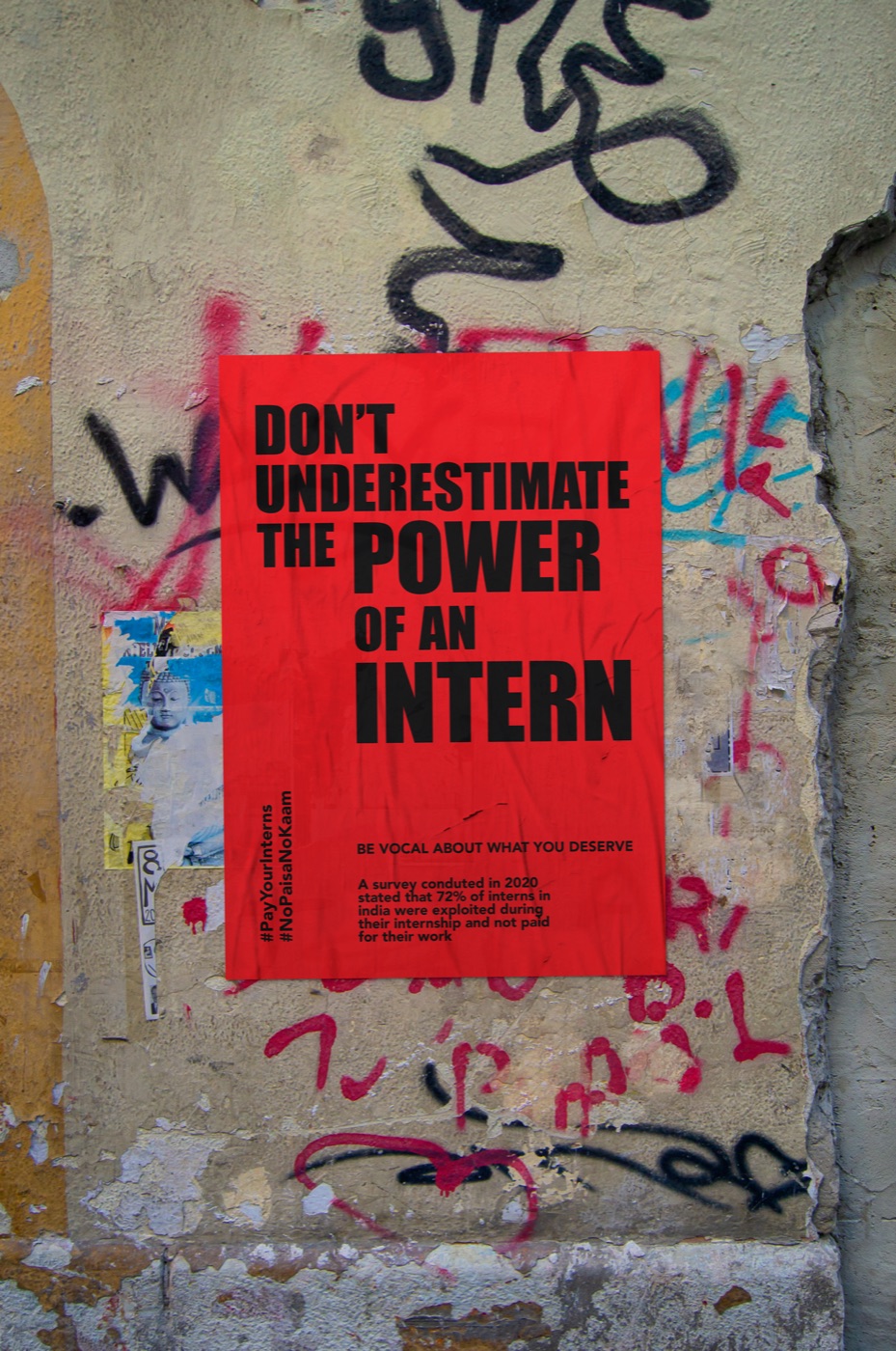
- •Typography: Heavy sans for headlines (impact/authority) + clean grotesk/humanist for body copy (legibility in print and screens).
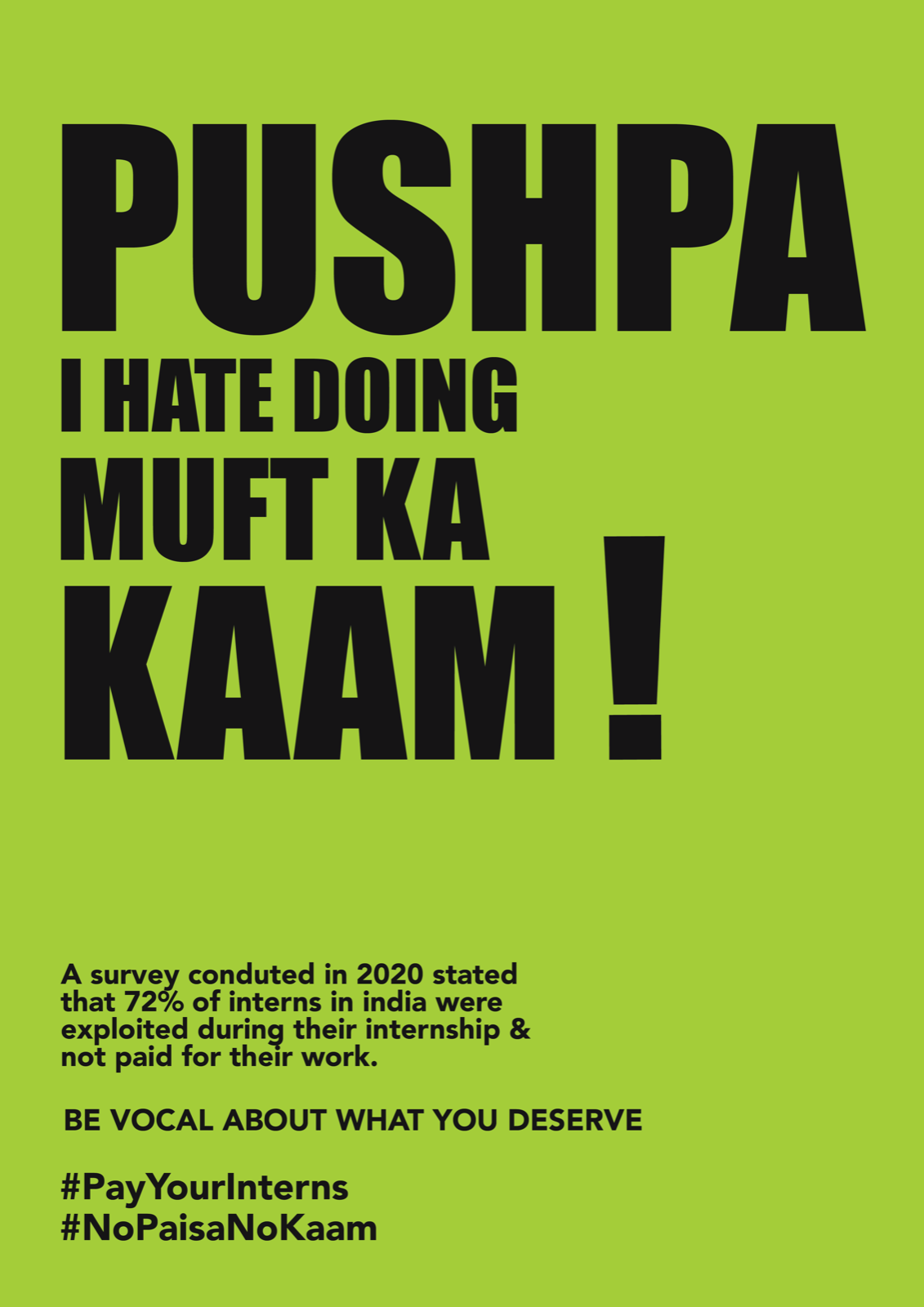
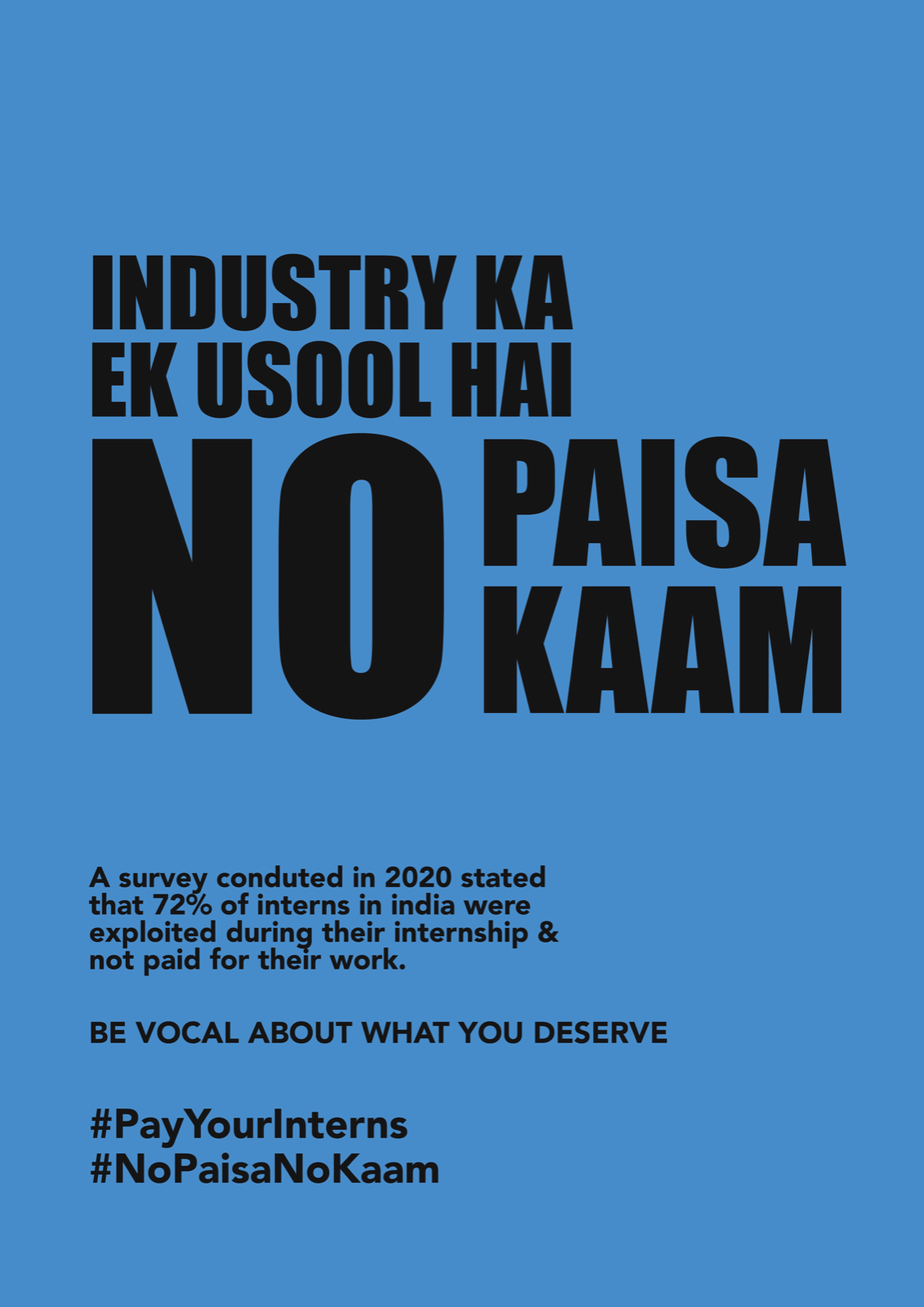
- •Color: High-contrast, bold grounds (black/charcoal, warning yellow, urgent red, electric blue) for scroll-stopping impact.
- •Composition: Poster-first layouts with oversized, left-aligned headlines; secondary copy blocks for context; prominent CTA chips.
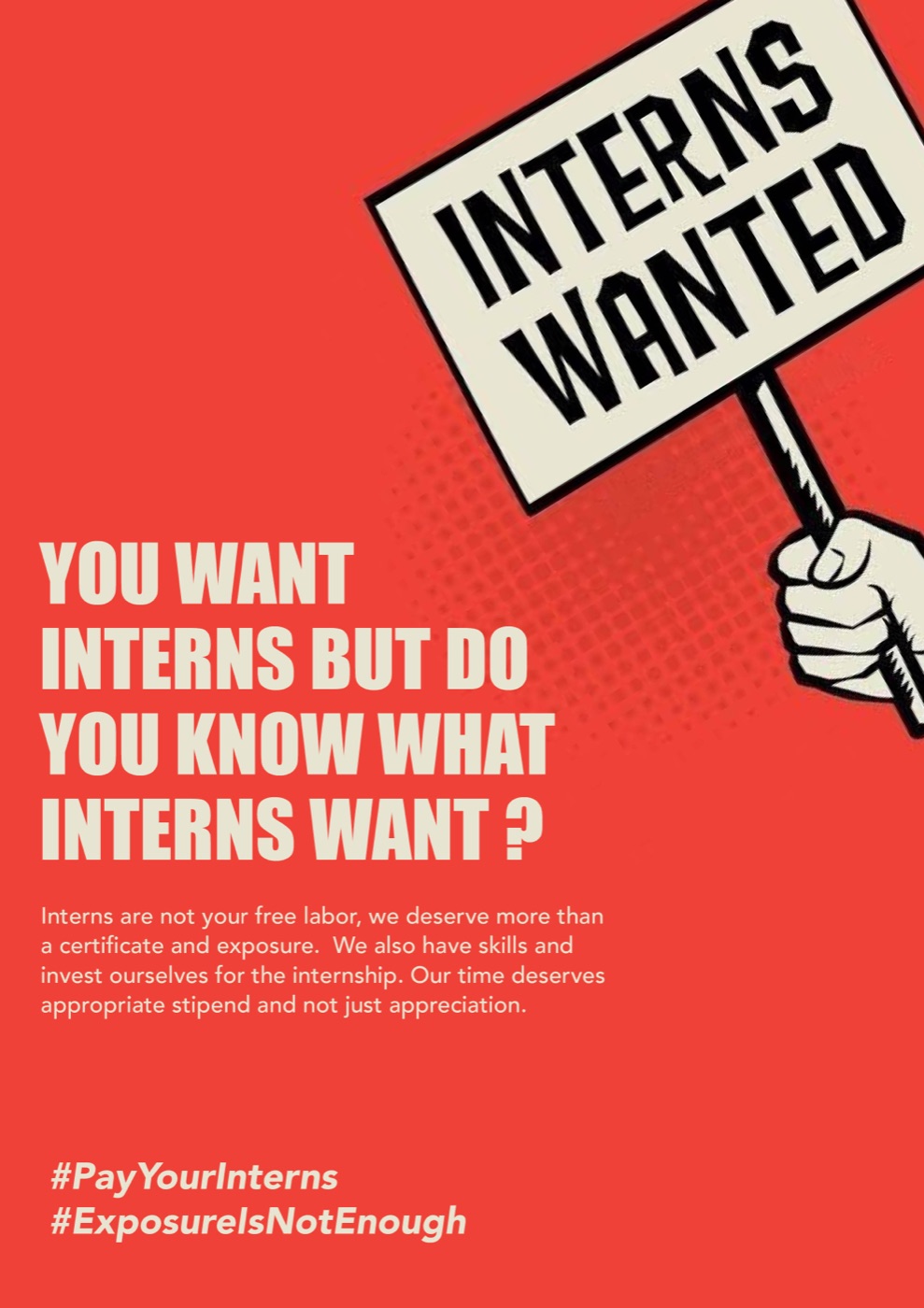
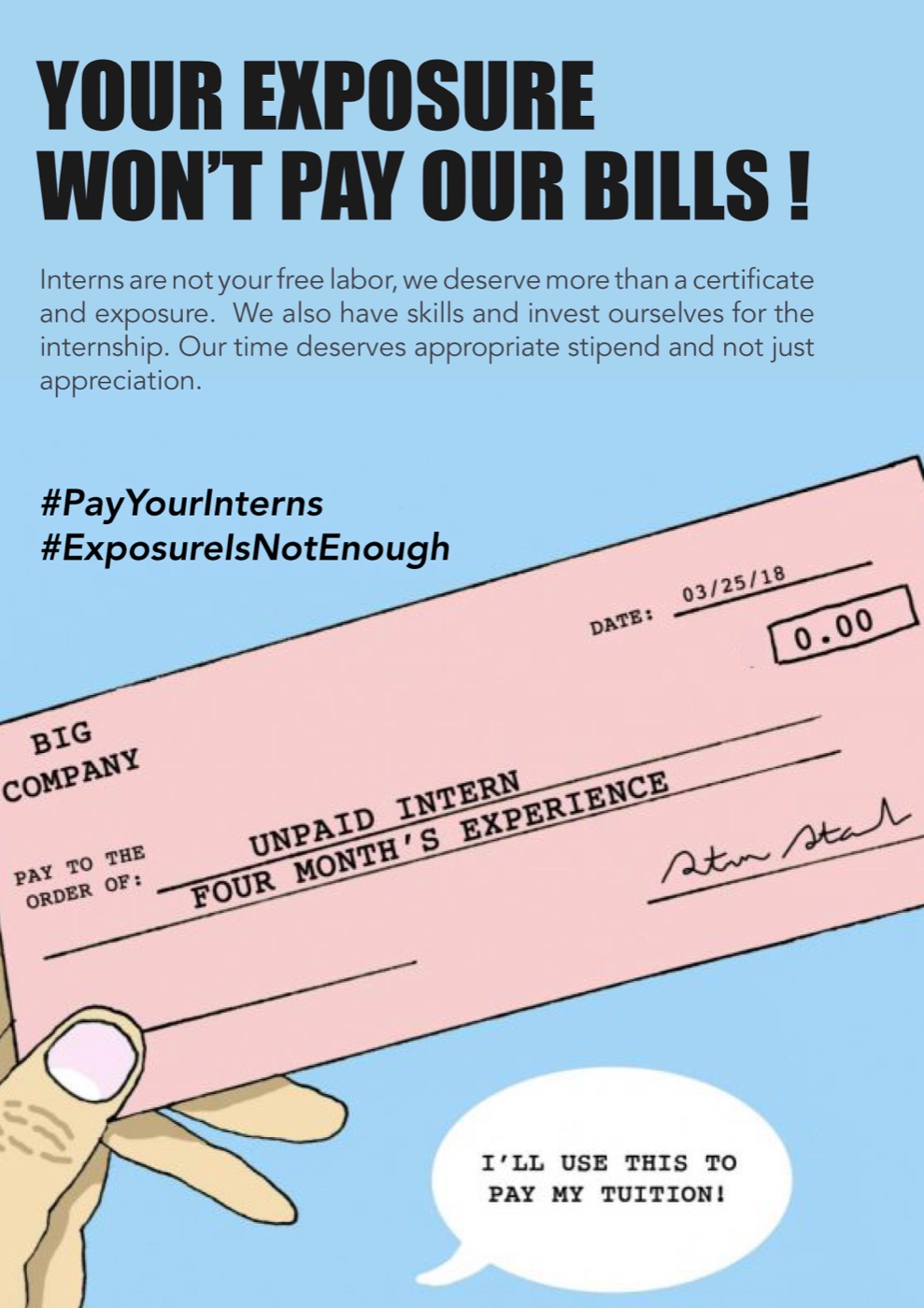
- •Iconic devices: Time-cards, price tags, punch-clocks, progress bars—everyday symbols of labor/value.
5)Posters & Copy System
Headline families (plug-and-play)
- •Value: “Exposure doesn’t pay rent.” · “Experience isn’t a stipend.”
- •Time: “40 hours/week ≠ ₹0.” · “If it ships, it should pay.”
- •Equity: “Unpaid internships are a filter— not an opportunity.”
- •Consent: “You can’t ‘volunteer’ someone else’s wages.”
- •Dignity: “Credit my work. Compensate my time.”
Poster anatomy
A1 / Instagram square variants with: Headline (impact), Subline (one-sentence context), CTA (e.g., “Ask for a stipend. Log your hours. Get terms in writing.”), Hashtags/handles for discoverability in campus networks.
Examples (Siya Parmar)
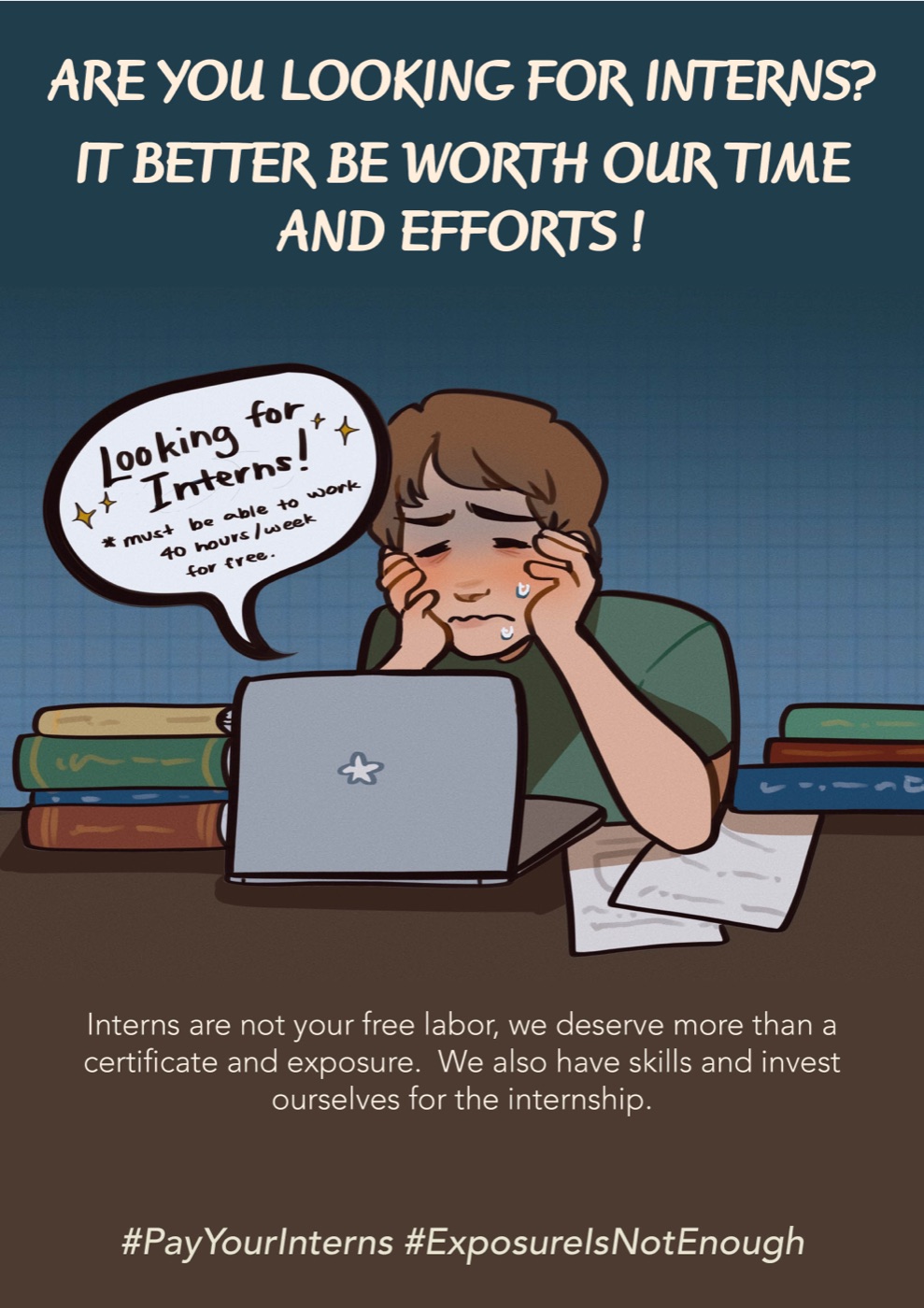
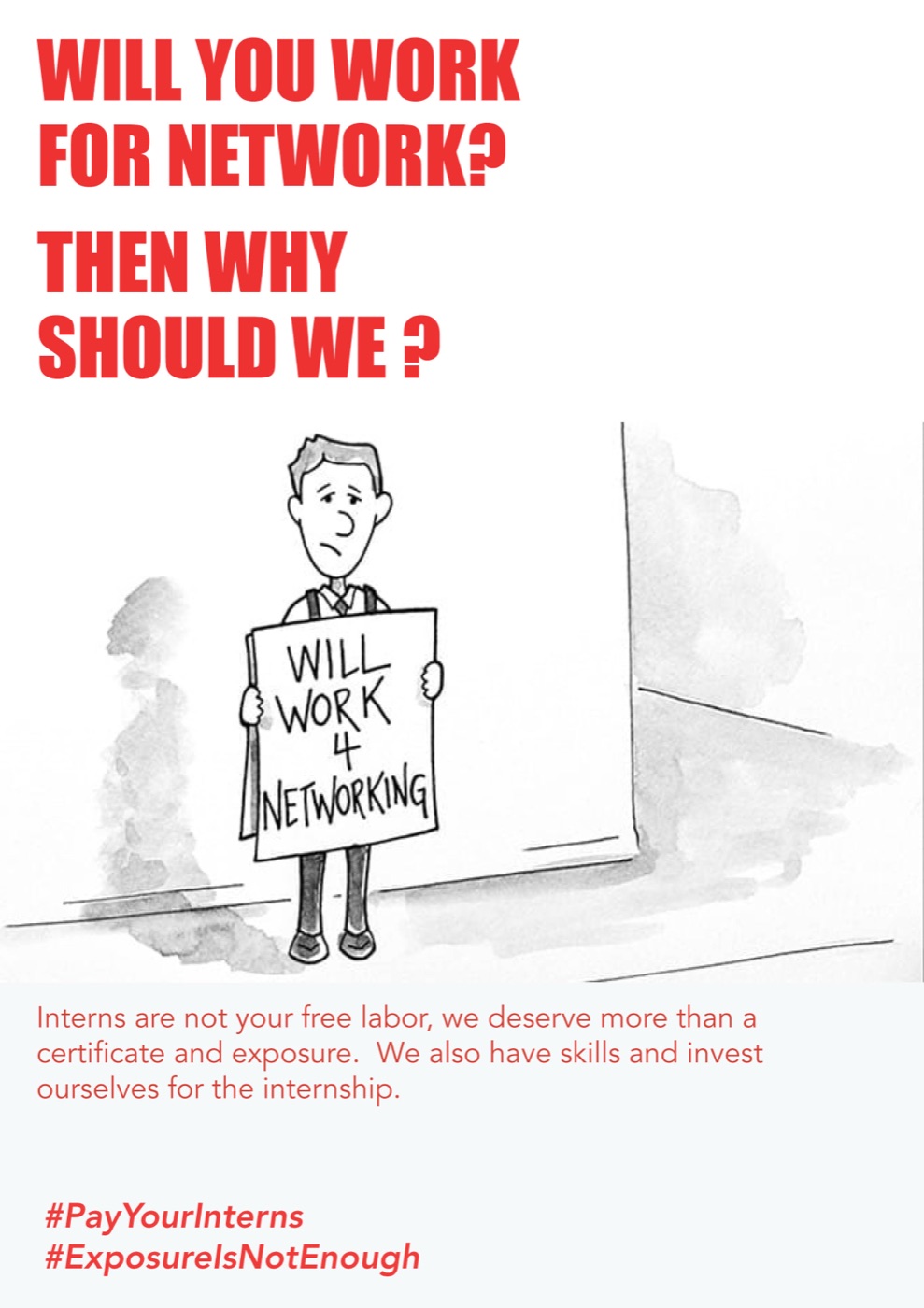
- •H1: “Intern ≠ Free Trial.” — Sub: “Work results aren’t beta. Pay is not optional.”
- •H1: “‘Exposure’ is a cost center— for us.” — Sub: “Travel, rent, data, time. Compensate labor.”
- •H1: “If you need deliverables, we need a stipend.”
- •H1: “Overtime without pay is not ‘passion’.”
6)Channels, Formats & Rollout
Channels
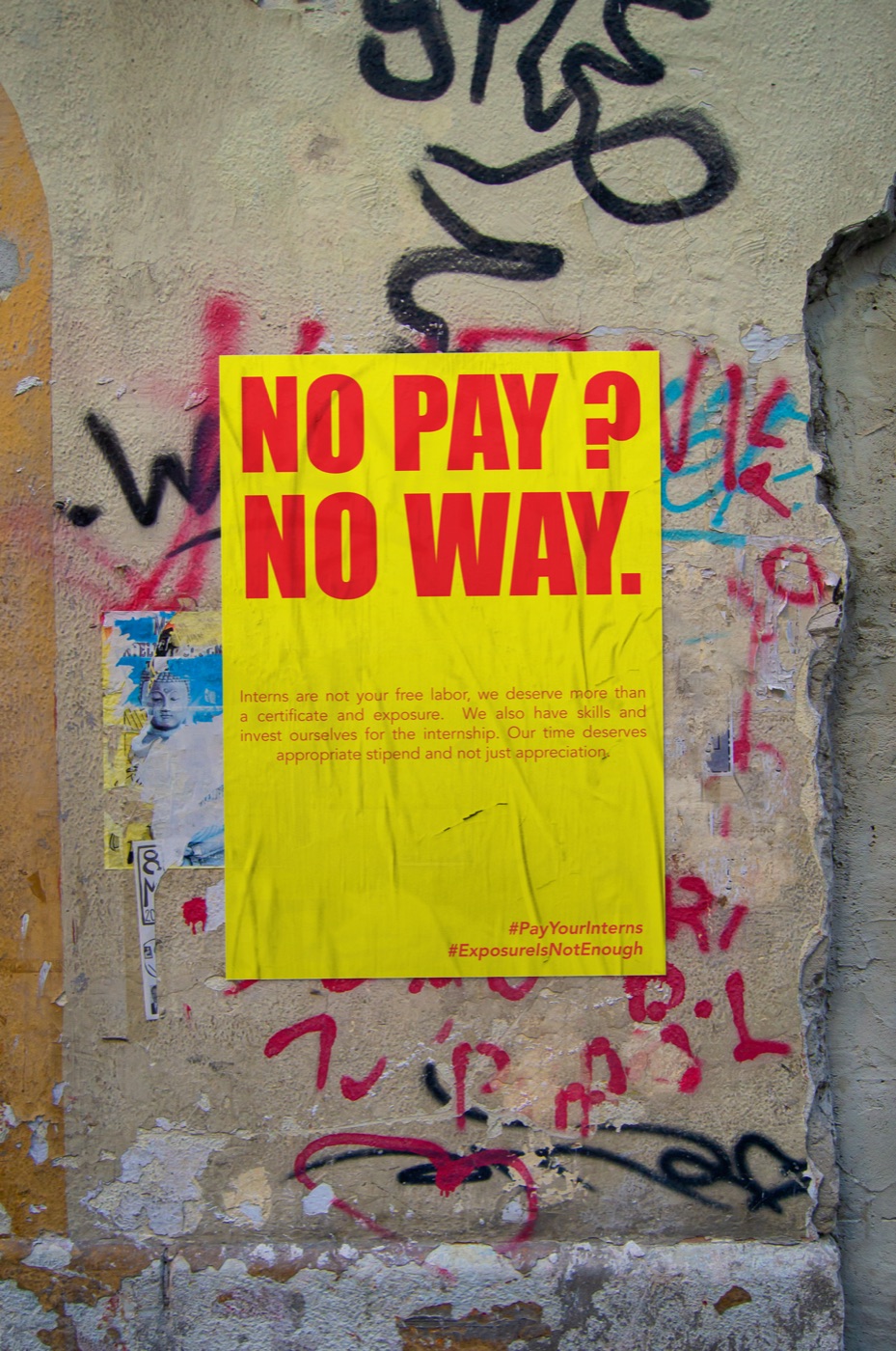
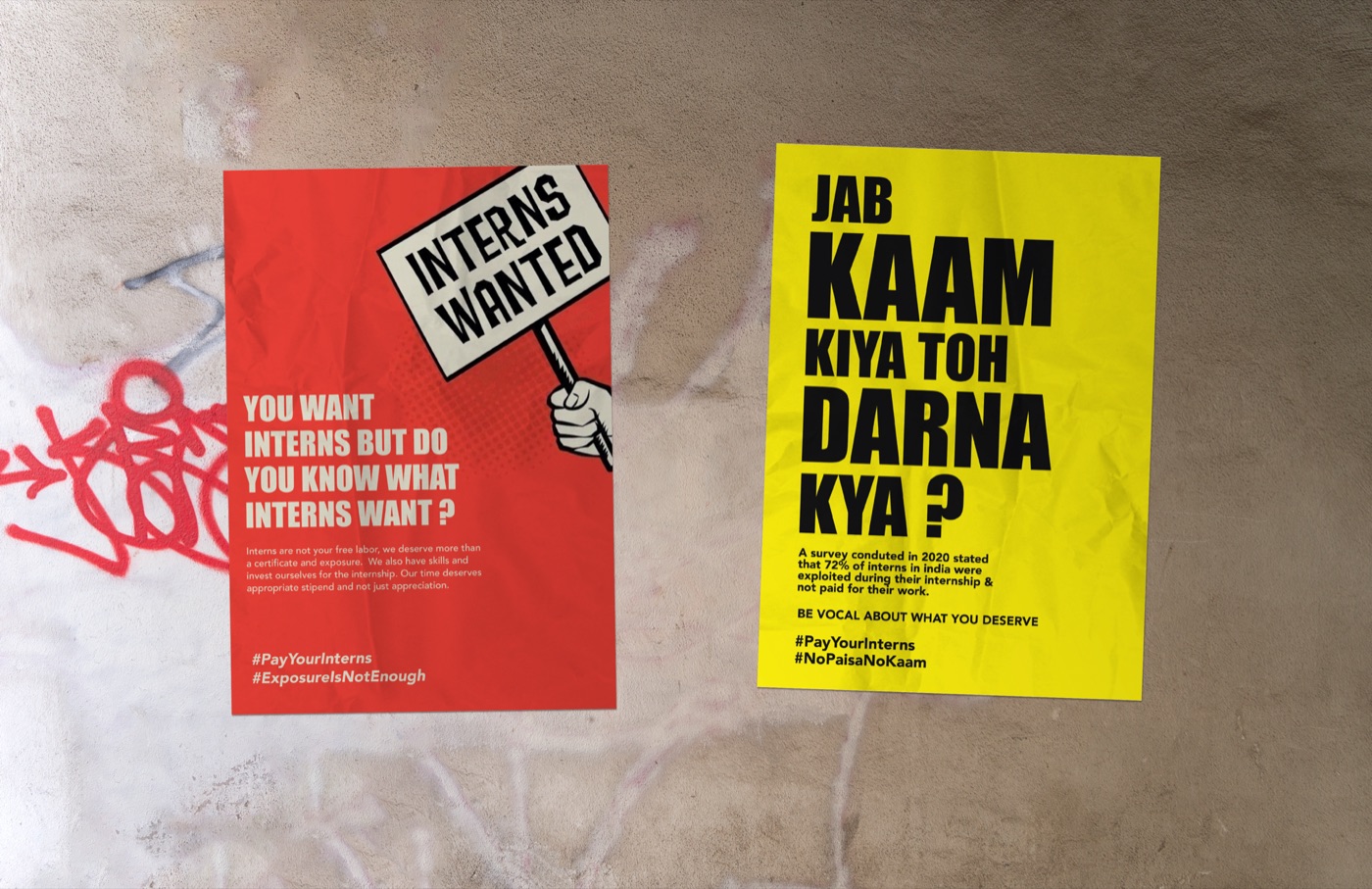
- •On-ground: Department boards, placement office, canteens, hostel lobbies, metro notice walls near campuses.
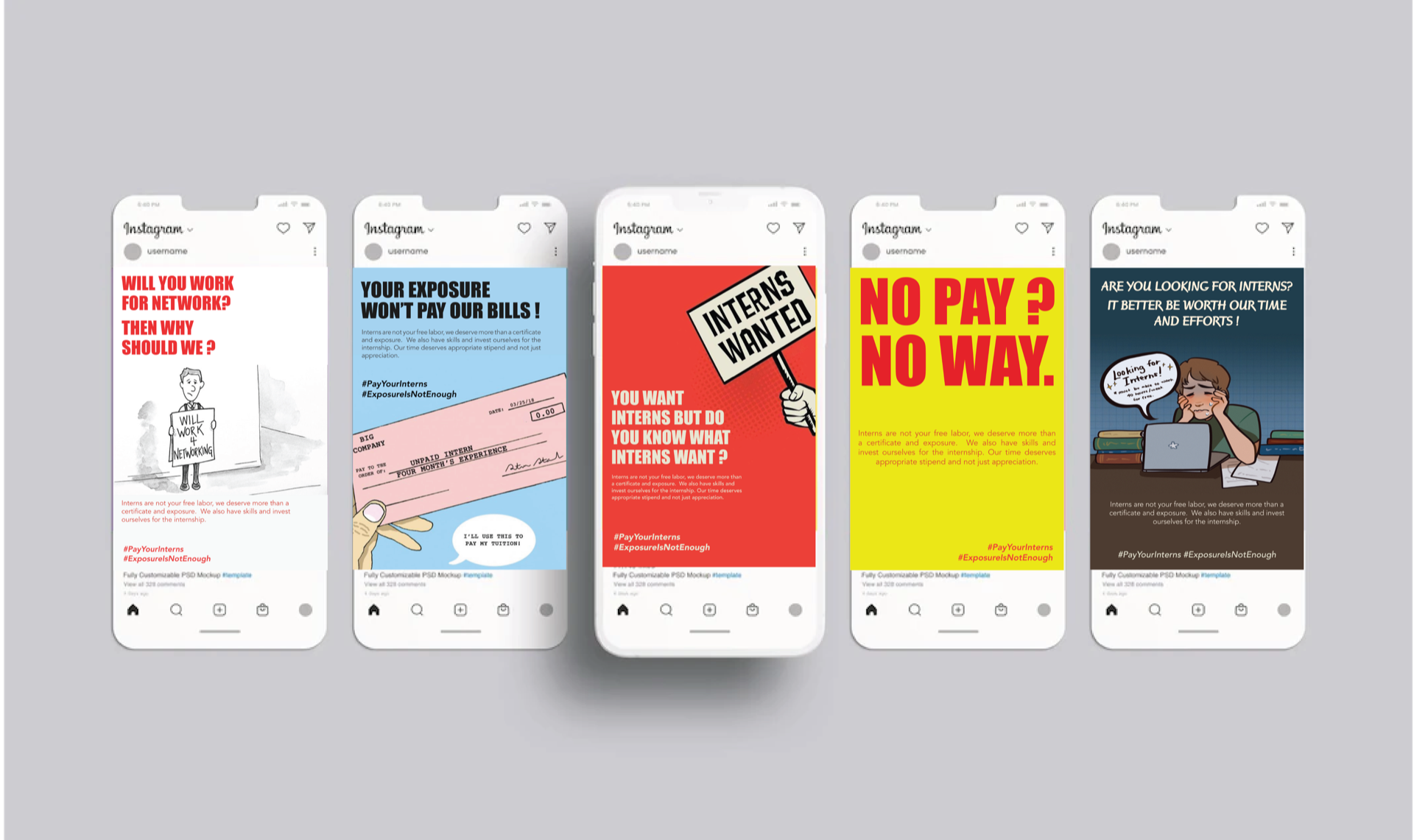
- •Digital: IG carousels, LinkedIn thought-posts, stories/reels with motion type, drive folders for student clubs.
Formats
- •Print: A1/A3 posters, table-tents for fests, stickers with micro-copy (“Exposure ≠ Rent”).
- •Social: Carousels (Hook → Context → Stat → CTA); Reels (kinetic type on beat; punchline lands on beat-drop); LinkedIn (case-style posts + questions to HR/educators).
Activation ideas
- •“Know Your Worth” template (editable PDF/IG story) to log hours/skills.
- •Office-hour Q&A on campus with alumni who negotiated stipends.
- •Hashtag prompt: #PayYourInterns #InternsAreWorkers
7)Outcomes & Learnings
What shipped
- •A cohesive poster set with a reusable copy system and color/typography guidelines, adapted for print and social.
- •A lightweight rollout plan that student bodies can reuse each semester.
Reflections
- •Systems change needs policy; comms can name the harm and shift norms.
- •Framing pay as fair exchange (not entitlement) kept the tone persuasive, not combative.
- •Short, declarative lines with strong contrast performed best (saves/shares, anecdotal feedback).
Next steps
- •Partner with placement cells to attach the poster kit to internship mailers.
- •Extend to a “Stipend Statement” one-pager template for interns to send before joining.
- •Micro-site with resources: stipend ranges by city, sample emails, legal FAQs.