The Canvas — 3D Chocolate Window Display
A narrative-rich window display for Huber & Holly’s new chocolate collection — blending storytelling, material play, and 3D visualization to immerse viewers in the journey from cocoa bean to chocolate bar.
- Year :
- 2021
- Course :
- Introduction to Materials & 3D Modelling (Academic)
- Role :
- Concept storytelling, Blender 3D modeling, physical material testing
- Project Duration :
- Fall 2021 · Ahmedabad
1)Brief & Objectives
Team
The Canvas — team of 5 (Shashwat Dalal, Siya Parmar, Rishita Bhadauria, Kashmi Shah, Sakshi Shah)
Deliverables
Window display concept, 1:5 scale physical mockup, SketchUp storefront model, Blender renders, animated walkthrough
Tools
Foam, resin, MDF, plaster, Blender (Eevee), SketchUp, hand prototyping
The ask
Design a window display for Huber & Holly’s in-house chocolate launch that stops passersby, tells the chocolate-making story, and reflects the brand’s cheerful spirit — within defined physical limits (257×130×82 cm) and build feasibility.
Audience
Café passersby and window shoppers — people who pause for a few seconds and should leave understanding how chocolate is made and wanting to step inside.
Goals
- •Turn the storefront into a storytelling medium for the bean-to-bar journey.
- •Balance narrative clarity with build feasibility inside tight dimensions.
- •Use tactile materials and warm lighting to evoke sensory recall.
- •Deliver research, sketches, modeling, prototyping, and documentation as a team.
Outcome snapshot
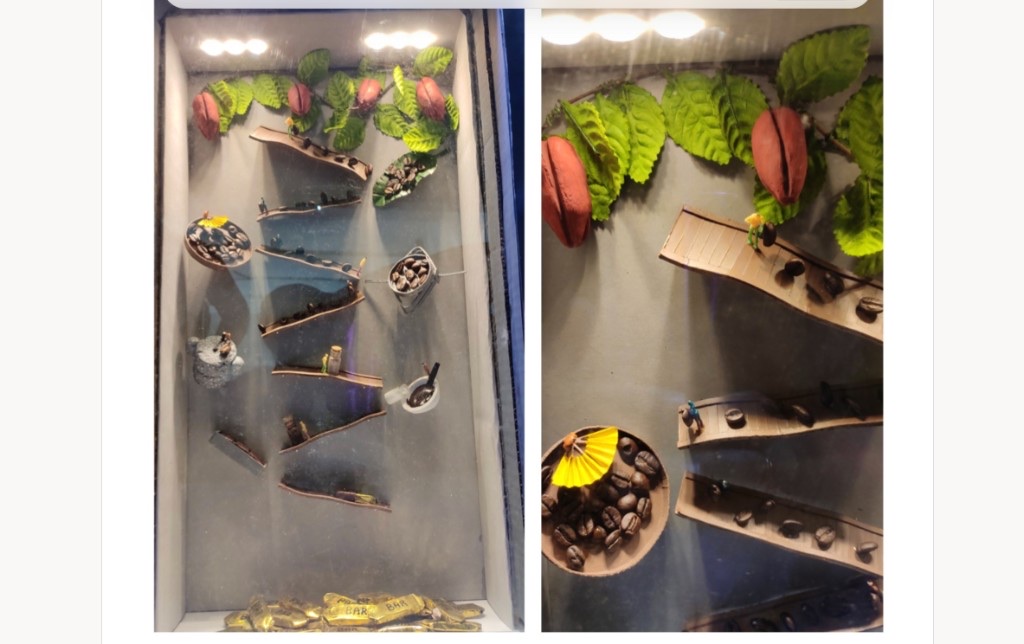
The Canvas — a staged visual narrative where viewers trace seven miniature scenes from cocoa pod to wrapped bar, framed inside a real café window and validated through scale mockup, SketchUp planning, and Blender visualization.
2)Research & Insights
Retail display research
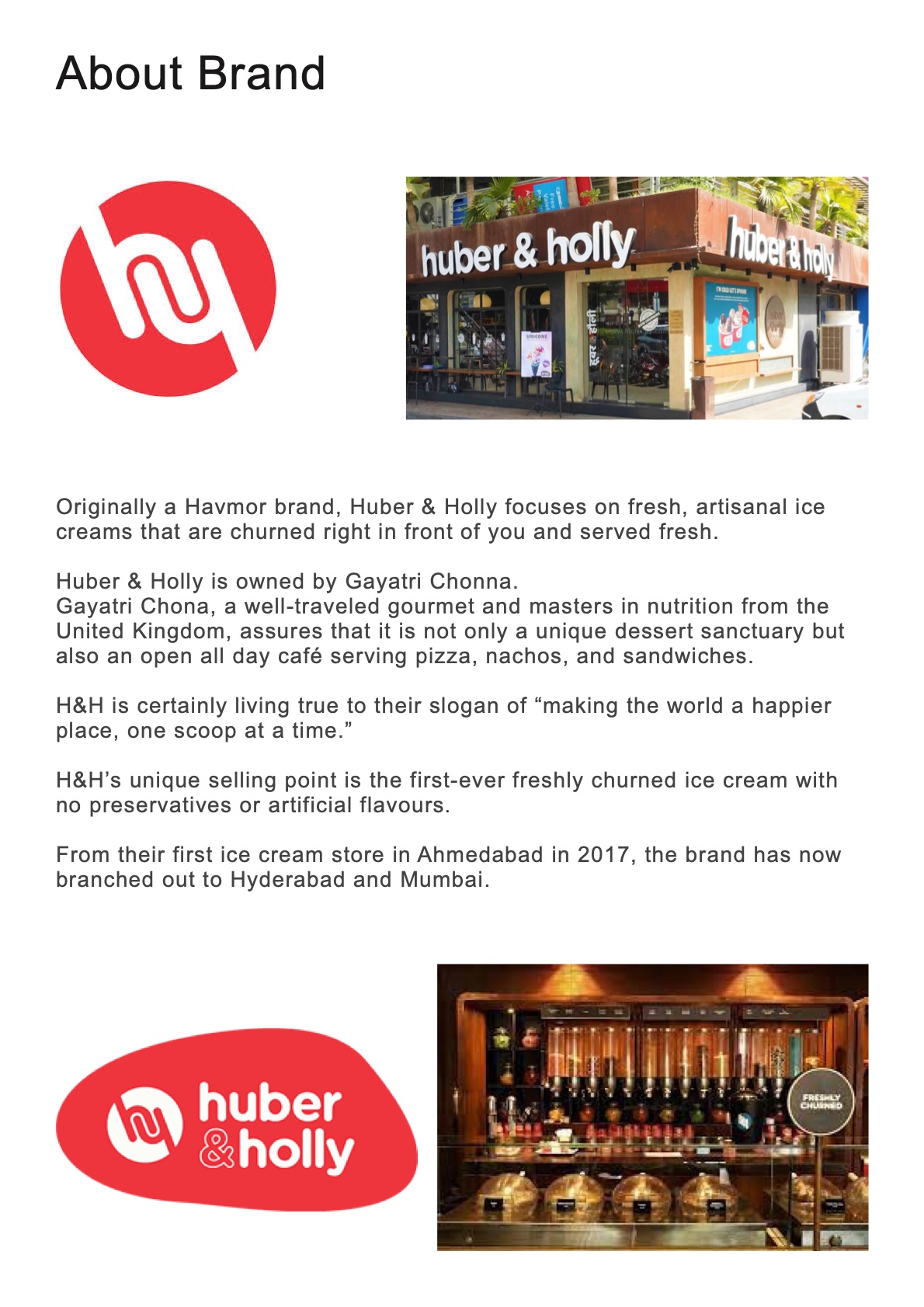
We studied how brands like Thorntons and Godiva use immersive displays to spark emotion and draw foot traffic.
Key findings
- •Narrative sells — displays that unfold a process keep viewers engaged longer.
- •Material realism evokes emotion — tactile textures trigger sensory memory.
- •Warm lighting and playful elements support visibility and brand consistency.
Mood direction
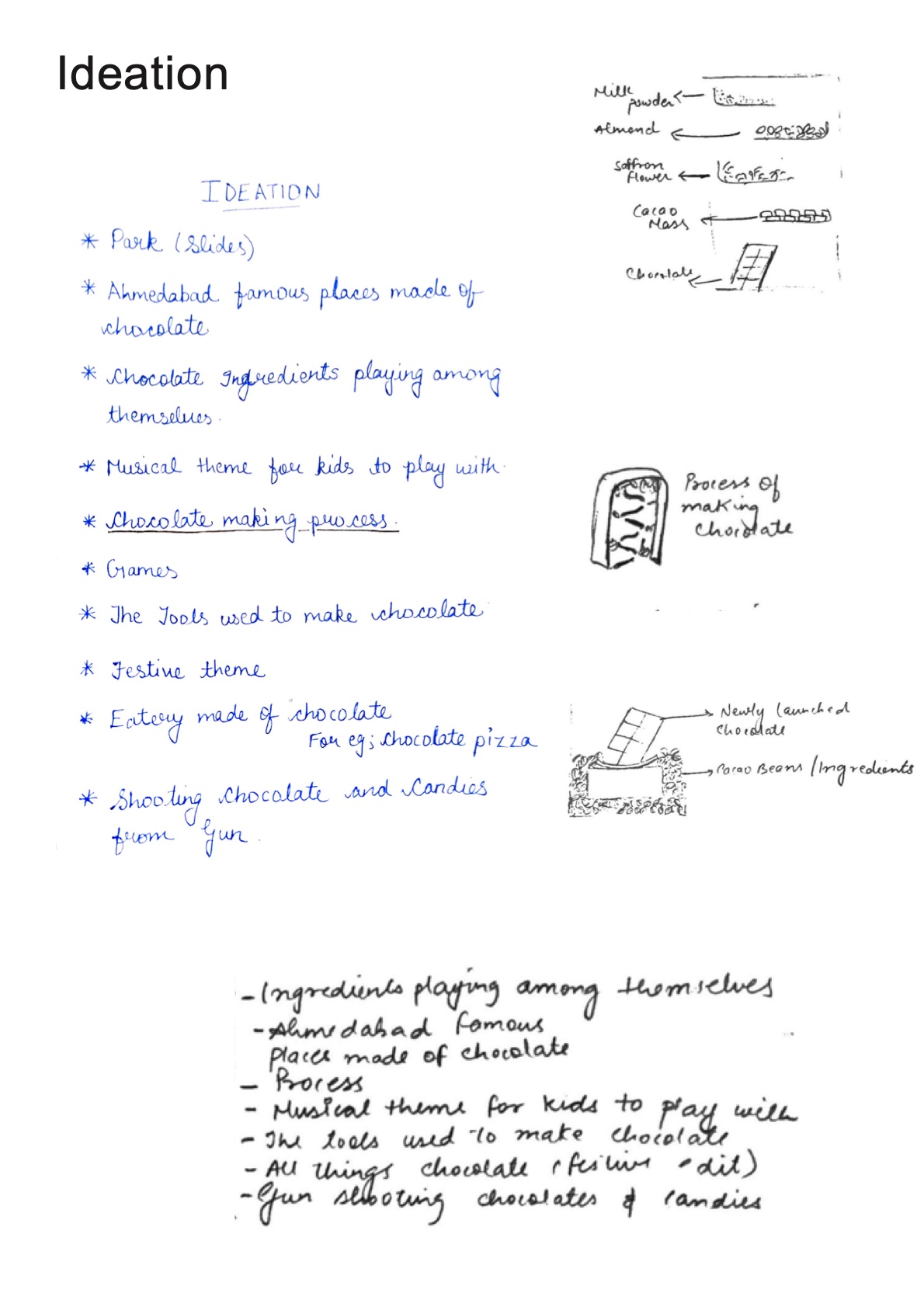
A visual moodboard pinned down a tone that was whimsical, earthy, and educational — aligned with Huber & Holly’s identity.
3)Concept & Story
Core concept
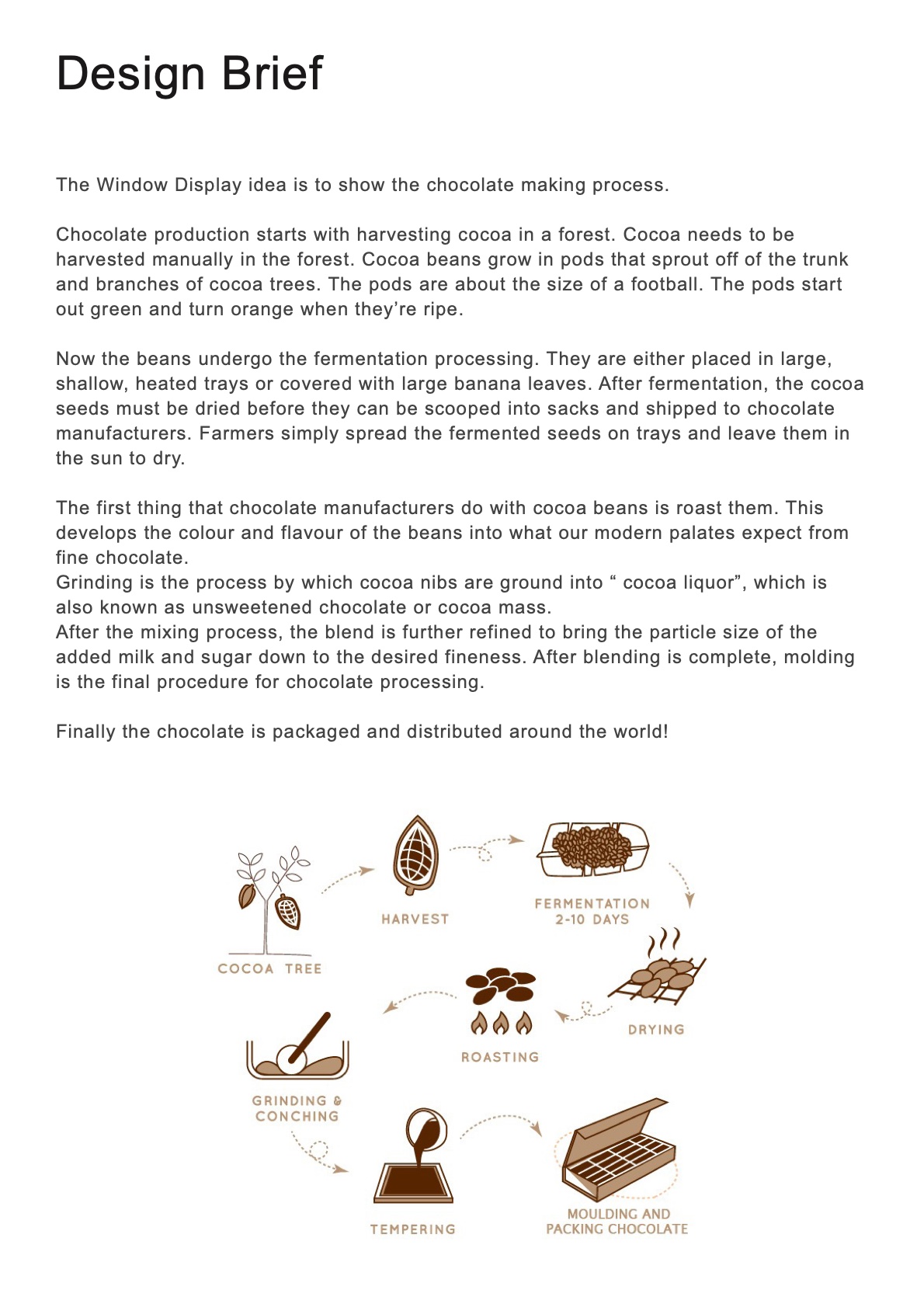
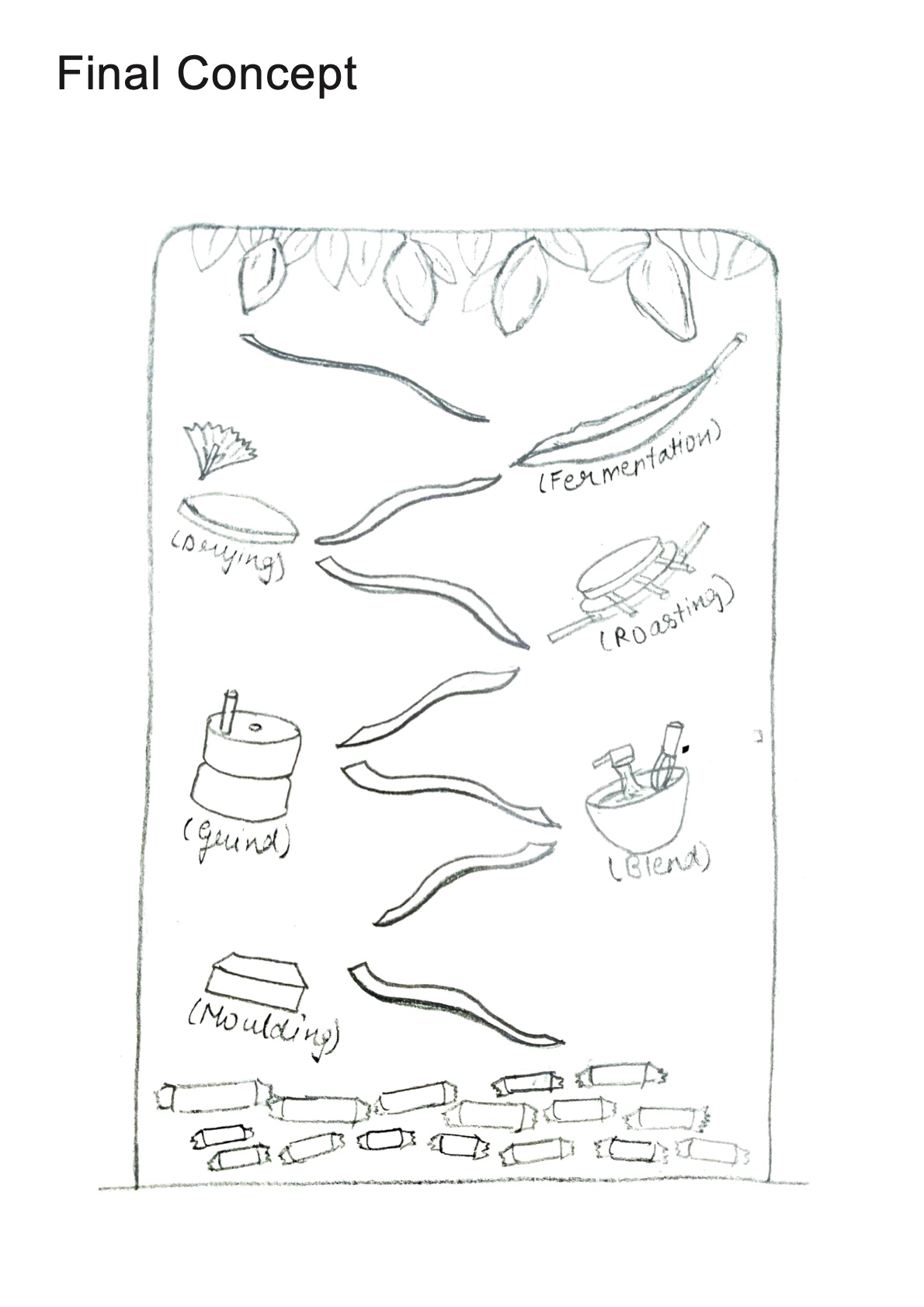
“From Cocoa Bean to Chocolate Bar” — a staged visual narrative where viewers trace the process through seven miniature scenes.
Narrative flow
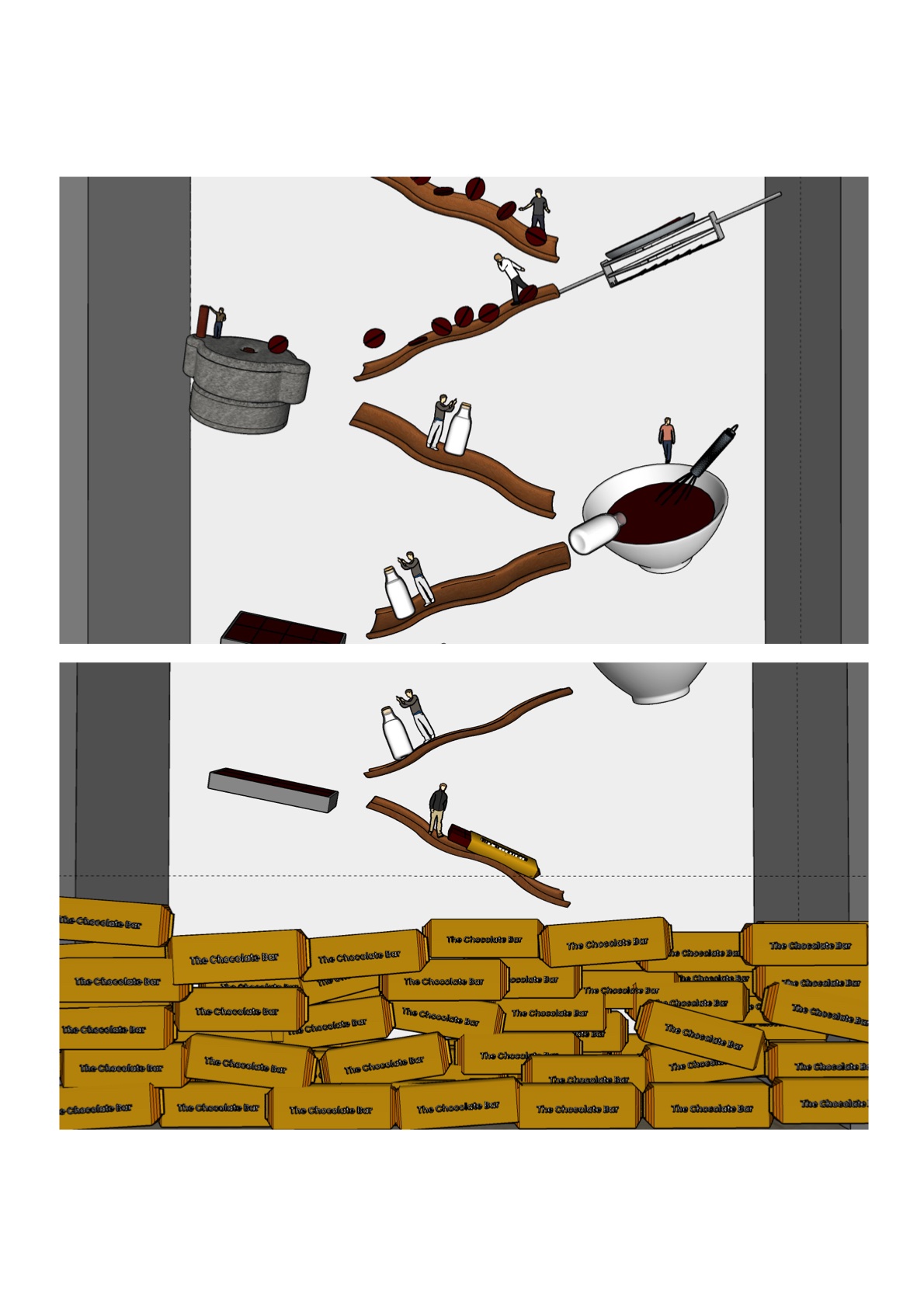
Starting with a cocoa pod and ending with glossy wrapped bars, props flow in sequence using slides, trays, and grinders to suggest transformation.
Form language
Each prop was designed to feel handcrafted yet stylized — oversized inviting shapes and layered textures so people pause, smile, and say “oh, that’s how it’s made!”
4)Material Exploration & Mockups
Materials
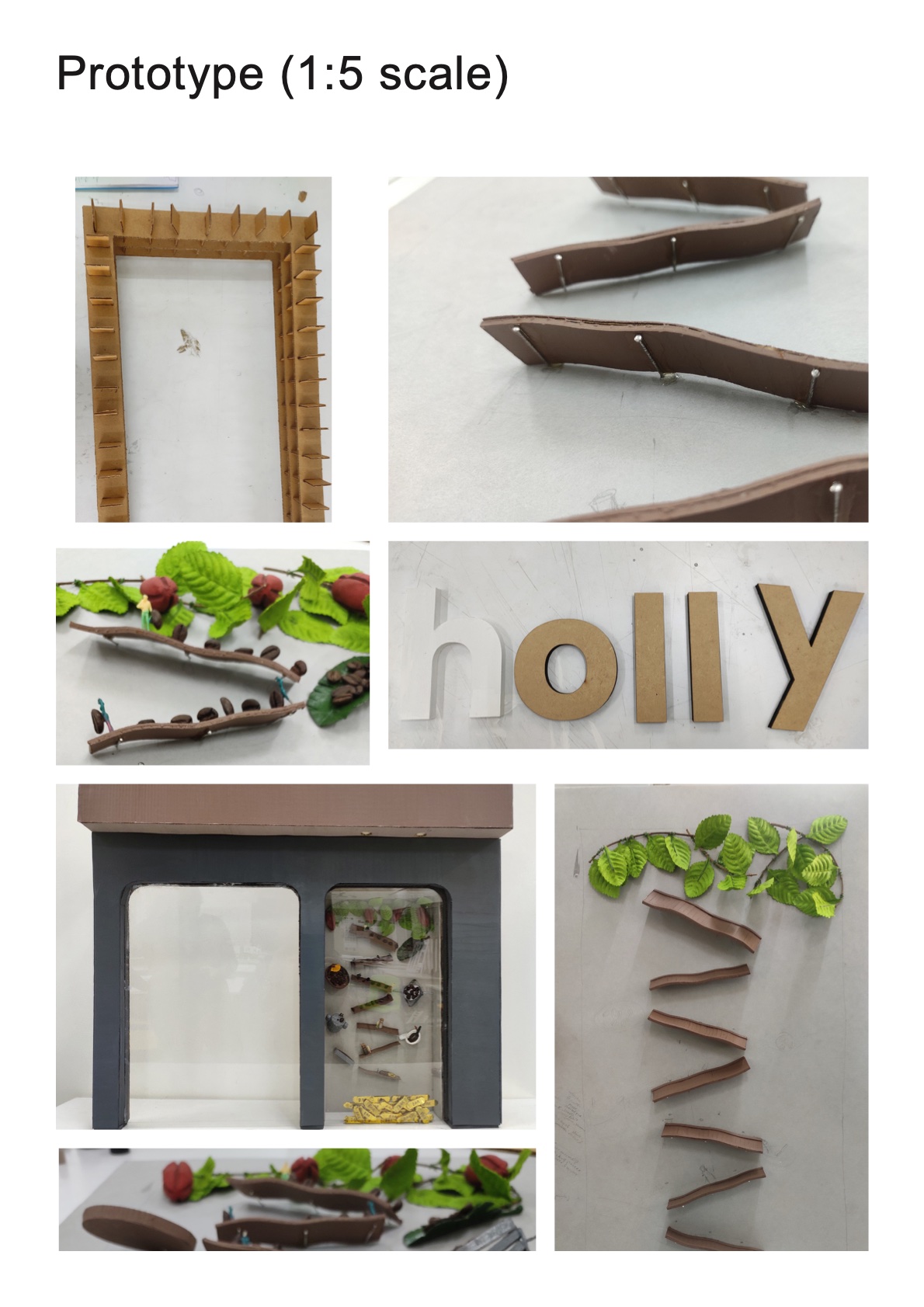
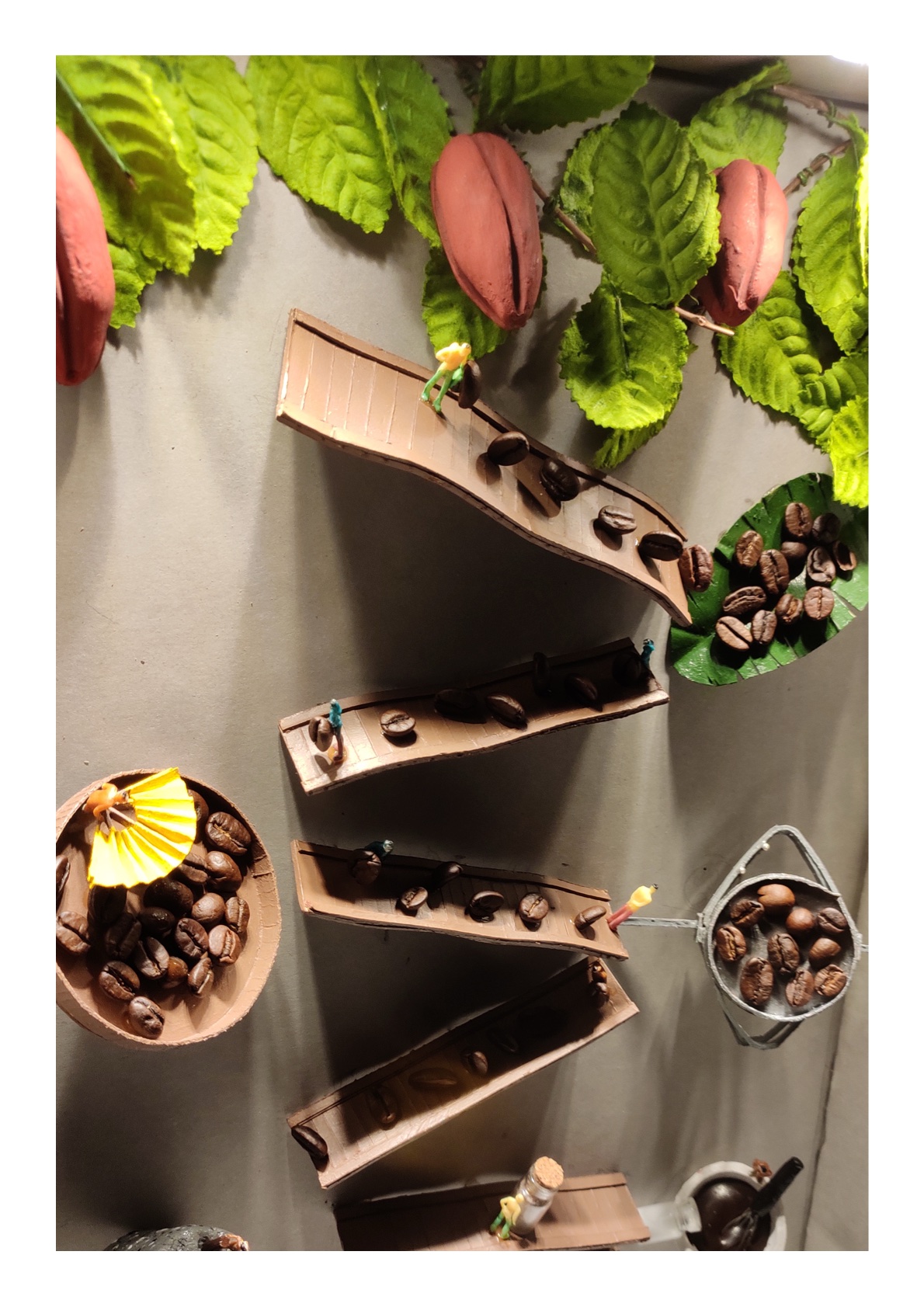
- •Foam + resin for cocoa pods
- •Painted rudraksha seeds to mimic fermenting beans
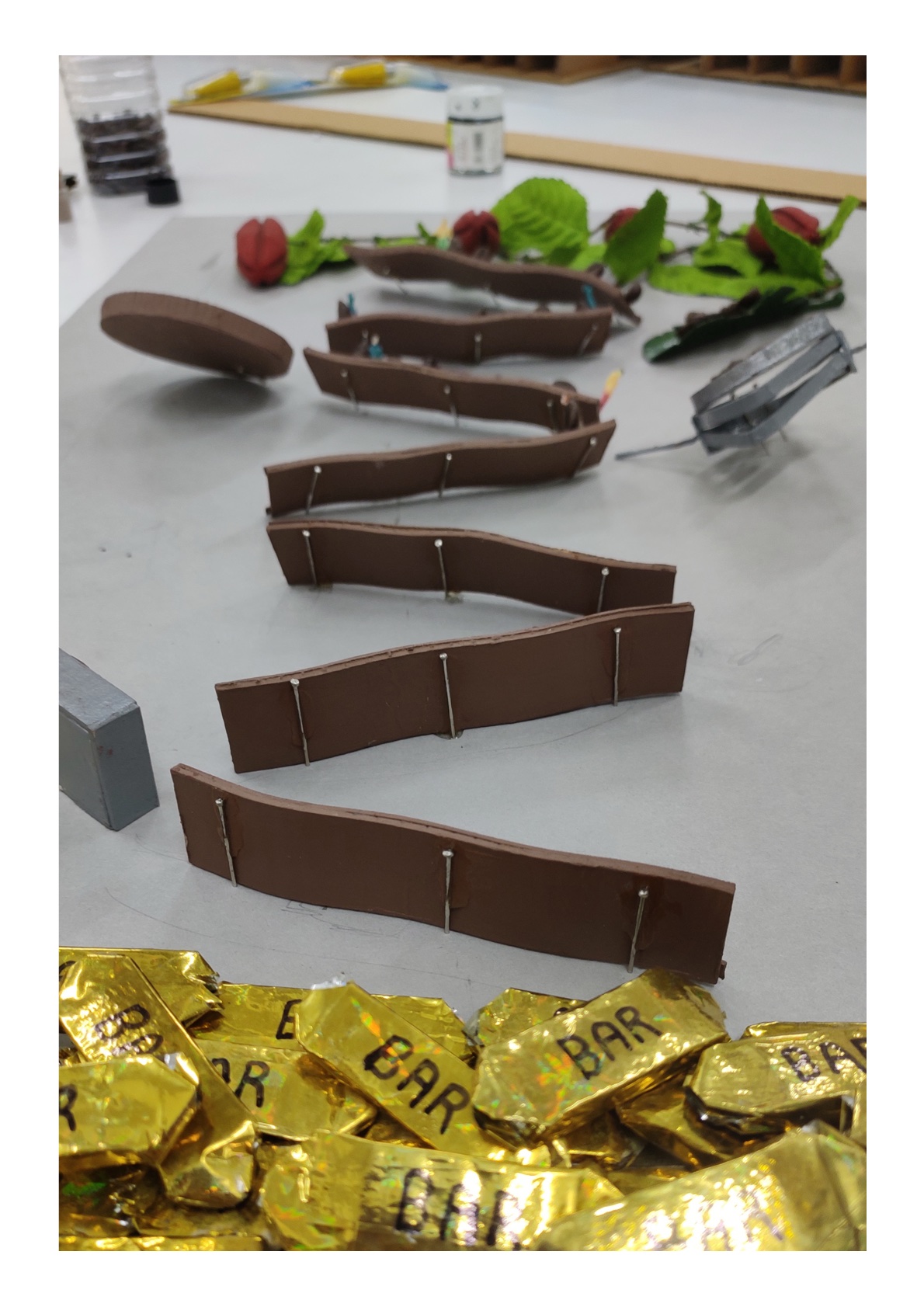
- •MDF trays and faux leaves for realism and depth
- •Plaster-coated foam for stone grinders
Scale testing
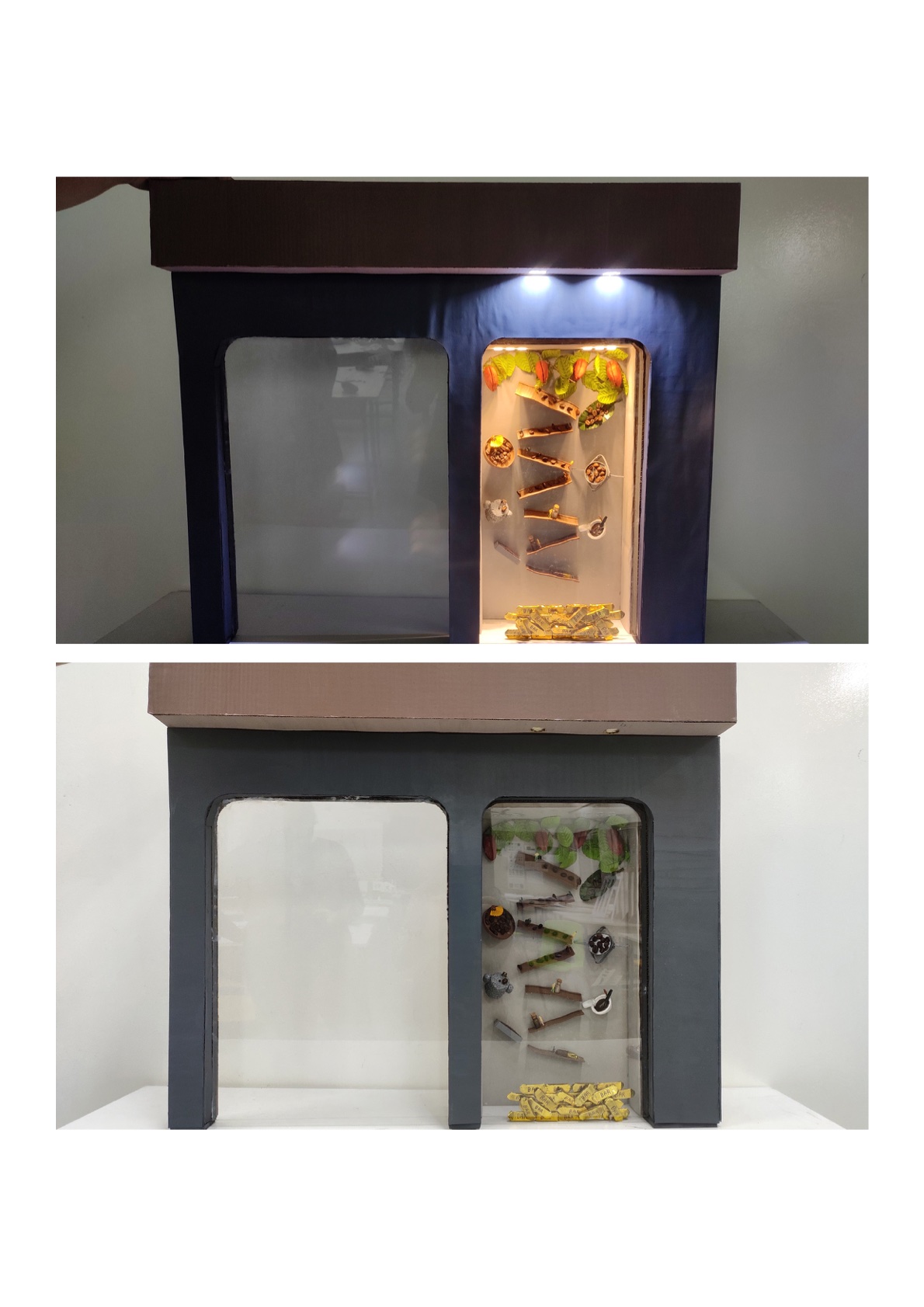
We built a 1:5 scale mockup, tested lighting with desk lamps, and prototyped textures to understand visual hierarchy — balancing crafted realism with playful abstraction.
5)3D Modeling & Rendering
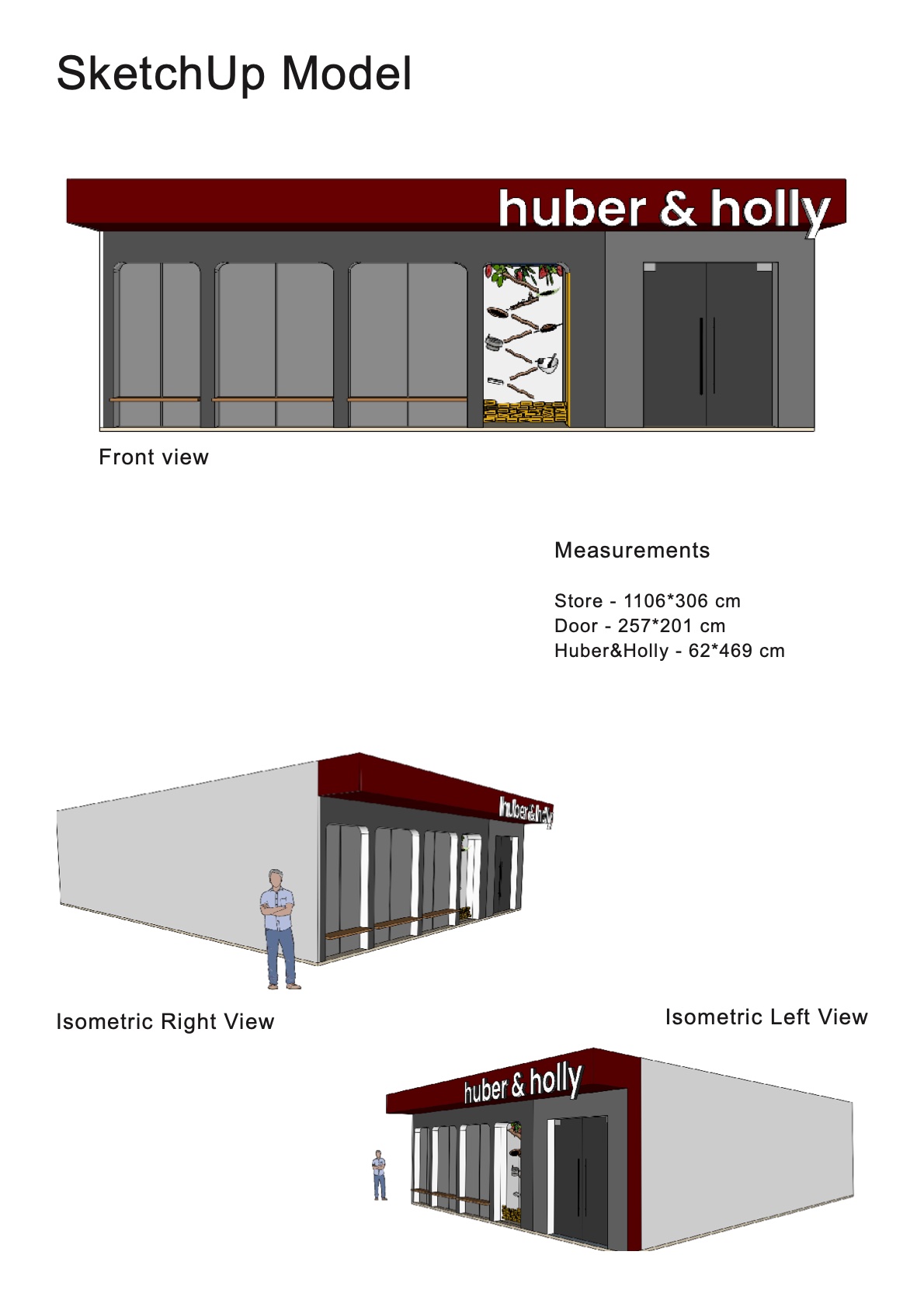
SketchUp planning
A storefront model established window dimensions, sightlines, and how the display reads from the street.
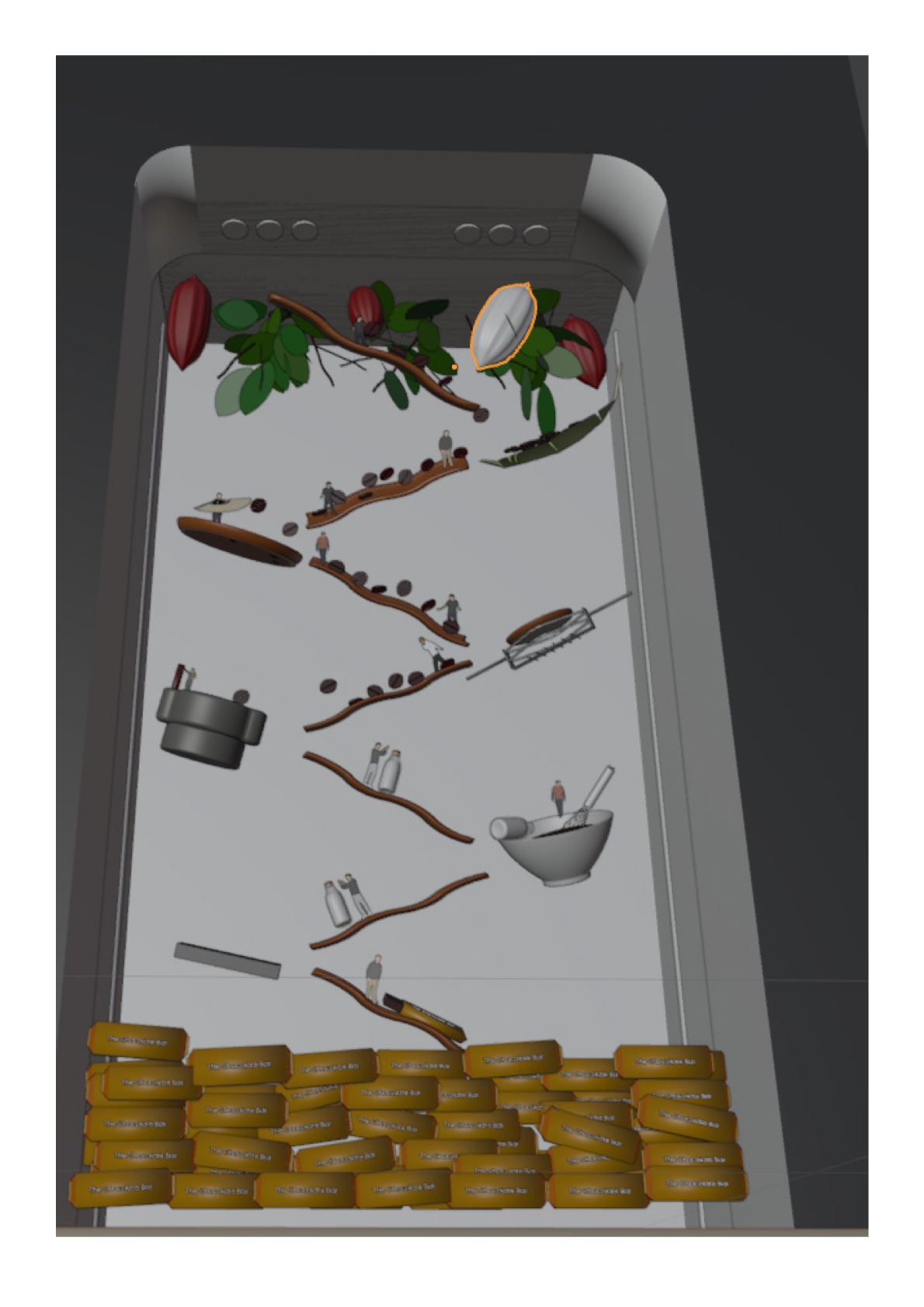
Blender visualization
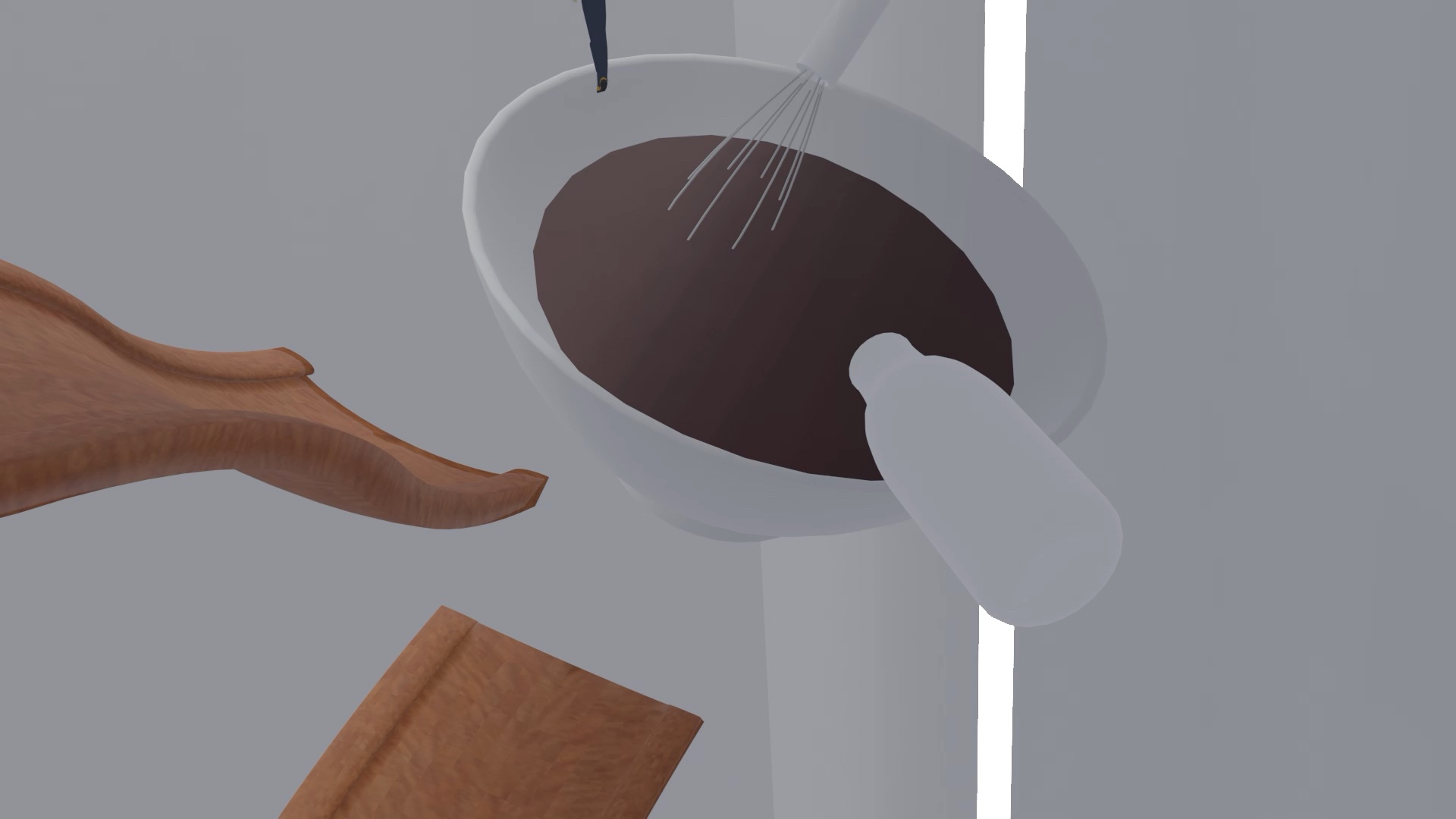
I translated the physical concept into Blender for high-fidelity renders — modeling each stage from pods to molds with procedural shaders for chocolate gloss and warm lighting simulations.
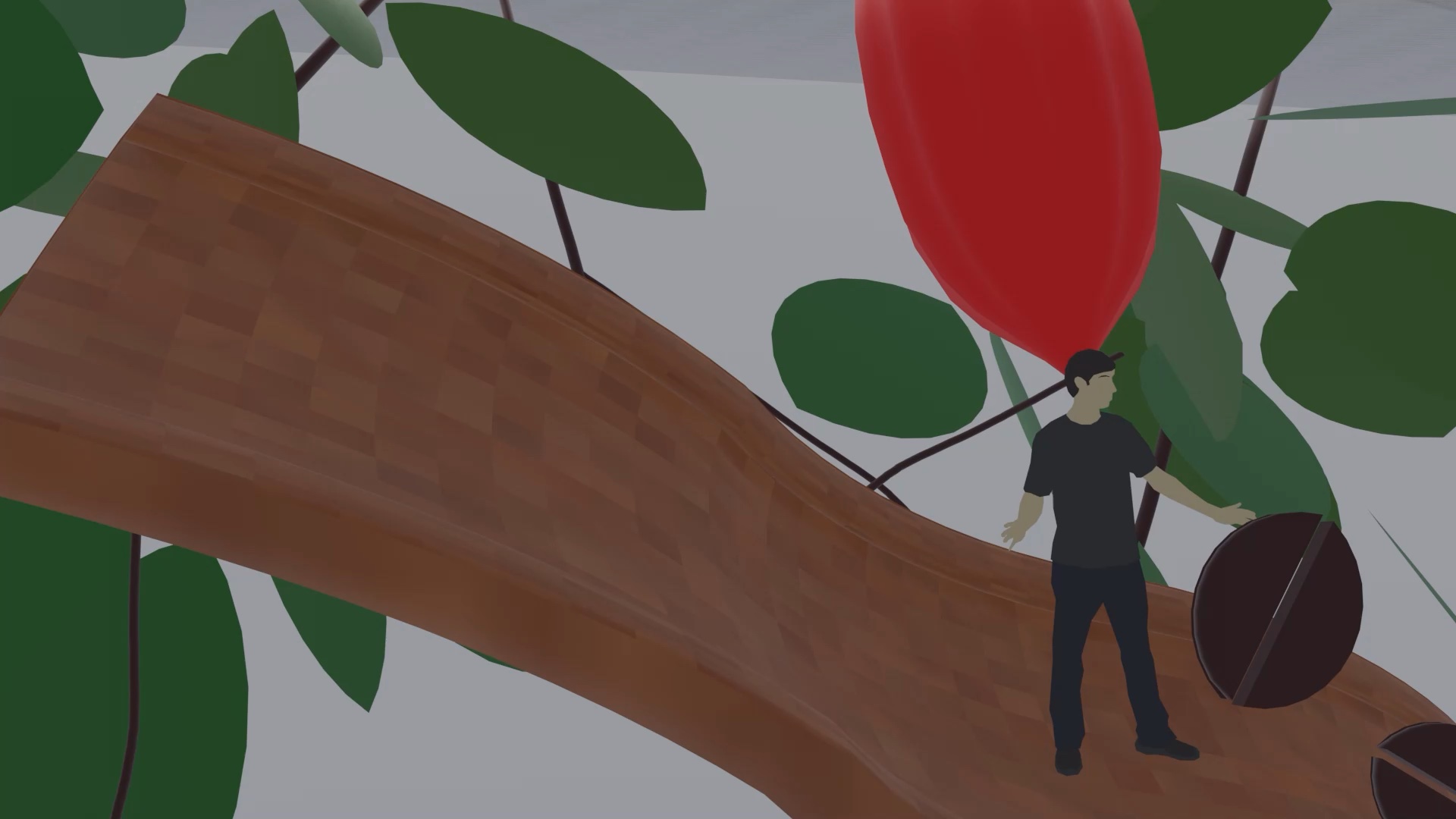
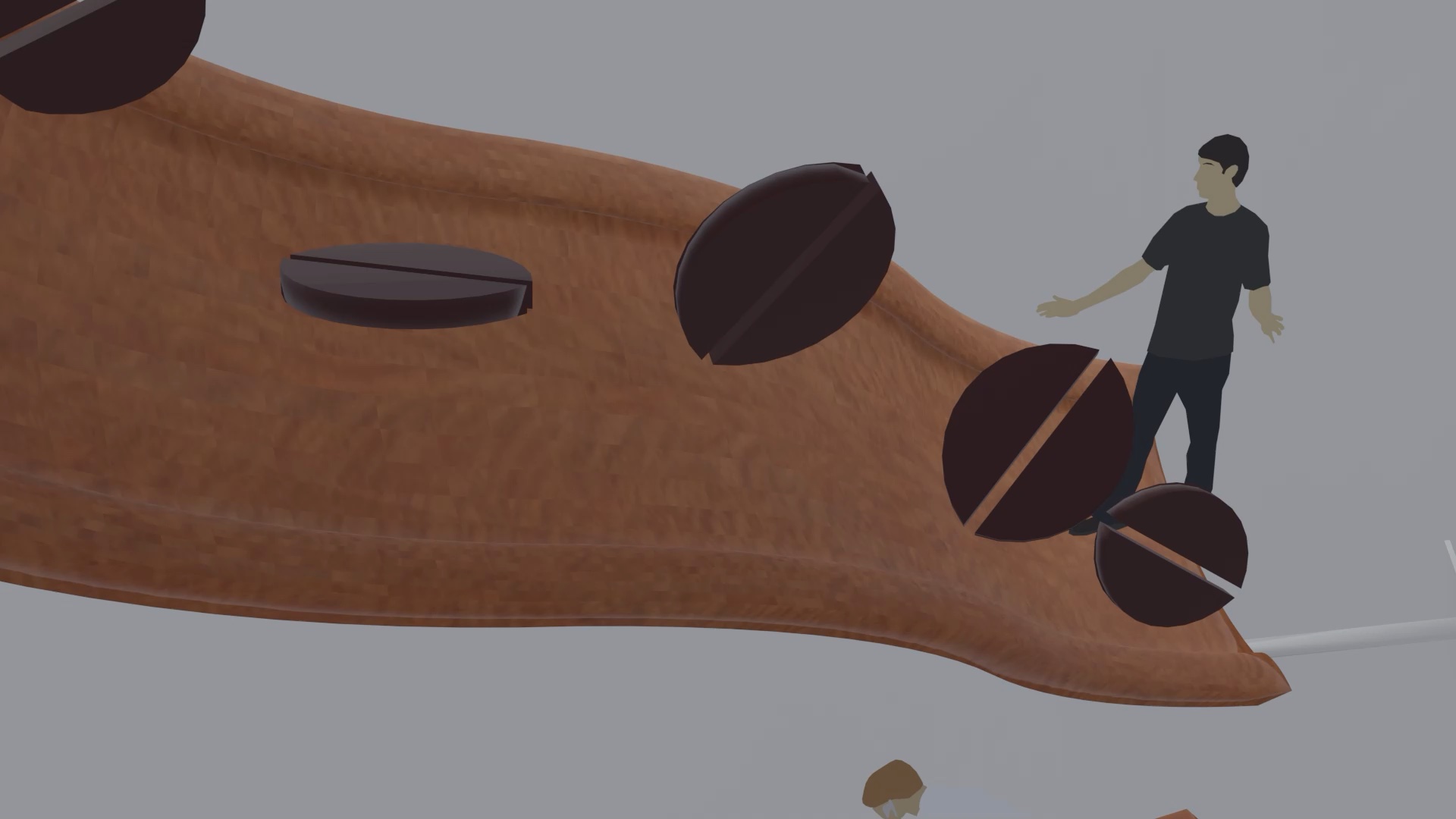
Stills from the walkthrough
Frames from the Eevee animation show how the story unfolds as a viewer walks past the café.
6)Final Design & Impact
Spatial story
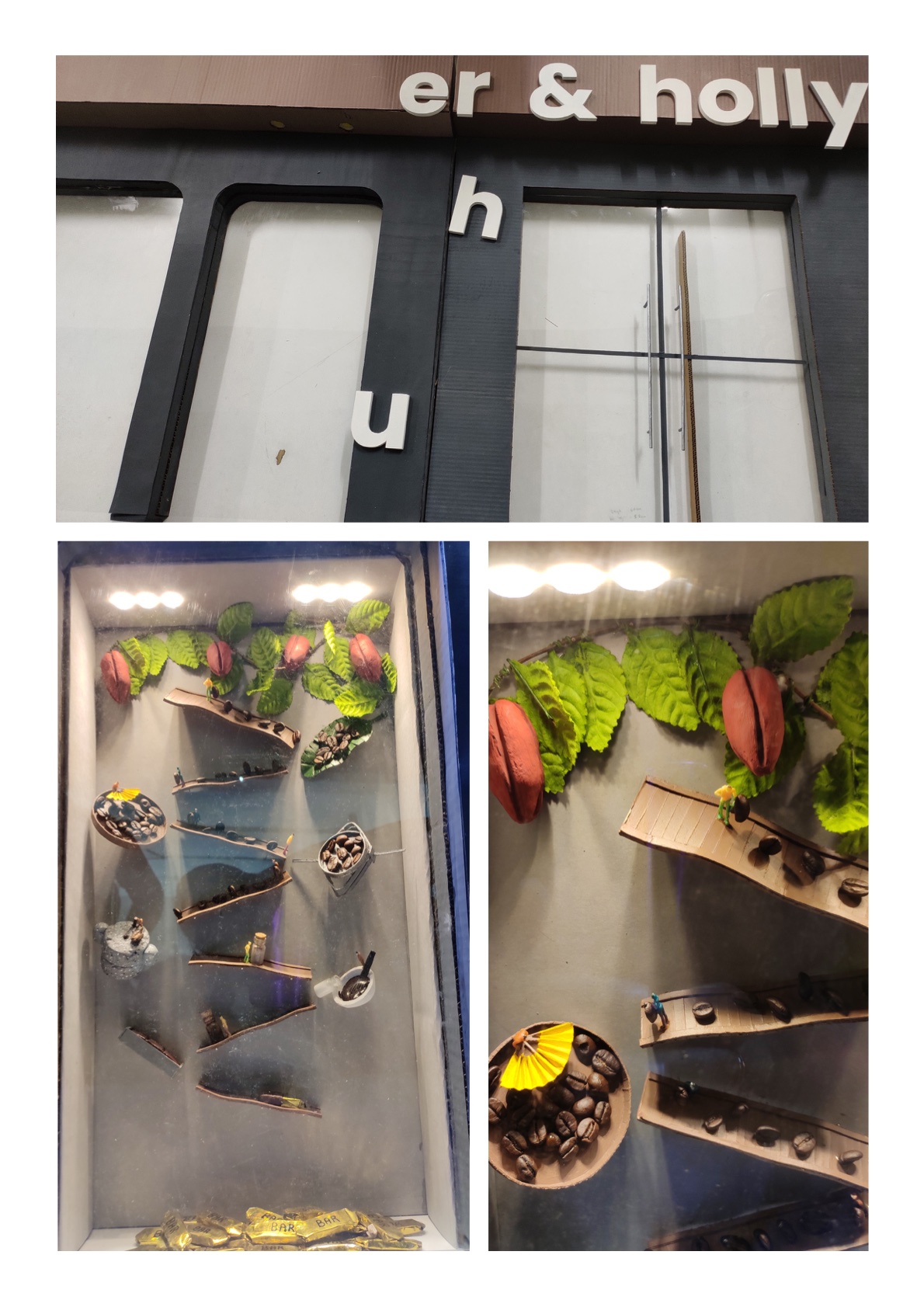
The final layout captured a tactile journey — lush greenery, flowing slides, rustic tools, and finished bars inside one seamless scene. Visitors read the story left to right; each prop acts as a chapter.
Feedback
Faculty highlighted storytelling strength, brand alignment, and creative use of scale and materials. One peer called it a “mini chocolate museum inside a window.”
7)Reflection & Next Steps
What I learned
- •Environmental storytelling shapes how customers perceive a brand before they ever taste the product.
- •Material choices carry narrative weight as much as form.
- •Moving between physical mockup and digital render catches proportion issues early.
Future directions
Interactive motion, scent cues, or AR storytelling layers could deepen engagement — but even in analog form, The Canvas achieved what every great display does: make people stop, feel, and want more.