Essence of Green — Publication Design
A field-friendly book that helps first-time gardeners and plant lovers start, care for, and enjoy houseplants & climbers through clear guidance, accessible science, and calm editorial design.
- Year :
- 2022
- Course :
- Publication Design (Academic)
- Role :
- Research, content architecture, grid & type system, illustration, layout, production
- Project Duration :
- 3 weeks
1)Brief & Objectives
The ask
Design a publication that gets young readers and beginners to genuinely care for plants—linking daily care to long-term environmental awareness.
Audience
Plant enthusiasts, teen readers, beginners in gardening; also relevant to botanists looking for a concise quick-reference.
Format
8" × 8" square book, print + e-book ready, ~32 pages
Core skills
Editorial systems, information design, illustration, typographic hierarchy, production prep
Goals
- •Make plant care actionable (light, water, soil, season, height, uses).
- •Make botany approachable via calm, uncluttered layouts and friendly tone.
- •Balance beauty + utility through line illustrations and consistent card layouts.
- •Deliver a print-ready system that also adapts to an e-book.
Outcome snapshot
A 32-page square book with two major chapters (House Plants, Climbers), a practical intro, and a species card system that repeats consistently for easy scanning.
2)Research & Content Architecture
Discovery → Structure
I mapped publication variables (grid, margins, image strategy, typography, navigation, media, target audience) and converted that into a repeatable content model.
Information model (per species card)
- •Scientific name (H1), Family, Common names
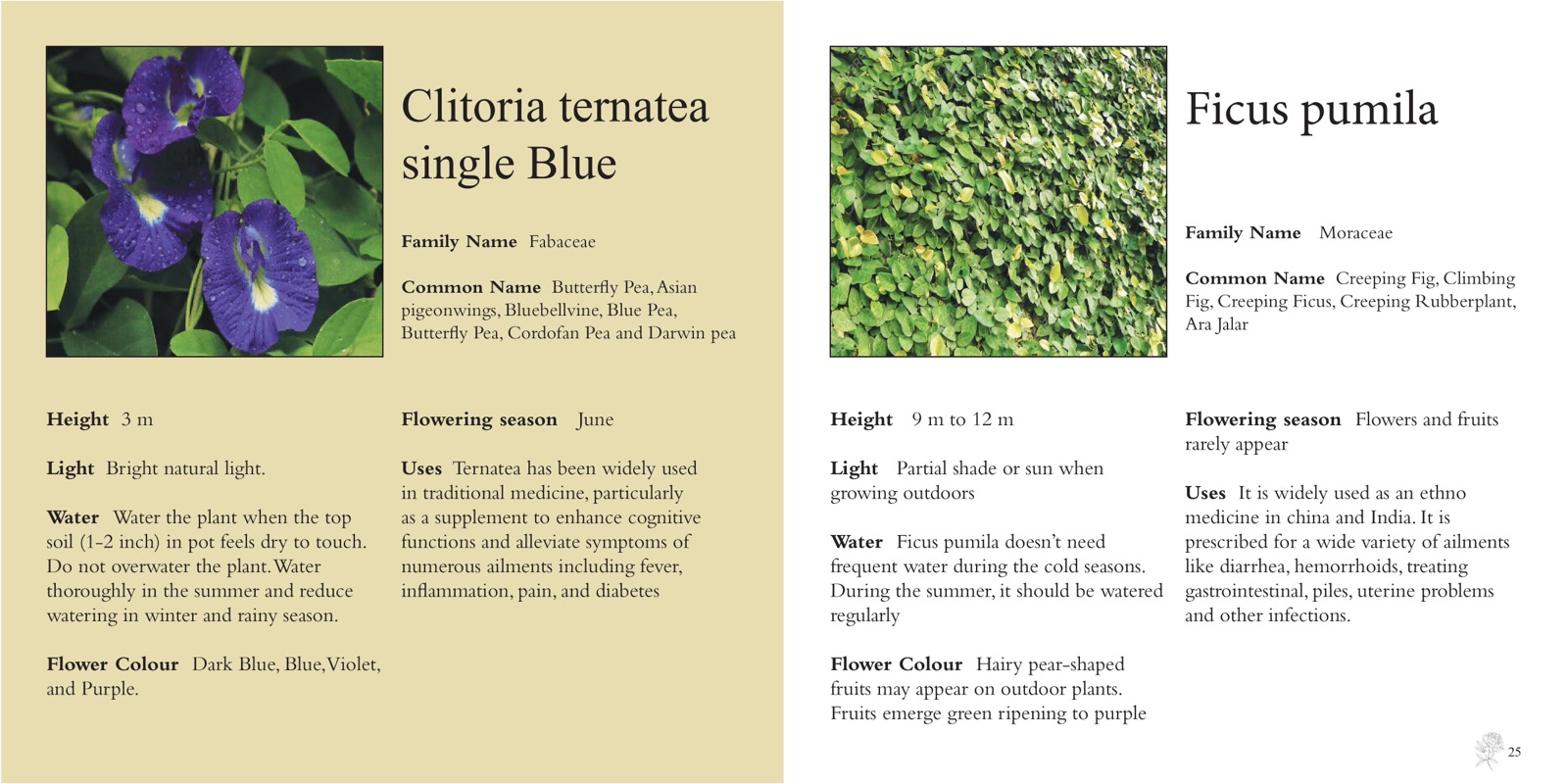
- •Care at a glance: Height, Light, Water, Flower colour, Flowering season
- •Uses: Everyday applications & interesting facts
- •Photo plate + supporting illustration if needed
Book structure
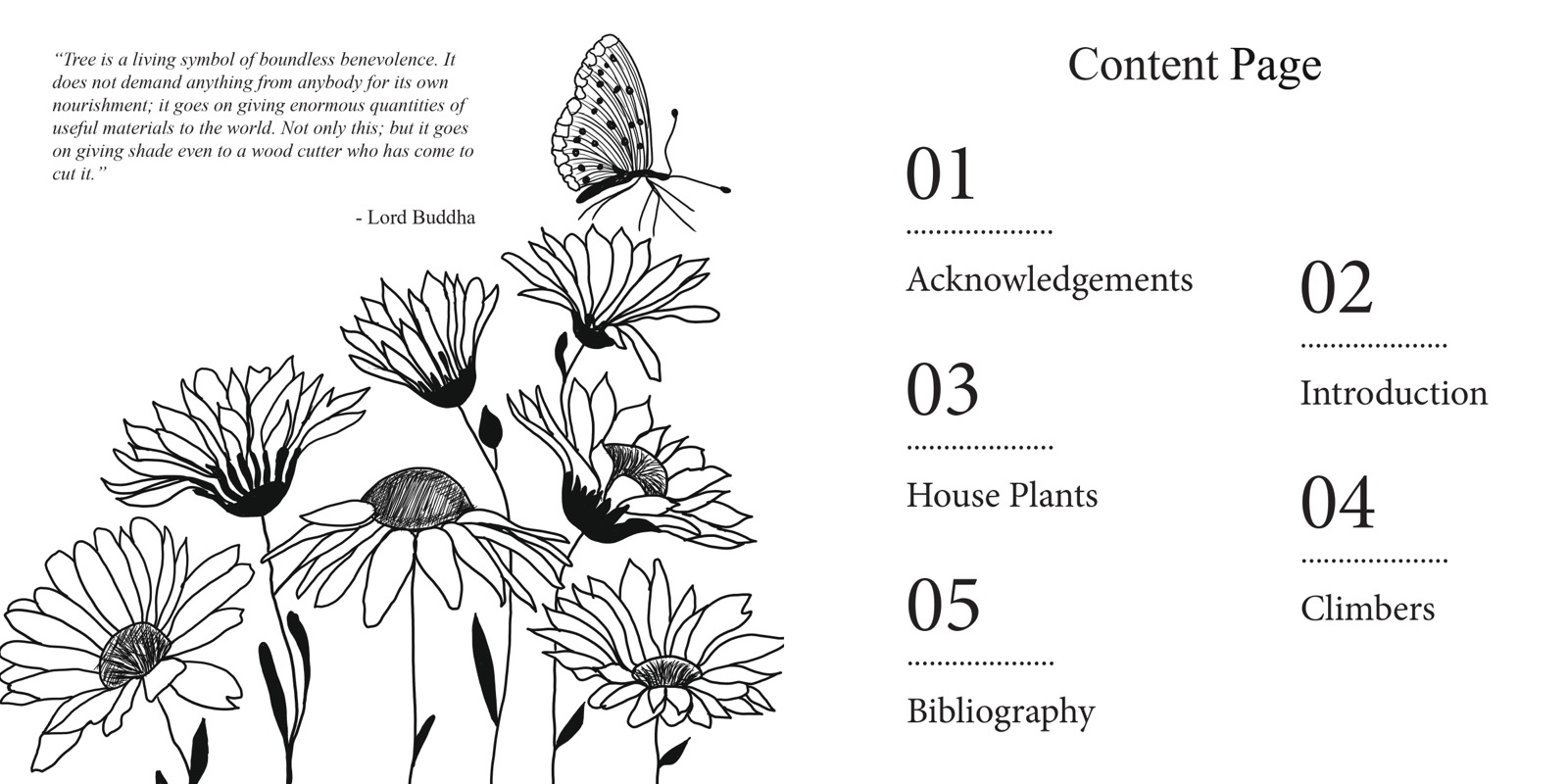
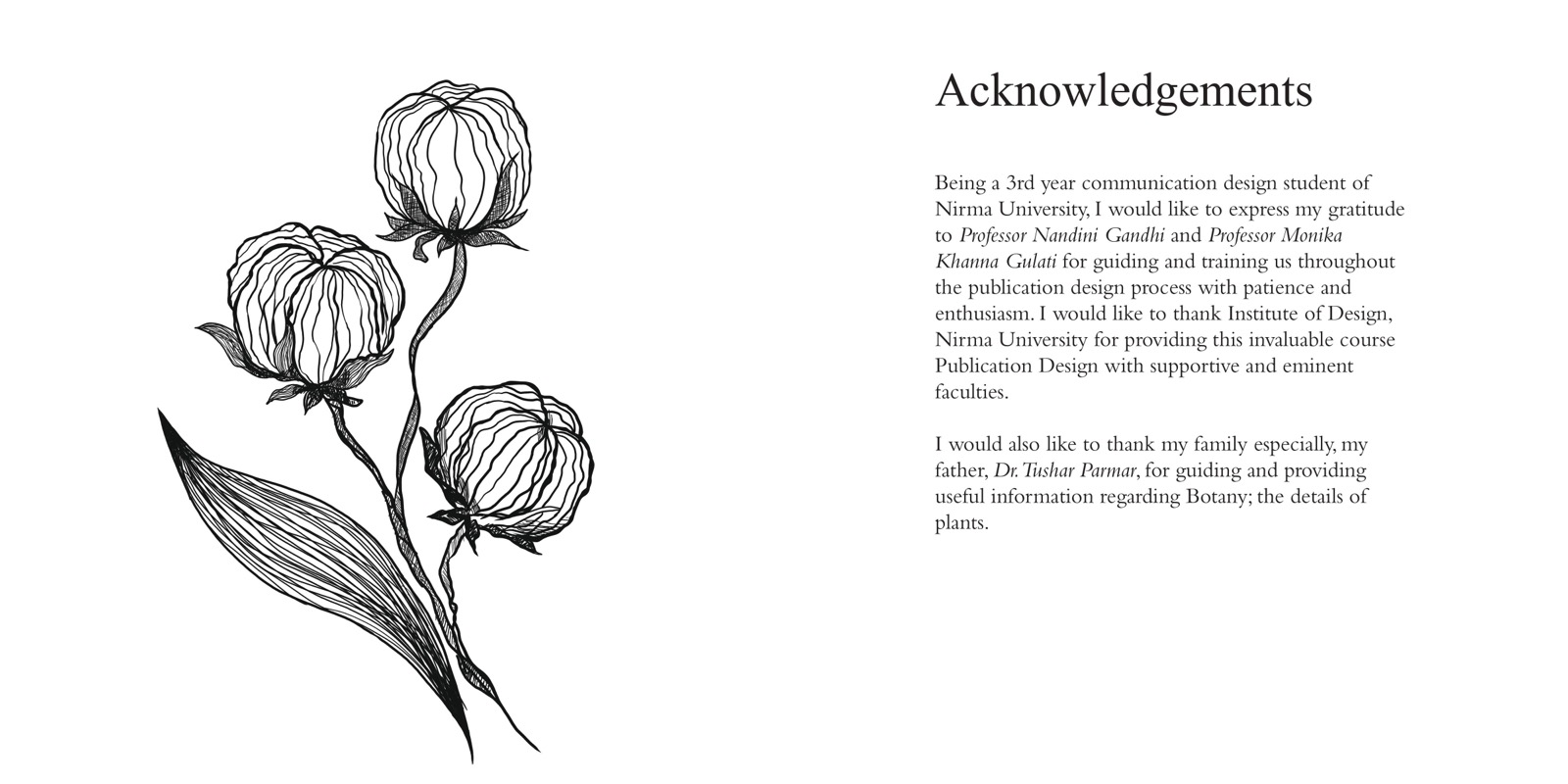
- •Acknowledgements (2 pp), Contents (2 pp)
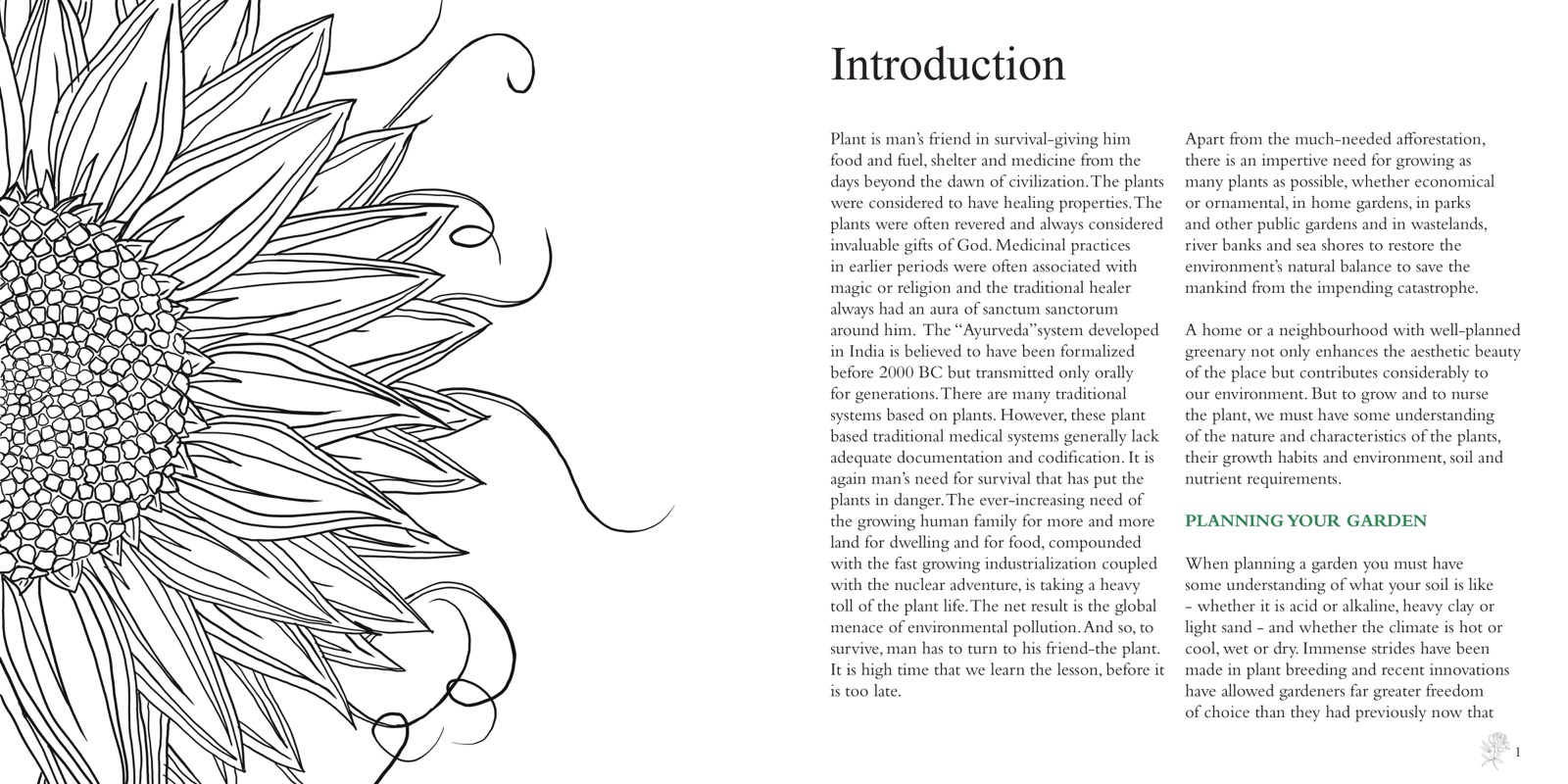
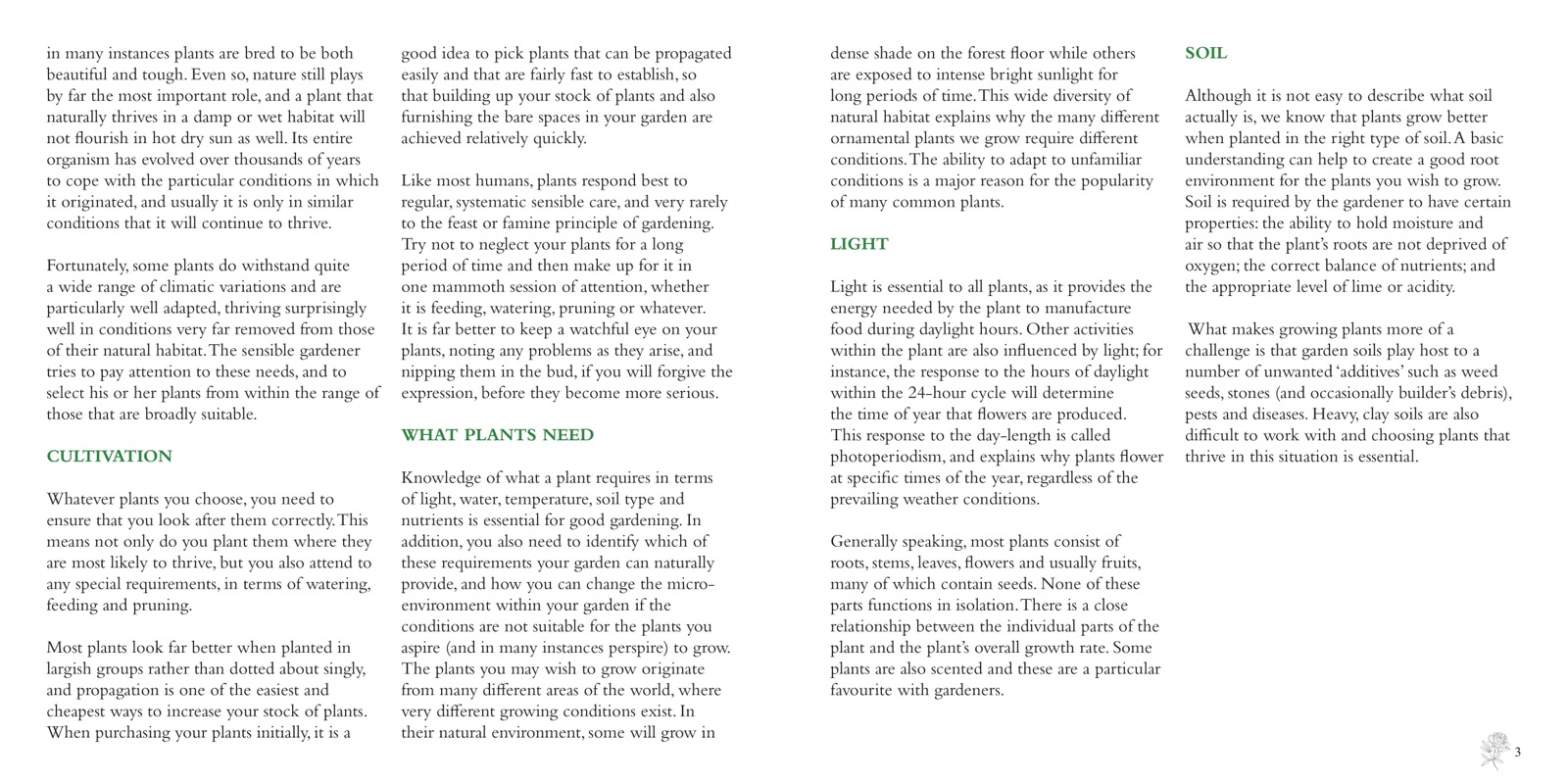
- •Introduction (4 pp): planning a garden, cultivation, what plants need, light & soil basics
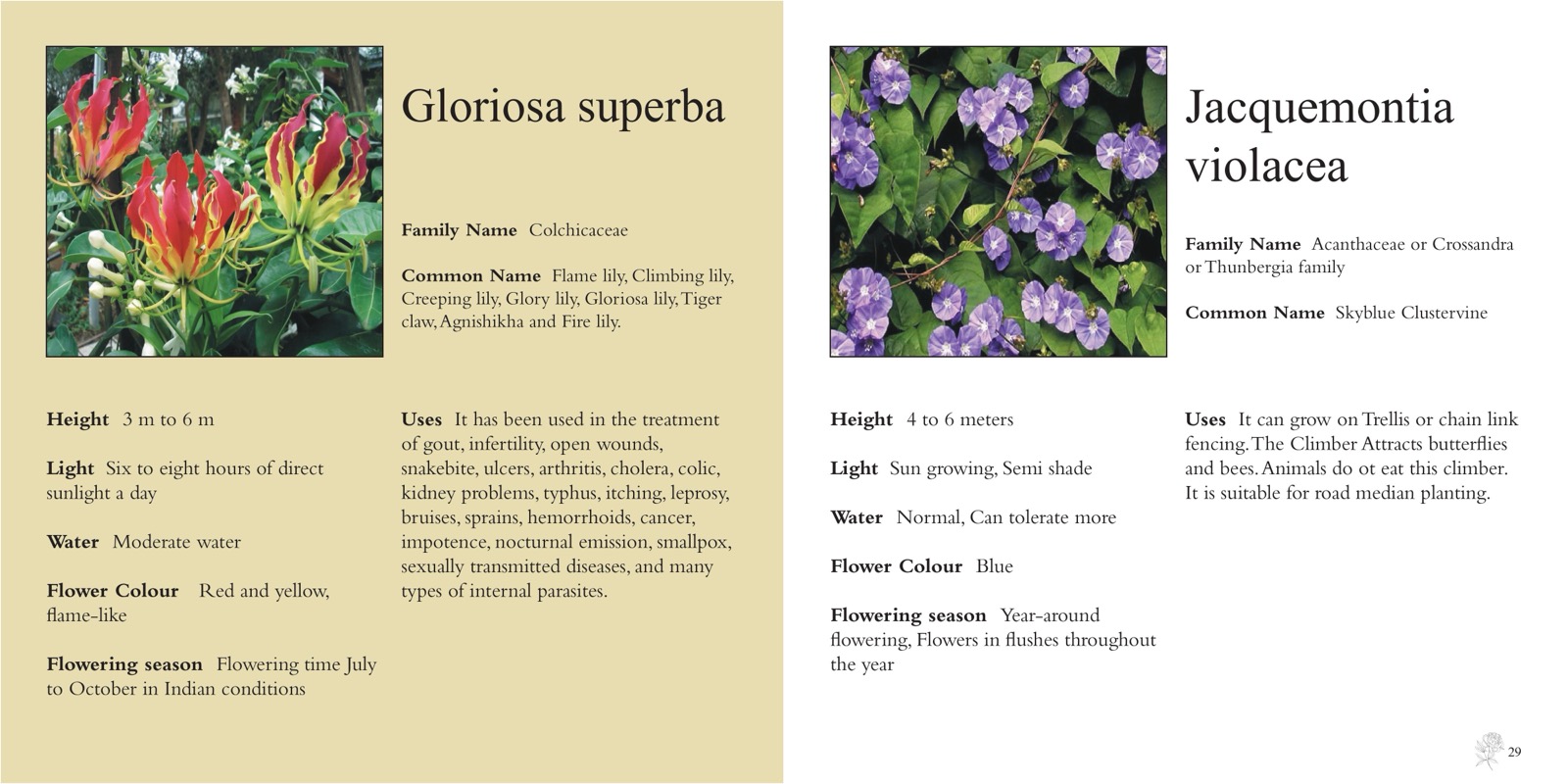
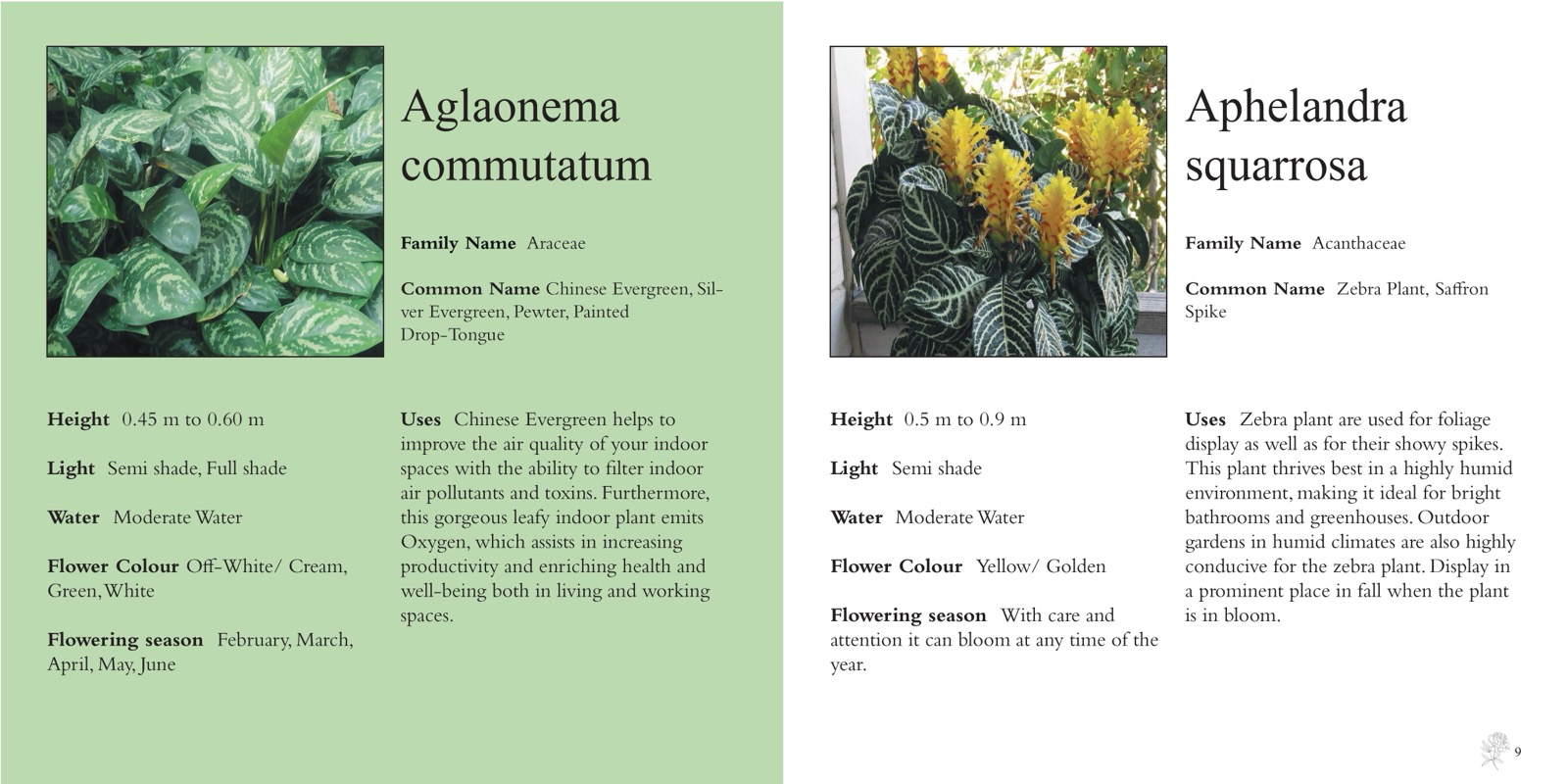
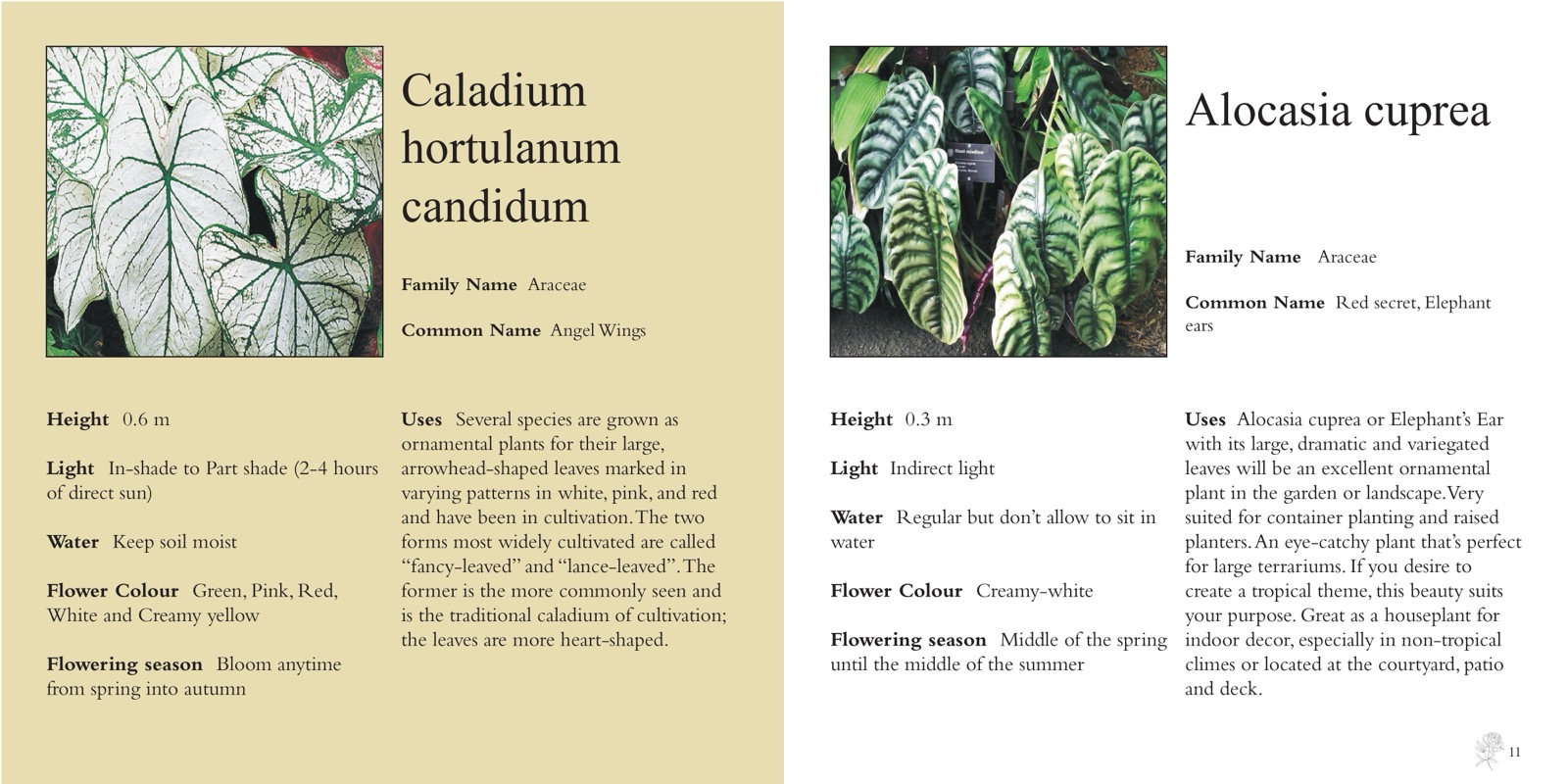
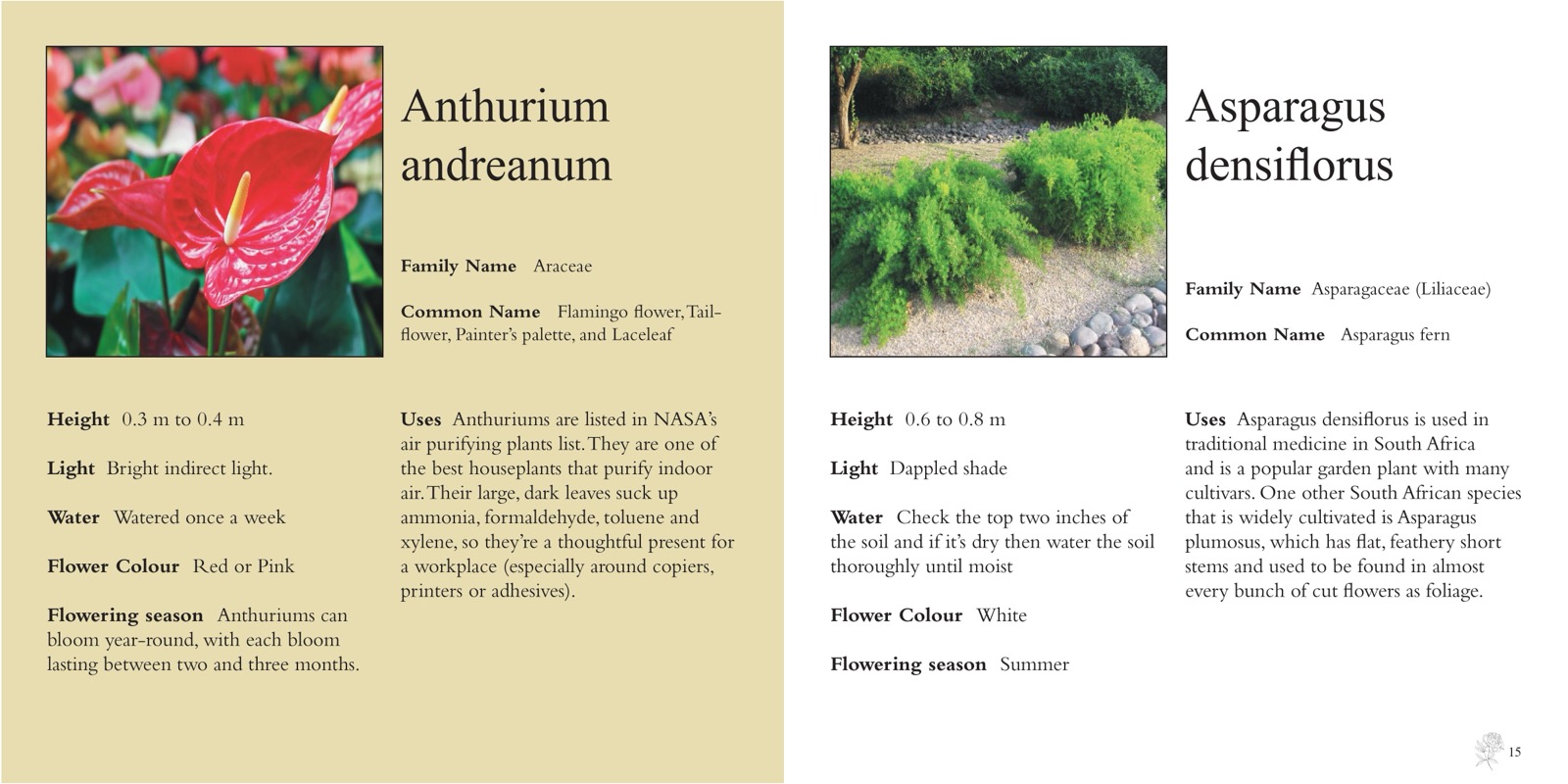
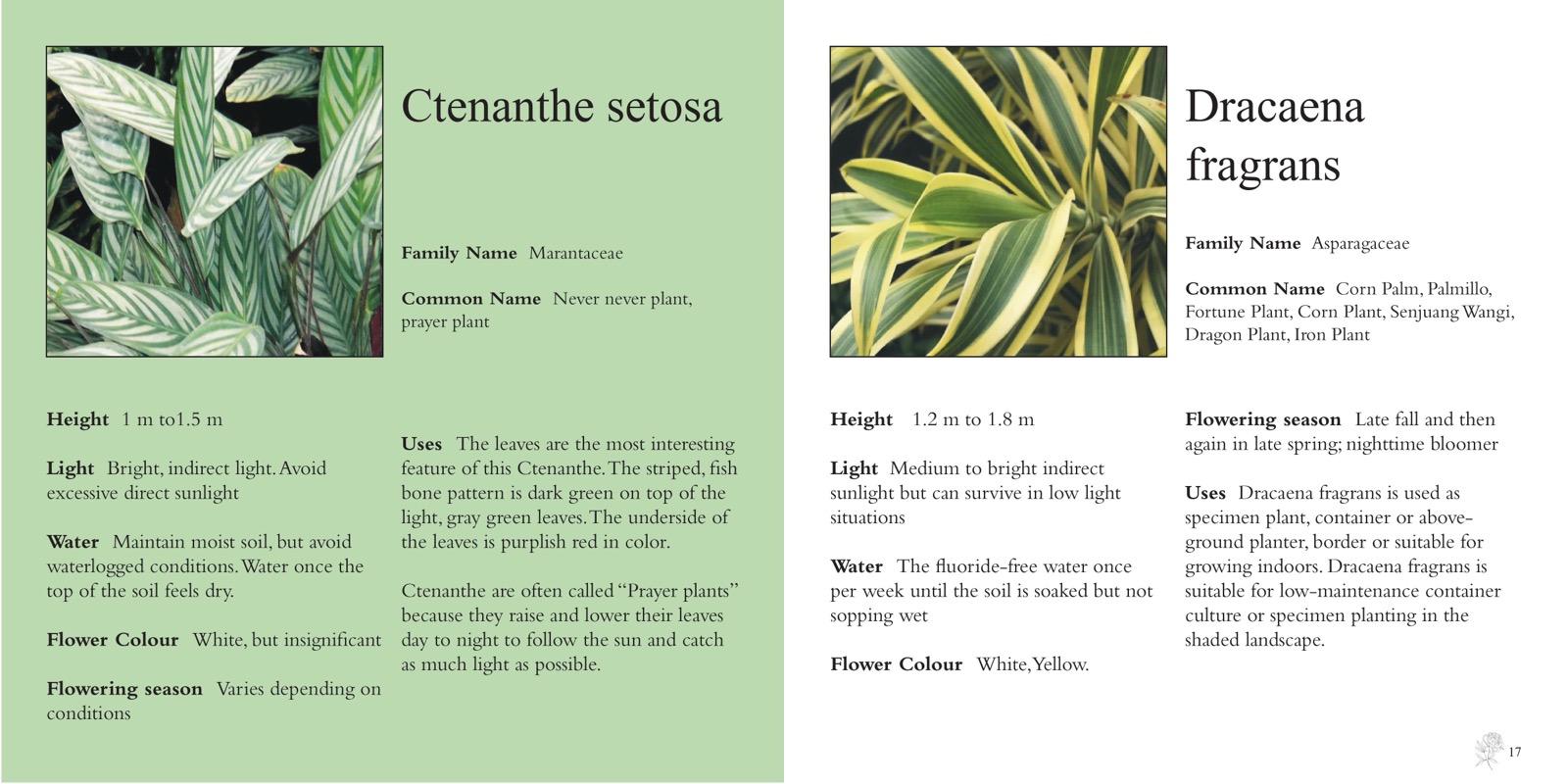
- •House Plants (10 cards) e.g., Aglaonema commutatum, Aphelandra squarrosa, Caladium hortulanum, Alocasia cuprea, Anthurium andreanum, Ctenanthe setosa, Dracaena fragrans …
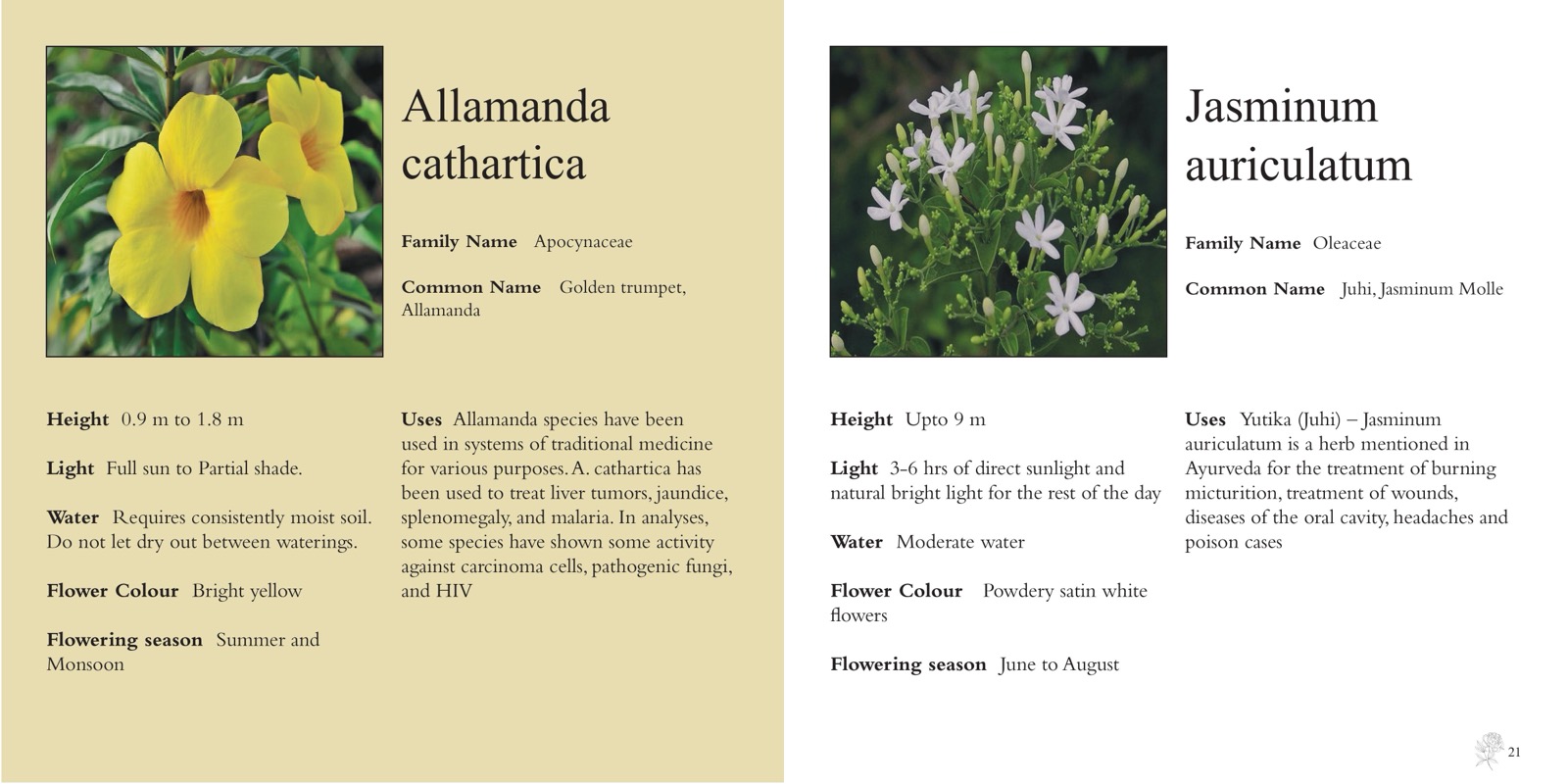
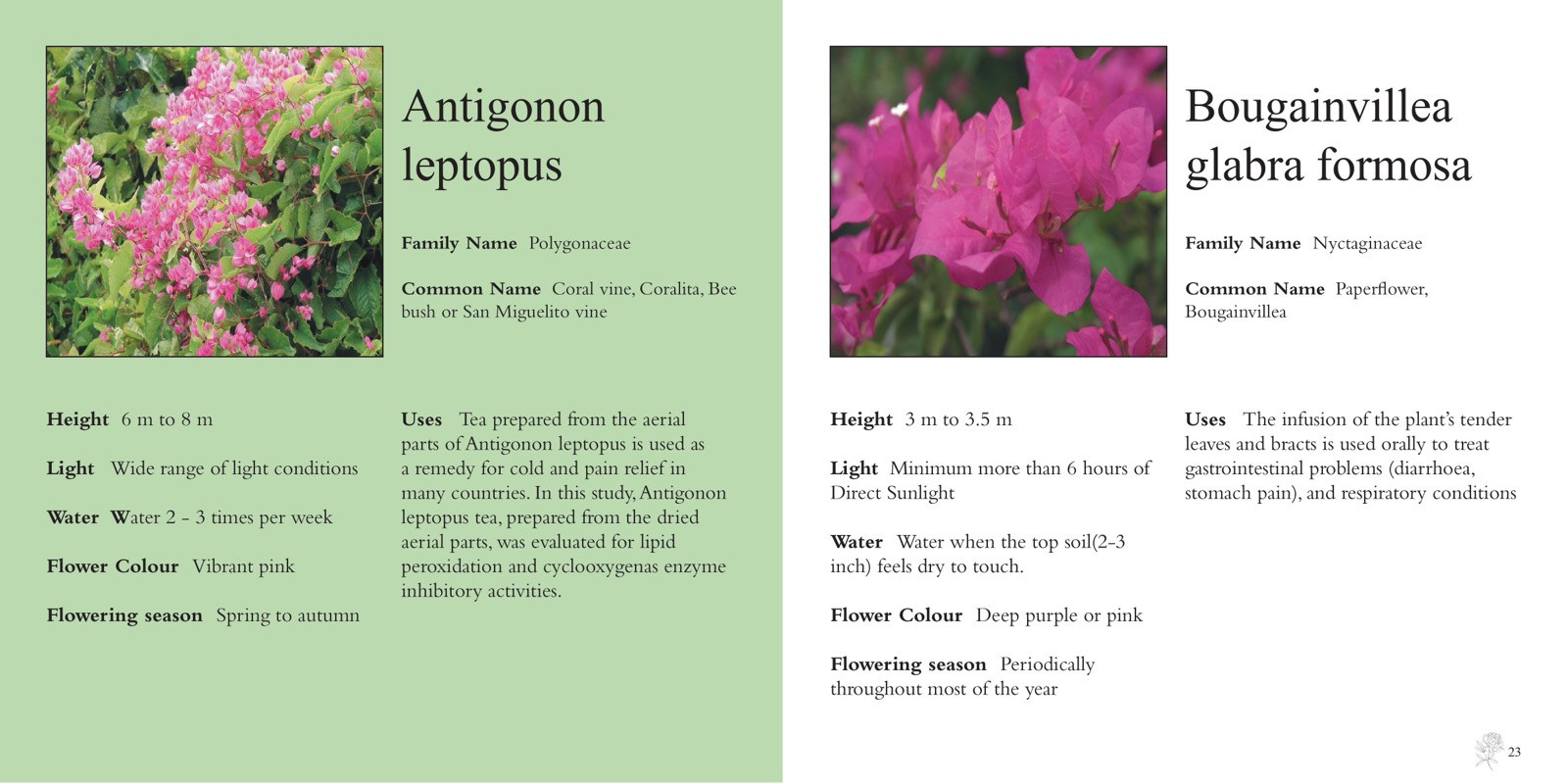
- •Climbers (10 cards) e.g., Allamanda cathartica, Jasminum auriculatum, Antigonon leptopus, Bougainvillea glabra, Clitoria ternatea, Ficus pumila, Passiflora caerulea, Quisqualis indica, Gloriosa superba, Jacquemontia violacea
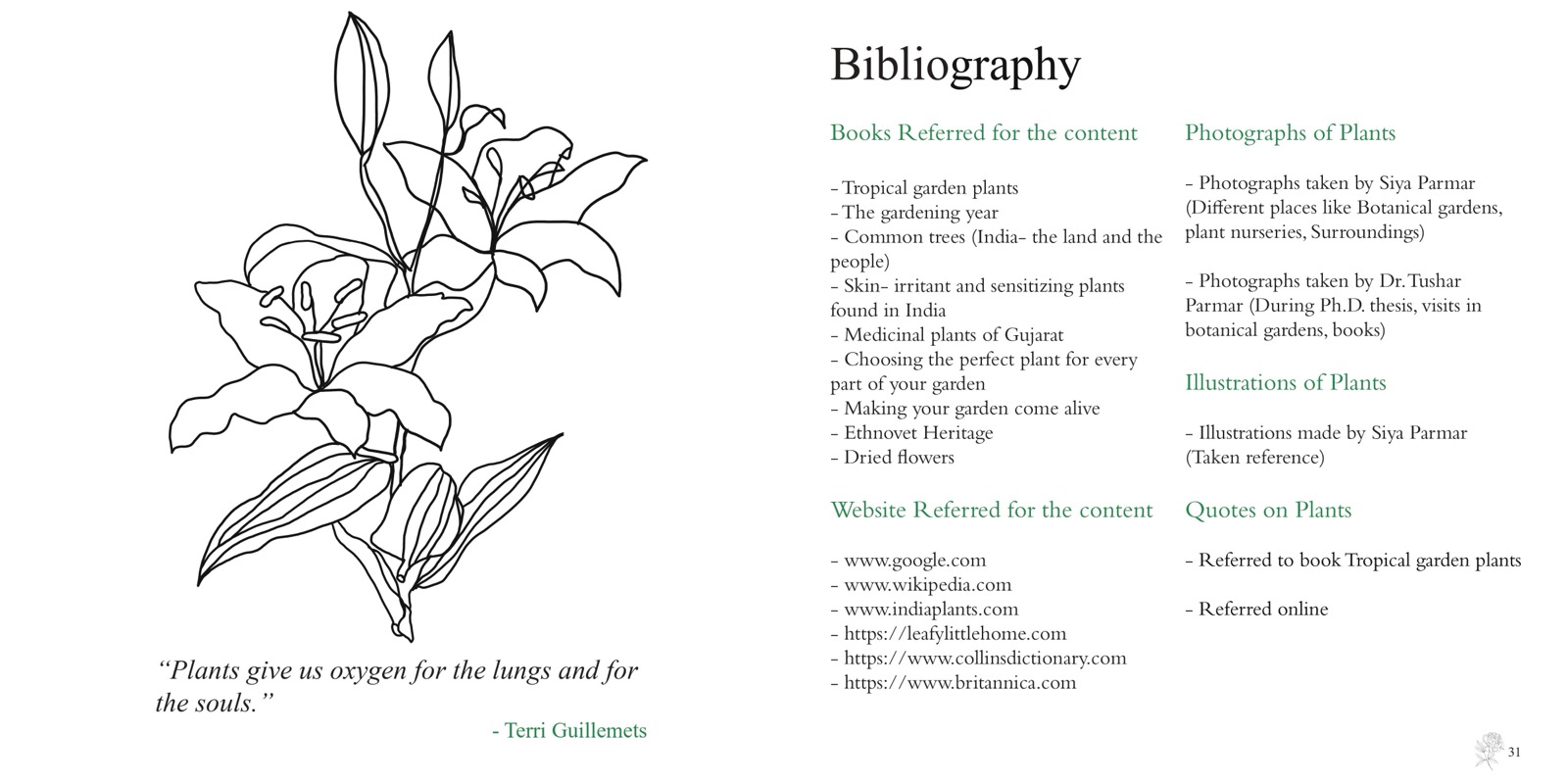
- •Bibliography (2 pp) and Back matter
Voice & tone
Plain-spoken, reassuring, and specific; minimal jargon with quick definitions.
3)Concept & Visual Strategy
Concept
Essence of Green — capture the serenity and discipline of plant care.
Illustration language
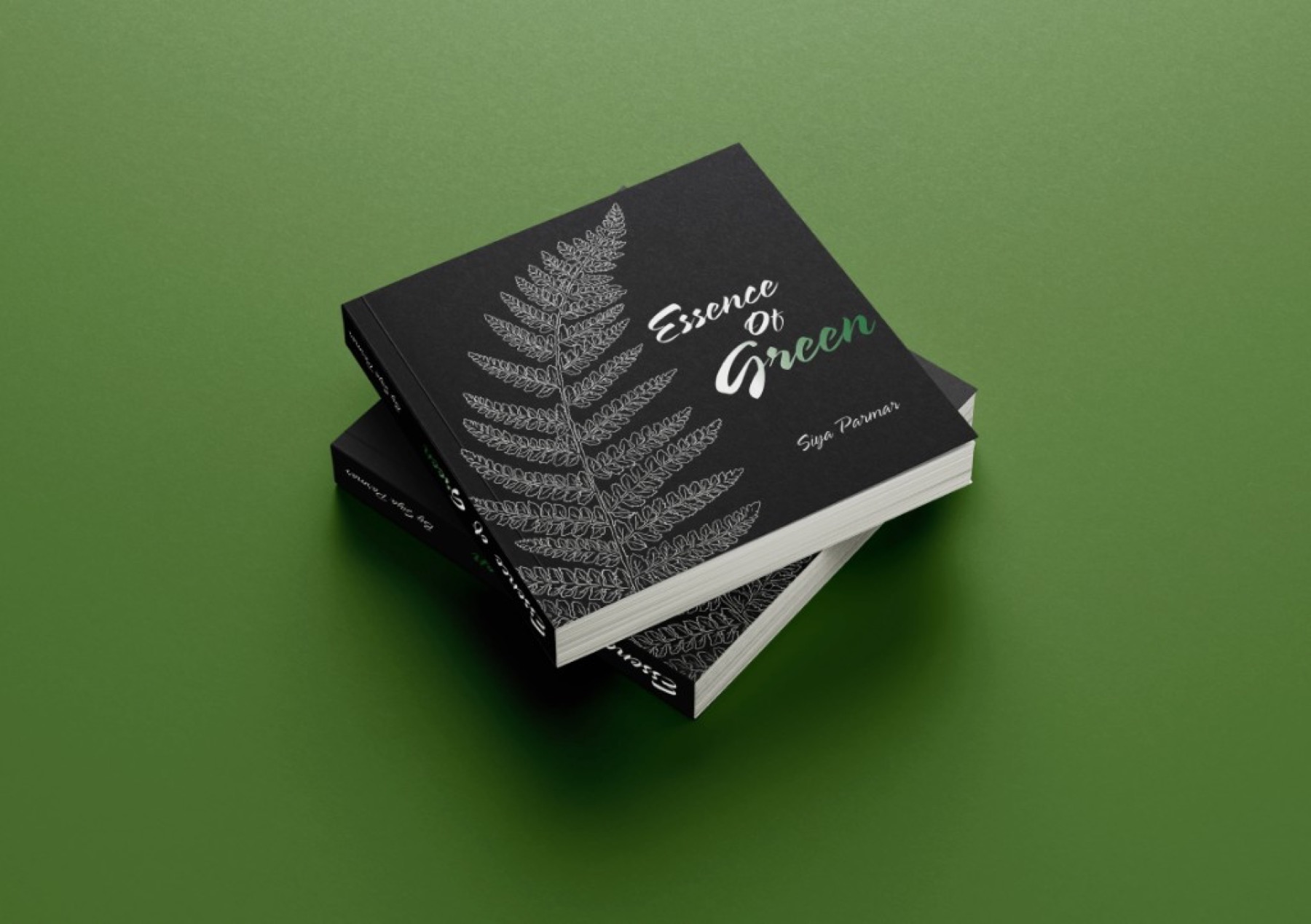
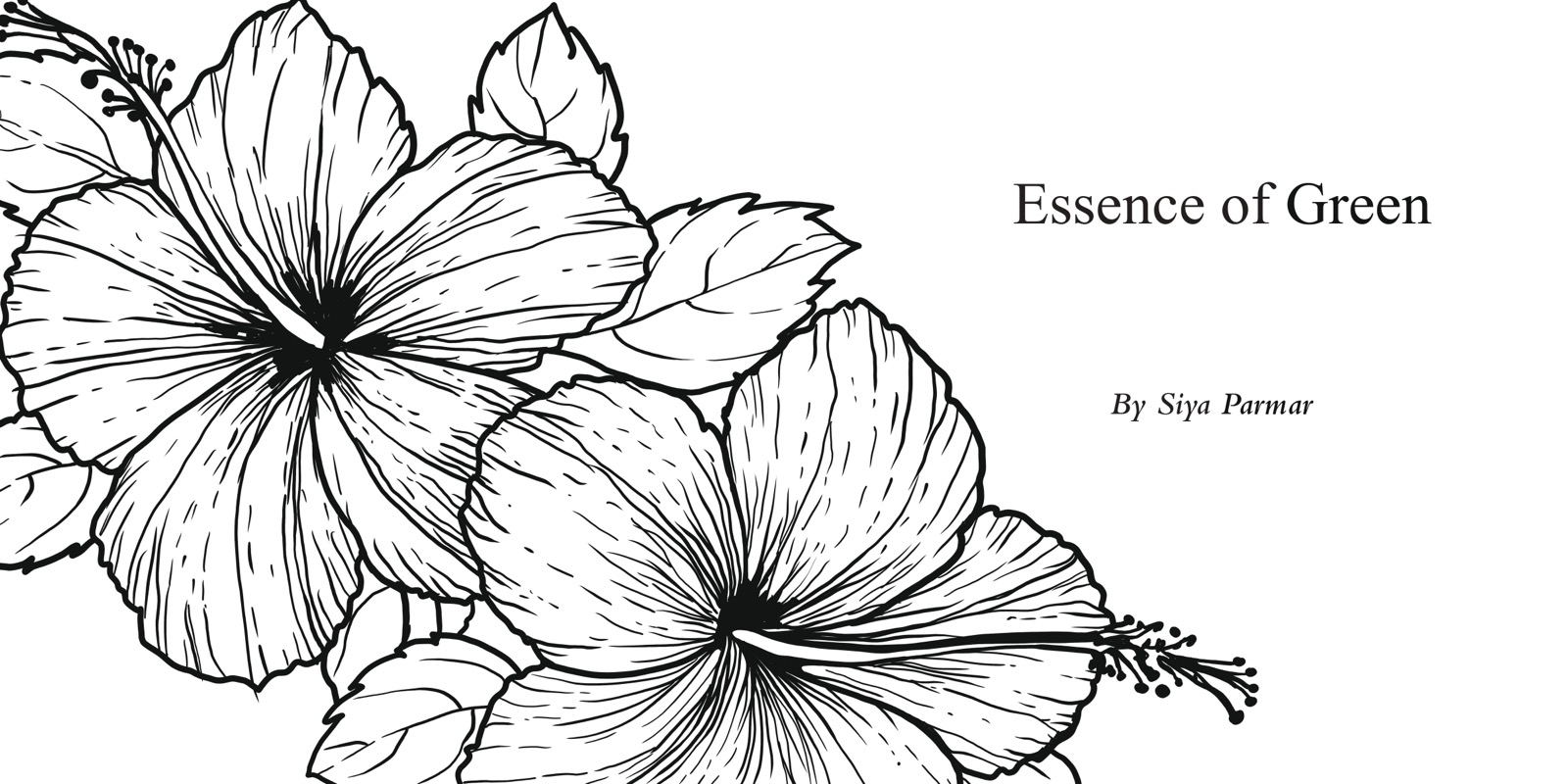
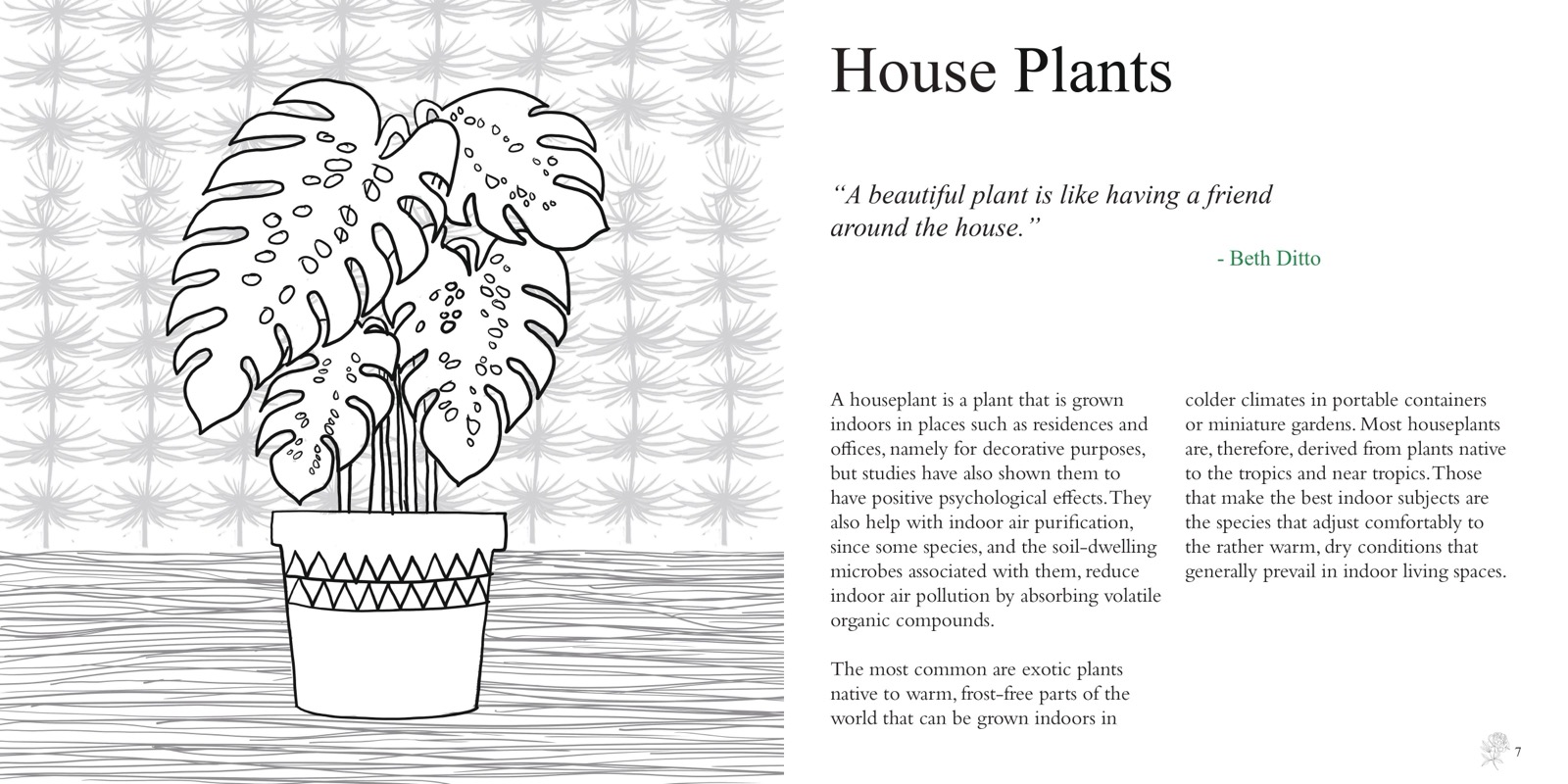
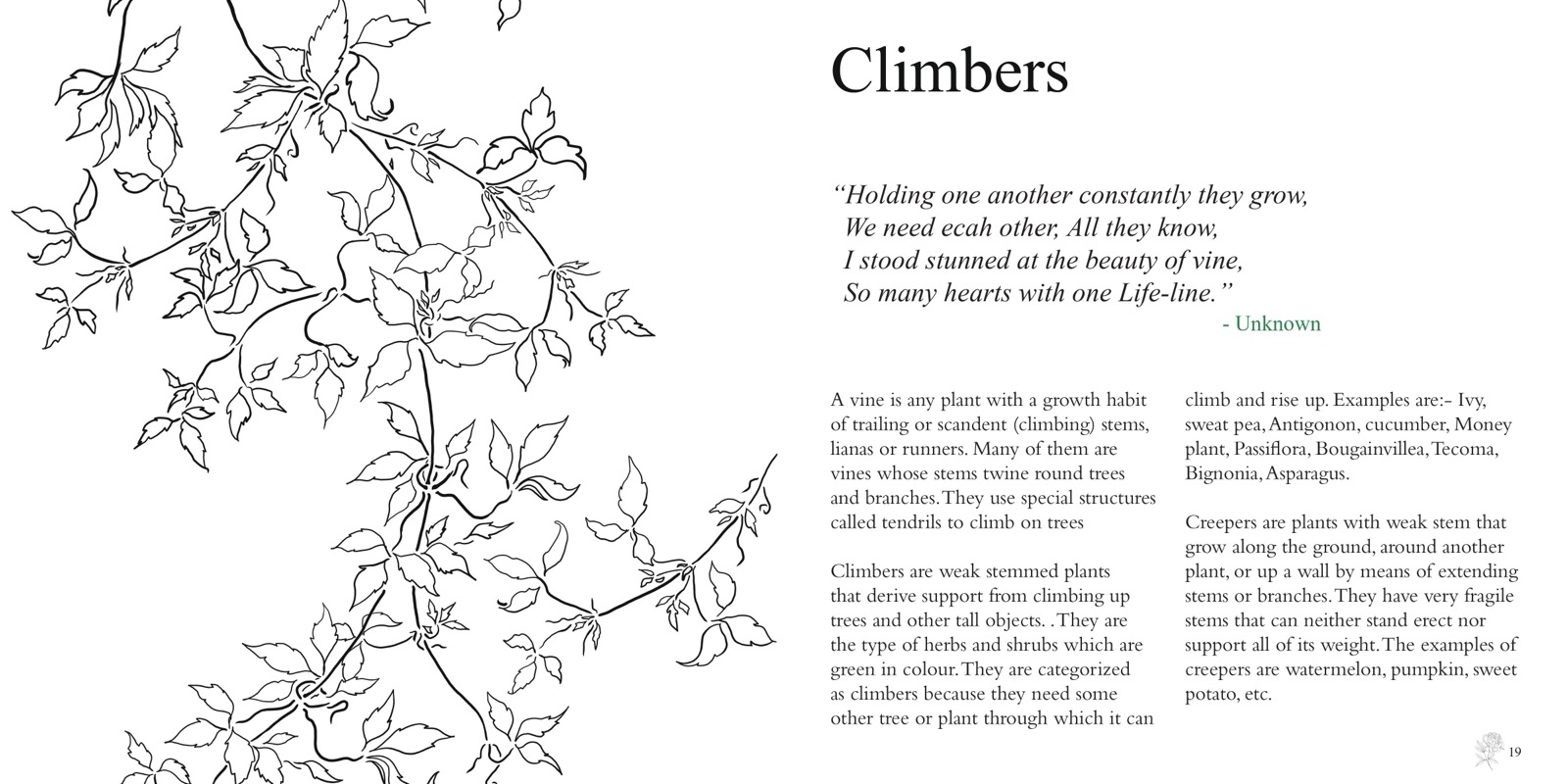
Crisp black-and-white line drawings (digital), used as quiet anchors on openers, dividers, and the cover (fern motif).
Colour strategy
Restrained, nature-adjacent tints for backgrounds (soft greens / warm neutrals) to separate metadata from narrative text; images carry the vibrancy.
Cover system
Macro fern linework on deep black with a hand-script accent for "Green" → blends scientific clarity with a human touch.
Why this works
- •High contrast + limited palette = legibility and print efficiency.
- •Line art scales beautifully and keeps visual noise low.
- •The fern motif threads identity across cover → chapter openers → back cover.
4)Typography & Grid System
Grid
- •2-column grid + baseline grid for rhythm and repeatability
- •Margins: Top/Bottom/Inner/Outer = 0.4724 in
- •Gutter: 0.1875 in · Bleed: 3 mm
- •Page size: 8 × 8 in square
Type system
- •Headings: Times New Roman — 35 pt (chapter/species titles)
- •Body: Bembo Std — 14 pt (main), 15 pt (alternate leading for image-heavy pages)
- •Display (Cover): Spring LP Std — 70 pt / 32 pt
- •Secondary language: Rasa (Gujarati) — 14/15 pt (where bilingual notes are used)
Hierarchy
H1 (scientific name) → Family/Common name (small caps/italic) → "Care at a glance" labels (bold) → body notes. Baseline-aligned callouts keep multi-panel spreads tidy.
5)Layout Patterns & Components
Chapter opener
Full-bleed line illustration on one side; opposing page with title, short quote, and a one-paragraph chapter promise.
Species card template
- •Photo plate top-left (house plants) or top-right (climbers) for variety with consistency.
- •Fixed stack for Height / Light / Water / Flower colour / Season (scan line < 5 seconds).
- •Uses block forms the narrative layer.
Navigation & micro-details
- •Page numbers with a subtle flower mark.
- •Stable running heads for chapters.
- •Quotes (Beth Ditto, etc.) set in italic to break density.
Image & illustration rules
- •Photos: natural light, true colour; avoid heavy filters.
- •Line art: single-weight family for cohesion; vector for sharp print.
6)Production & Deliverables
Primary deliverable
Print-ready PDF for offset/digital print (3 mm bleed, CMYK, embedded fonts). 32 pp (approx.), square 8" × 8".
Assets created
- •30+ original line illustrations (flowers, foliage, dividers, cover/back motifs).
- •20+ plant photo plates (Credits: Siya Parmar; additional photos by Dr. Tushar Parmar as cited).
- •Accessible e-book export guidelines (reflow notes; alt-text model for images).
Recommended paper (print suggestion)
- •120–140 gsm uncoated/text for interiors (readability, low glare).
- •250–300 gsm cover with matte lamination to protect the black cover.
7)Impact, Reflections & Next Steps
Why this matters
A calm, credible handbook lowers the barrier to begin. Readers can act today: pick a plant, read one card, set light/water reminders, and see success quickly—turning curiosity into stewardship.
What I learned
- •Editorial systems: once the card template was locked, throughput and quality both improved.
- •Type on a baseline: crucial for visual calm, especially in a square format.
- •Illustration restraint: line art lets information lead, aesthetics support.
If I continue
- •Add seasonal care checklists, a starter-kit spread (tools, pots, soils), and a quick index by light level.
- •Include QR codes linking to short care videos.
- •Release a bilingual edition (Gujarati/English) using the existing Rasa pairing.
- •Build a small companion poster (light × water matrix) for dorm rooms.