Visual Language of Emotion — Film Analysis
A comparative read of how Sanjay Leela Bhansali builds emotion through color, set, camera, and music — mapped across two films to show a repeatable directorial grammar.
- Year :
- 2021
- Course :
- Applied Literature (Academic)
- Role :
- Research, semiotic analysis, shot cataloging, color/lighting/sound breakdown
- Project Duration :
- 2021
1)Brief & Objectives
Deliverables
Written study, palette & shot taxonomy boards, style map summary
Tools
Close reading, frame grabs, shot lists, lyric-sound-context notes
The ask
Analyze a director’s storytelling language beyond plot — surfacing reusable visual and sound systems and how they cue emotion.
Audience
Design faculty and peers evaluating semiotic rigor; transferable to editorial, brand moments, and product storytelling.
Goals
- •Identify what visual and sound systems recur across films and how they cue emotion.
- •Apply semiotics and Barthes (studium/punctum) to key frames.
- •Compare two films that diverge in genre yet feel authored by the same hand.
Outcome snapshot
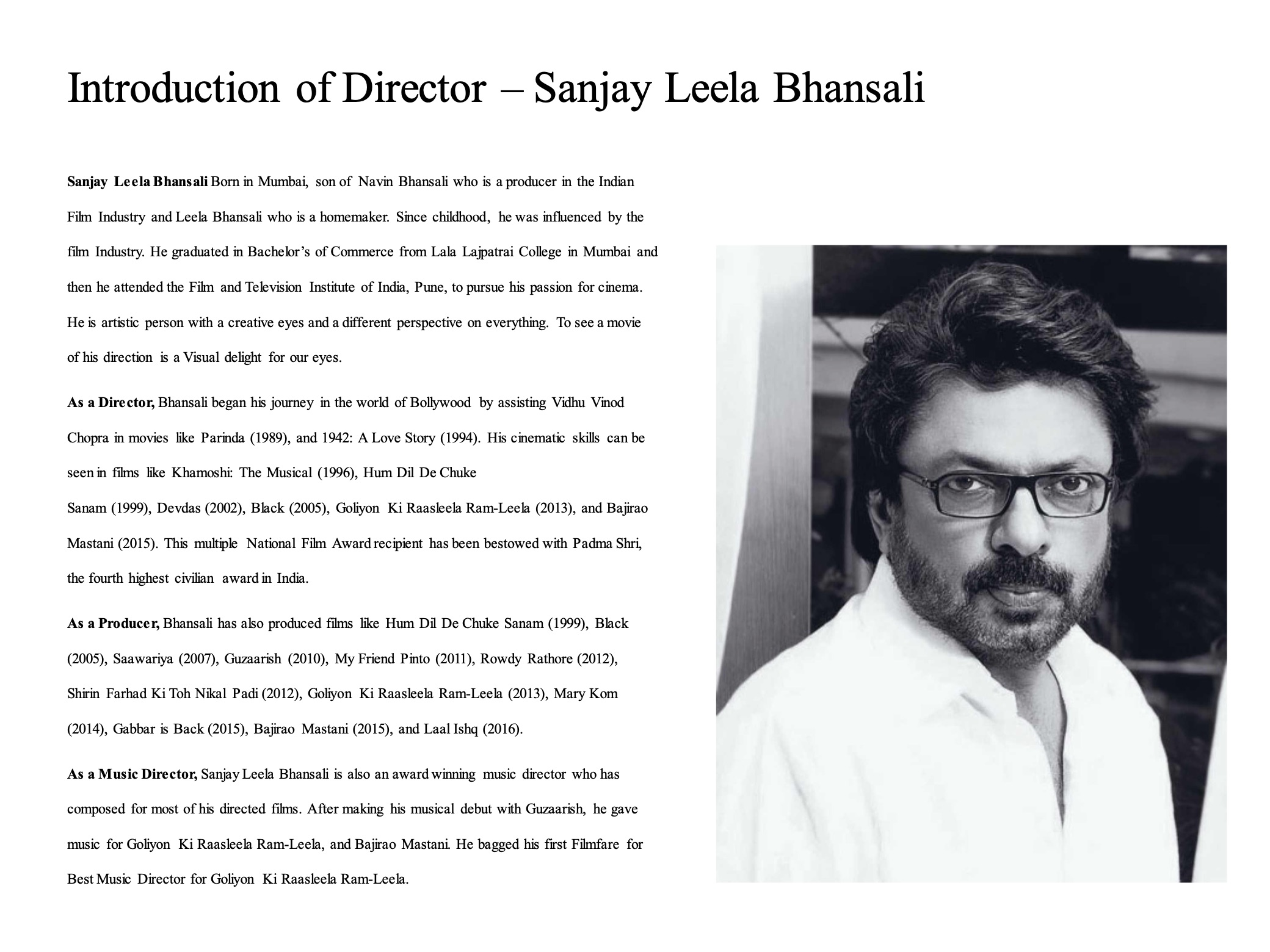
A style map matrix — color, lighting, set, camera, and sound × scene types (entry, confrontation, romance, lament) — with comparative synthesis across Ram-Leela and Bajirao Mastani.
2)Method & Frameworks
Method mix
Close reading of sequences; frame grabs → palettes; shot lists; lyric-sound-context notes.
Frameworks
- •Semiotics: sign / signifier / signified; icon–index–symbol.
- •Barthes: studium (cultural ground) vs. punctum (the piercing detail).
- •Form analysis: color harmony, light source, set scale, camera movement, music leitmotif.
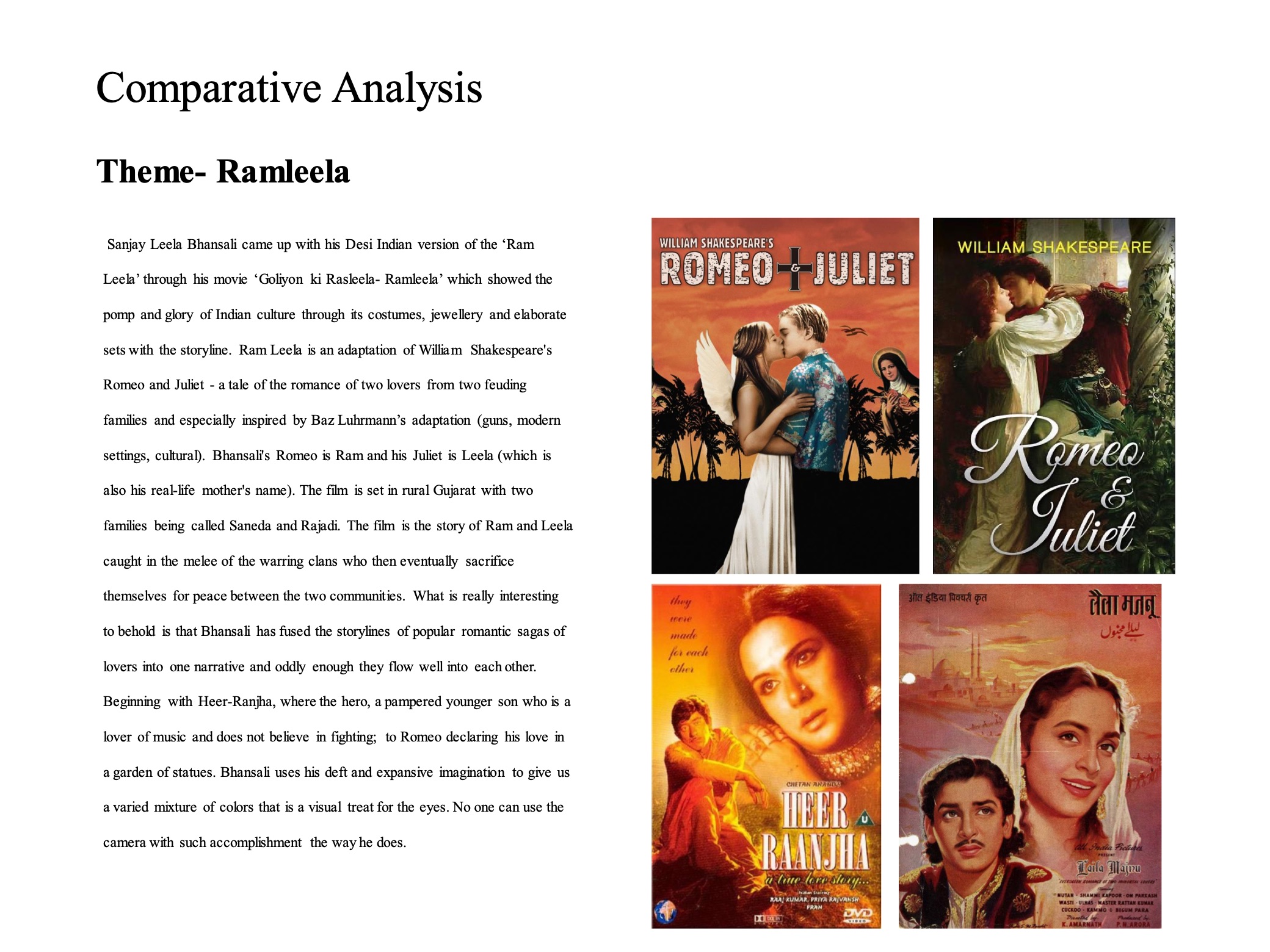
Style map
Rows (color, lighting, set, camera, sound) × columns (entry, confrontation, romance, lament).
3)Films & Narrative Spine
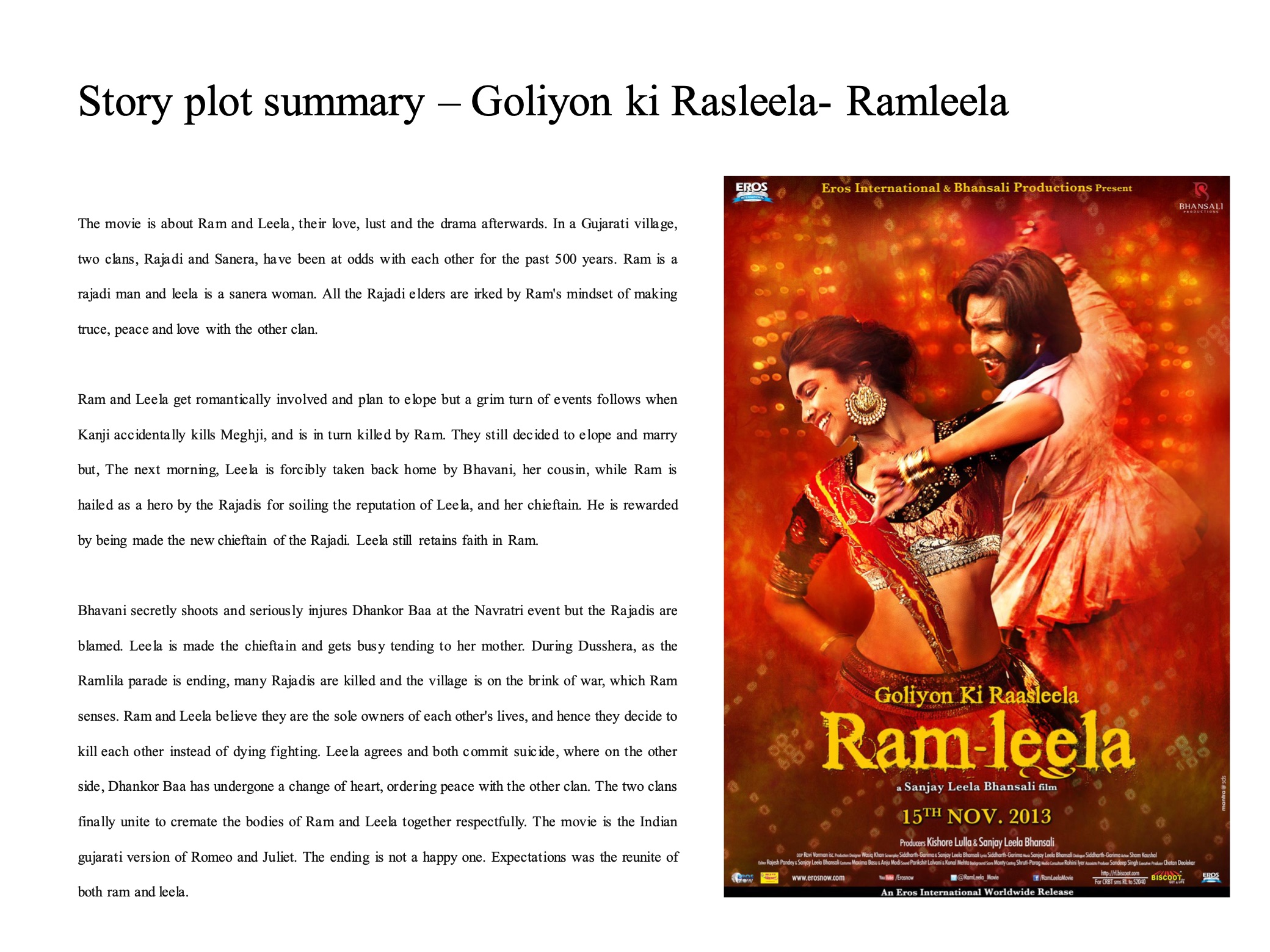
Ram-Leela (2013)
Romeo–Juliet in Gujarat: clan violence frames ecstatic romance; tone swings from festive to fatal.
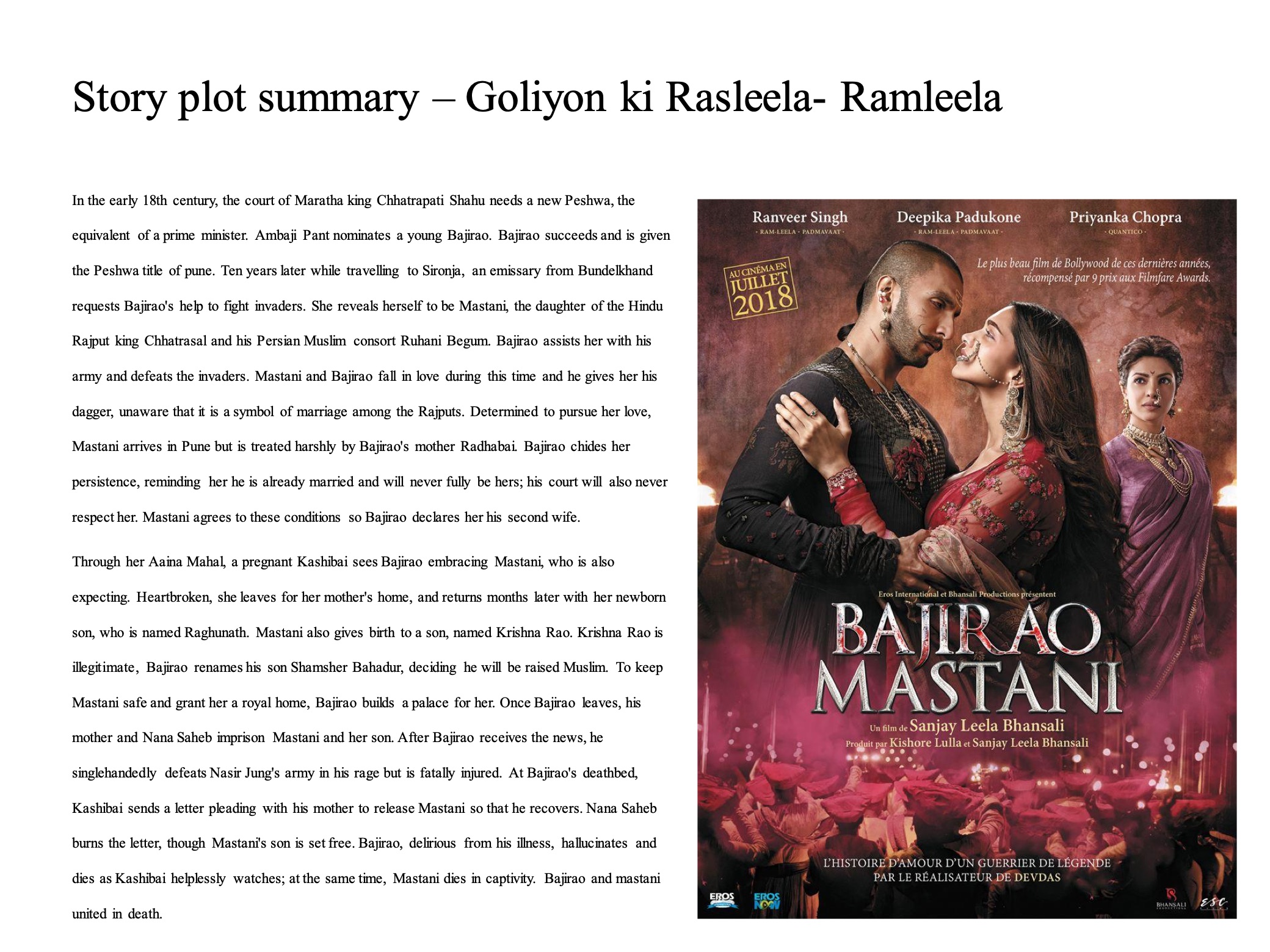
Bajirao Mastani (2015)
Courtly epic: love vs. orthodoxy; power, ritual, and tragedy staged in grand interiors and battle edges.
Why these two
Different palettes and scales, yet the same operatic cadence — ideal for surfacing a director signature.
4)Visual Systems: Color · Set · Lighting
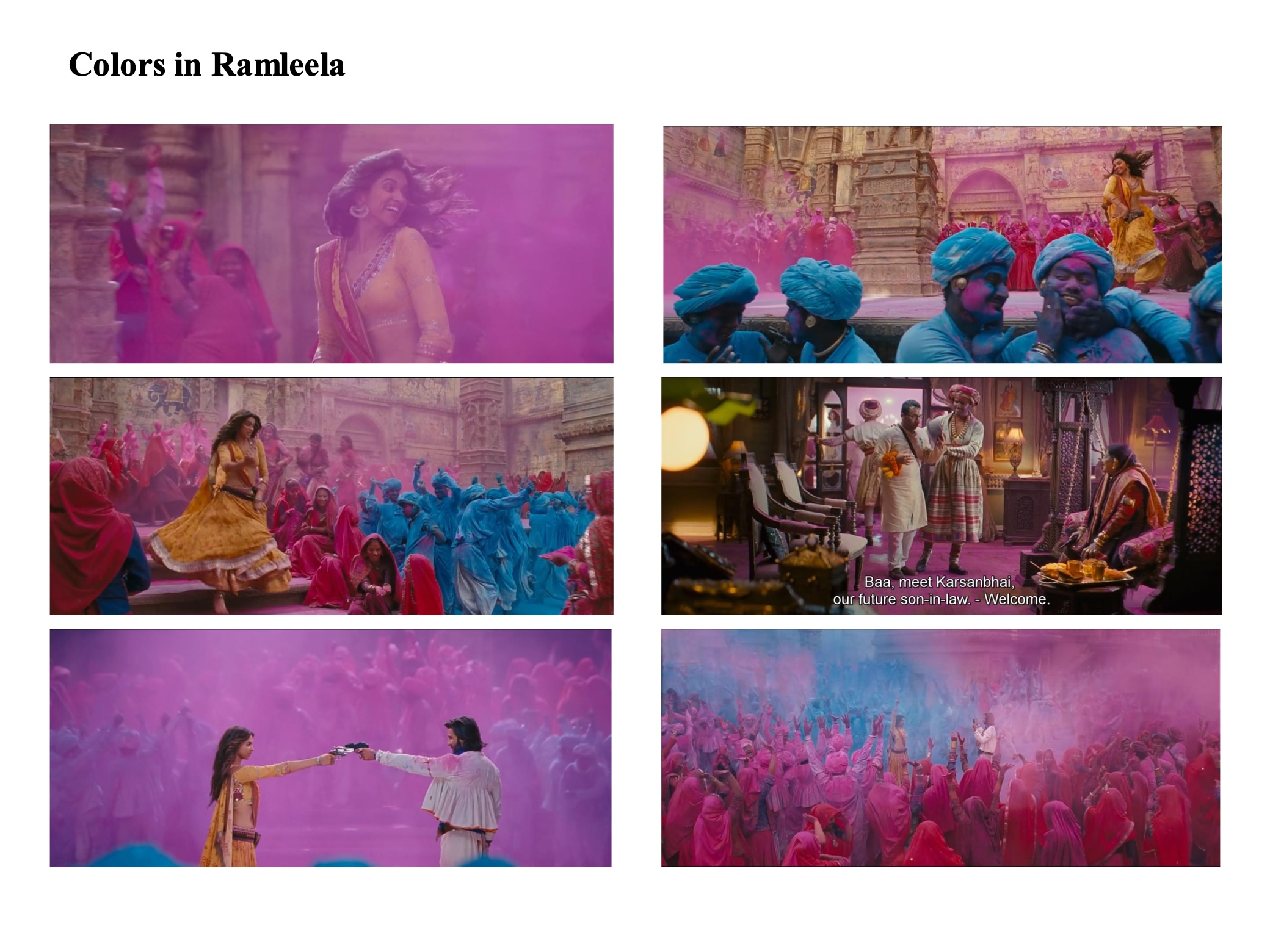
Ram-Leela color
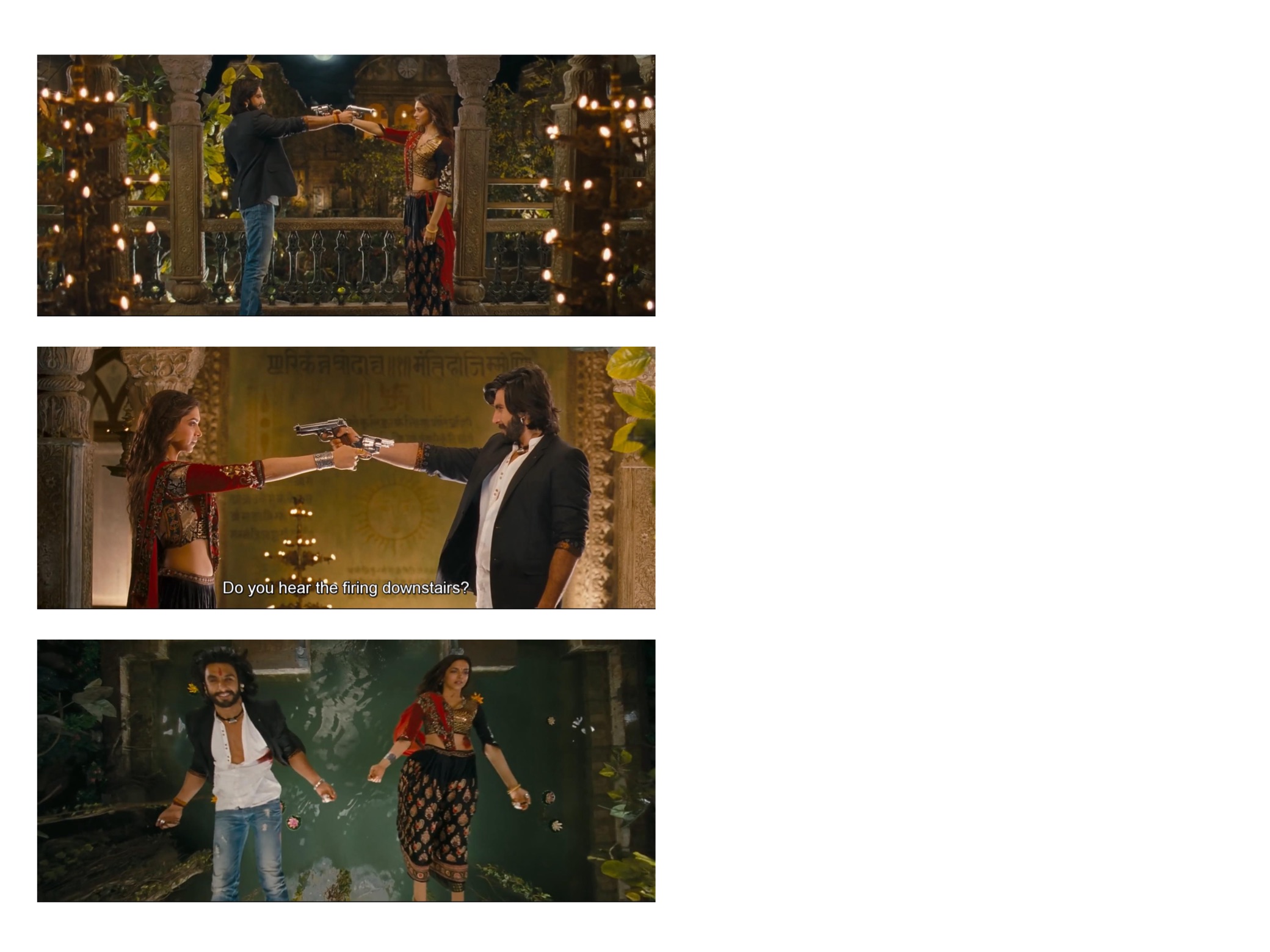
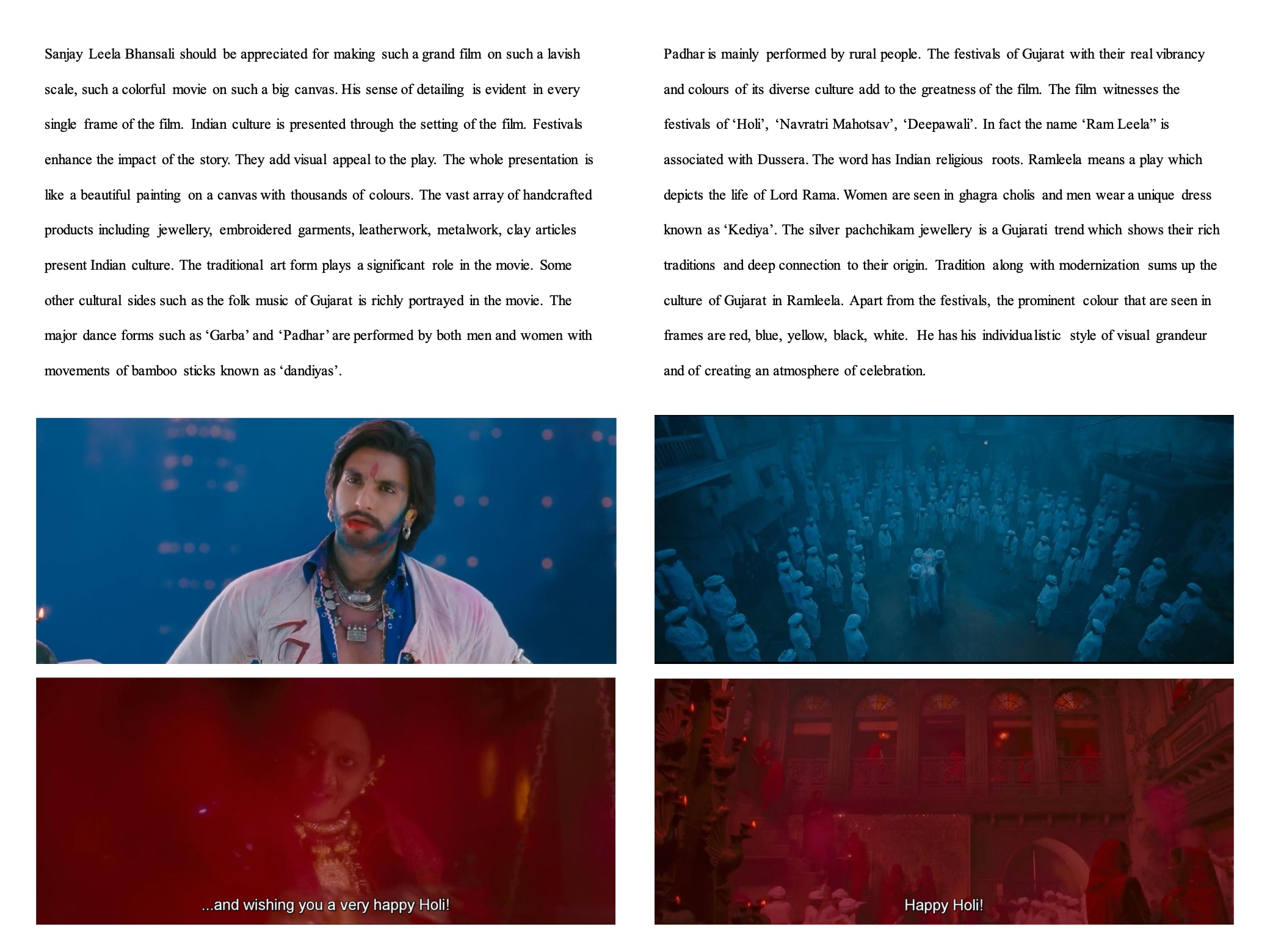
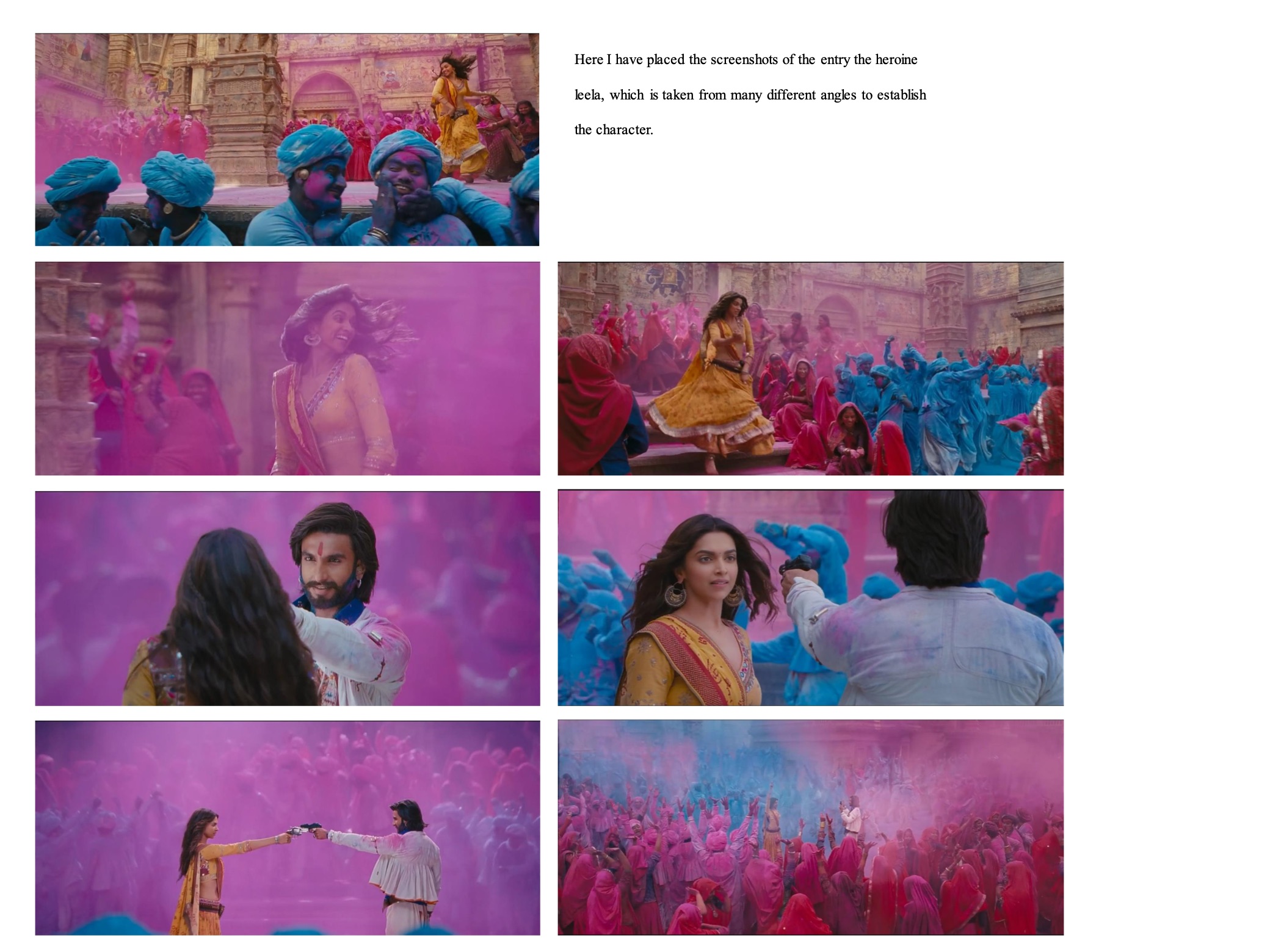
Carnival brights — vermillion, ultramarine, marigold. Connotation: abundance, youthful defiance. Punctum: saturated powder bursts, mirrored ghagras.
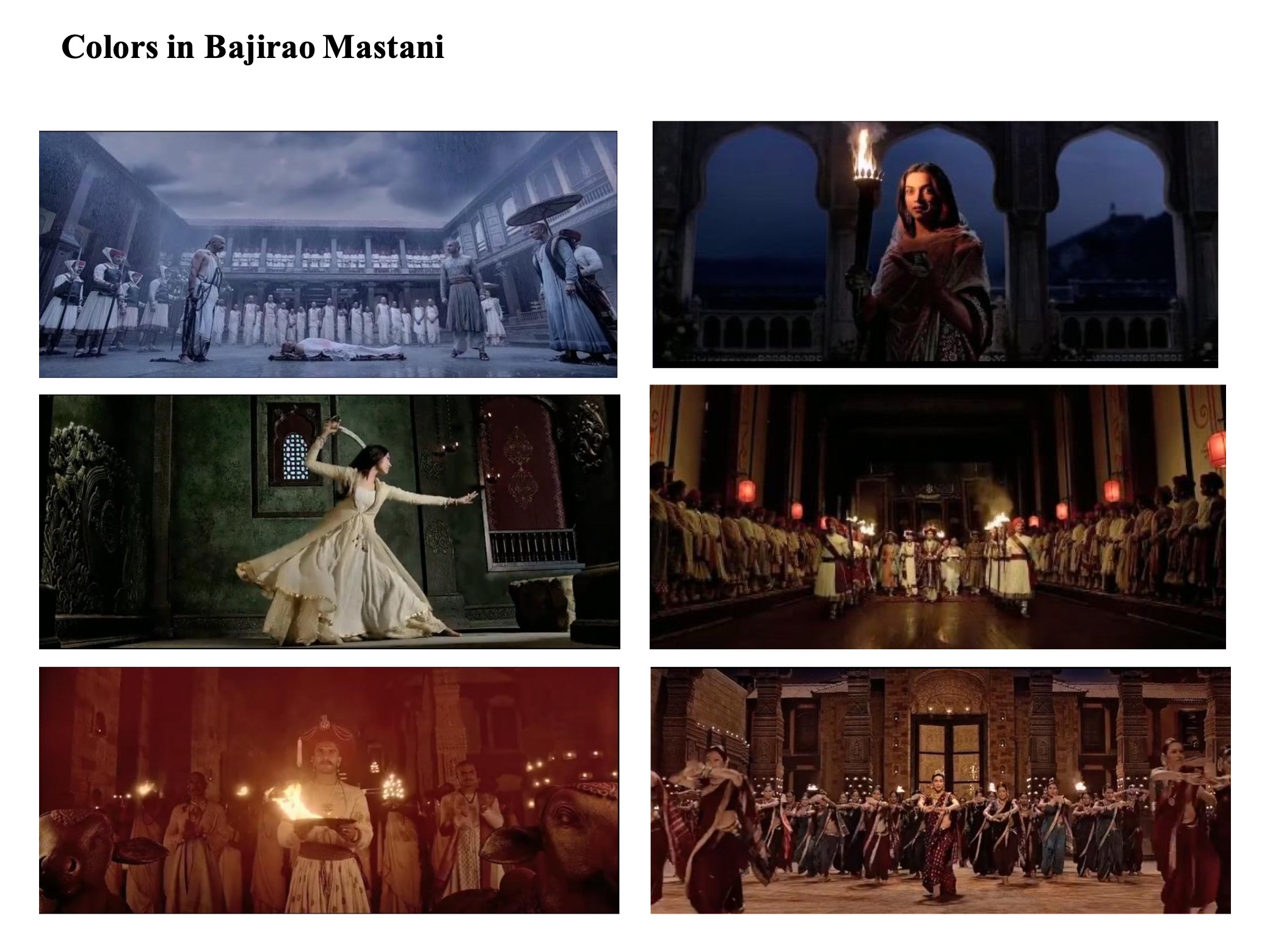
Bajirao color
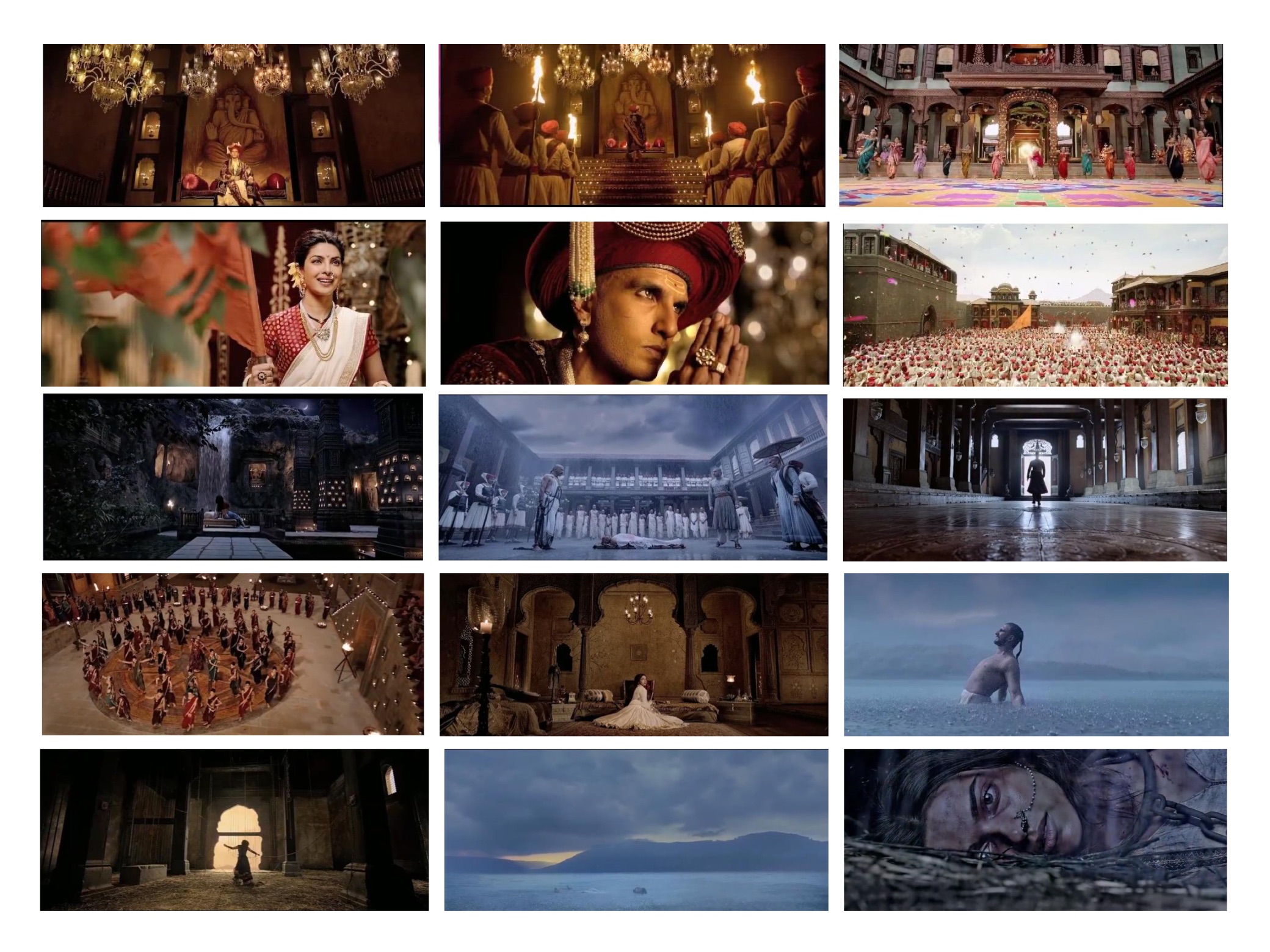
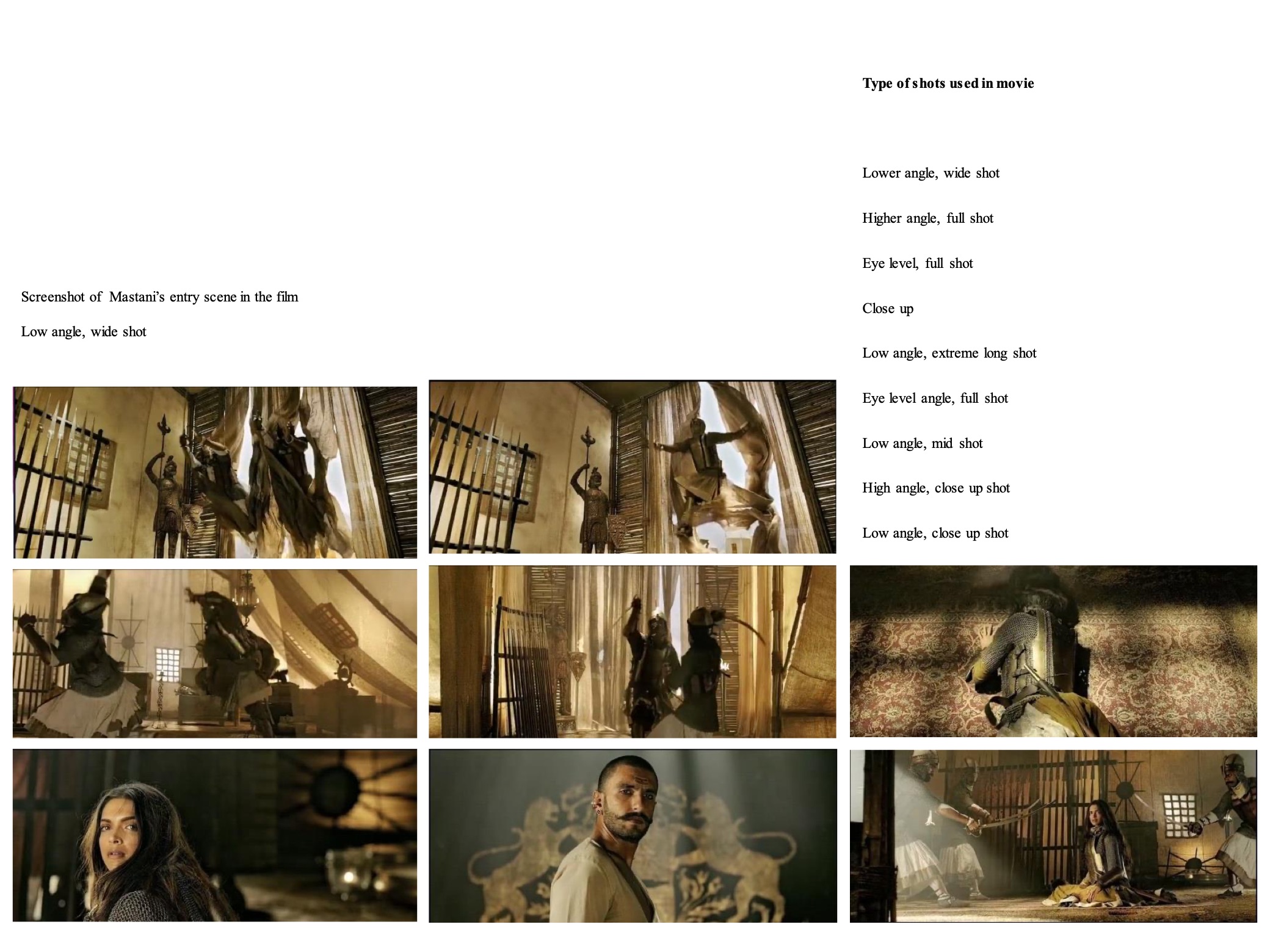
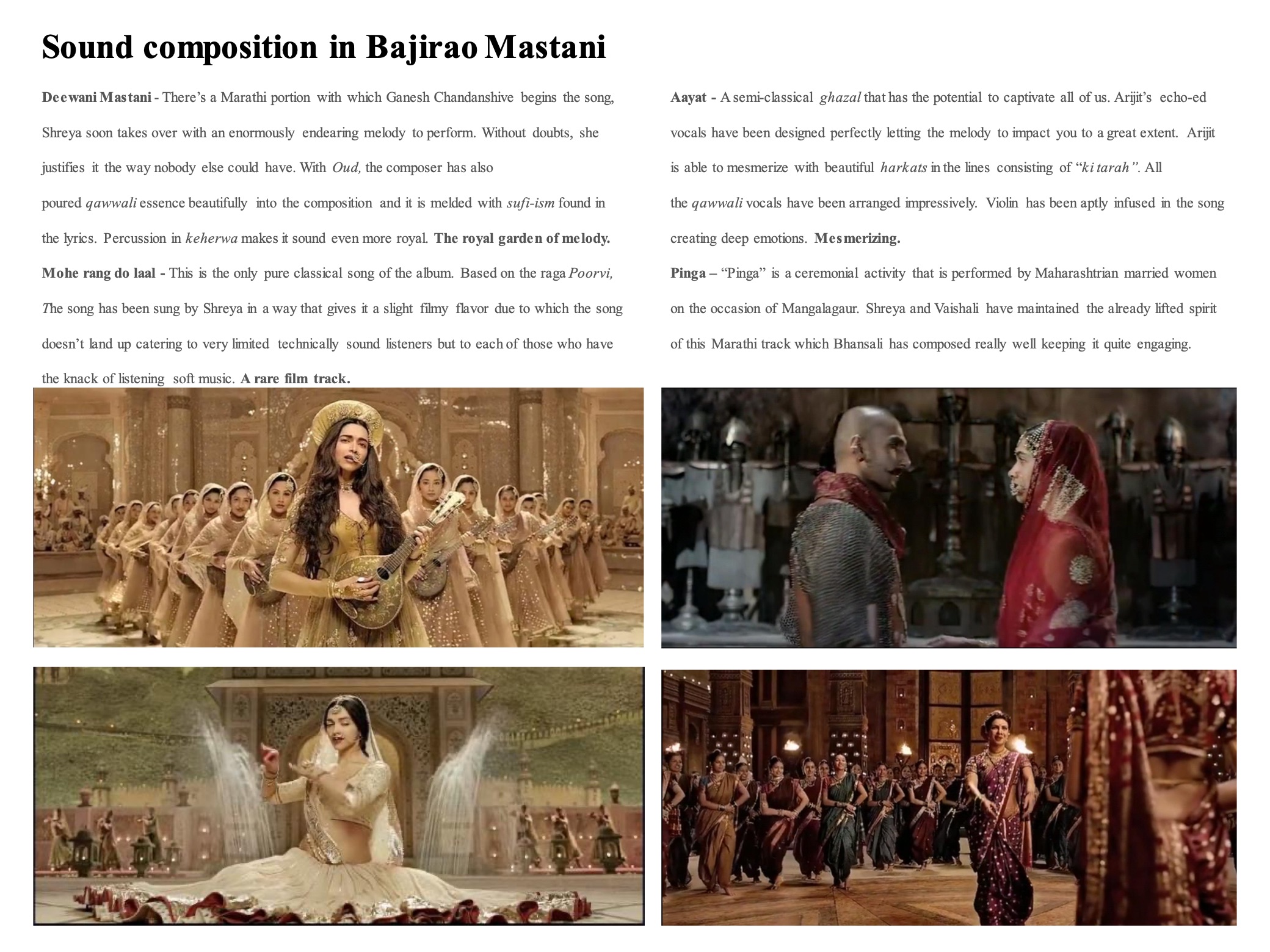
Courtly earths — saffron, emerald, indigo, brass. Connotation: empire, ritual gravity. Punctum: oil-lamp gold against indigo night.
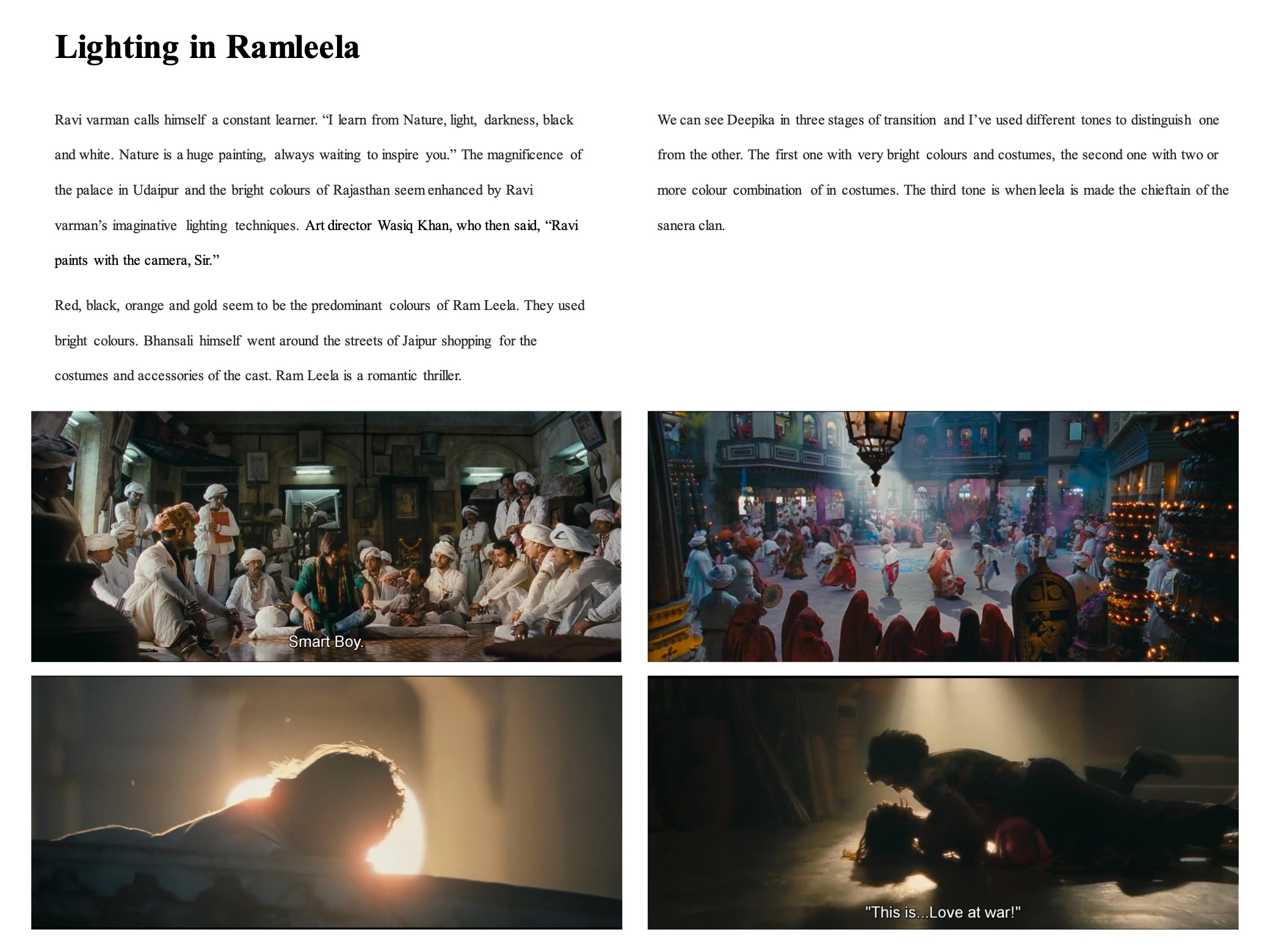
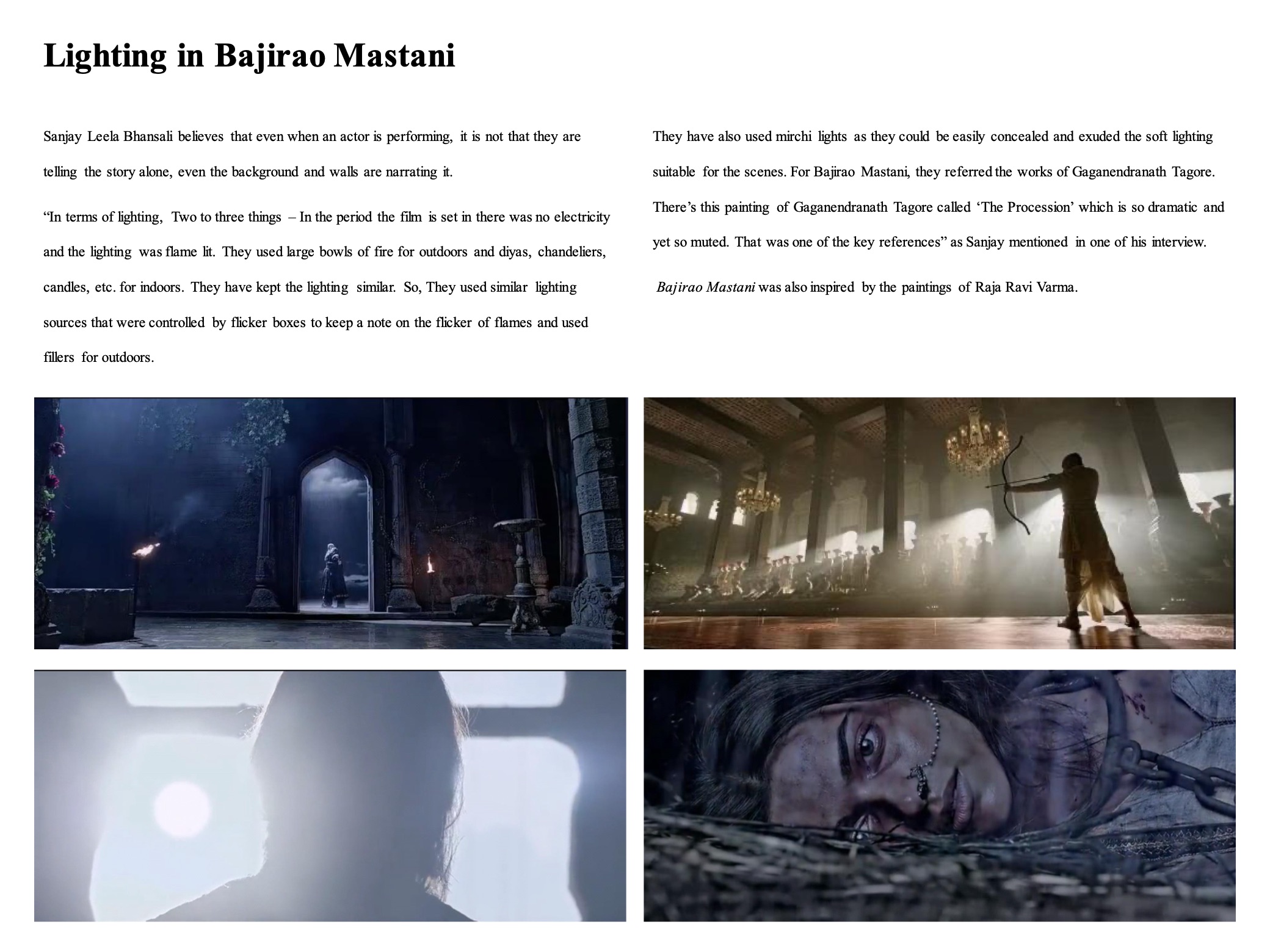
Set & lighting
- •Ram-Leela: open squares and ghats invite crowd choreography; porous boundaries heighten danger.
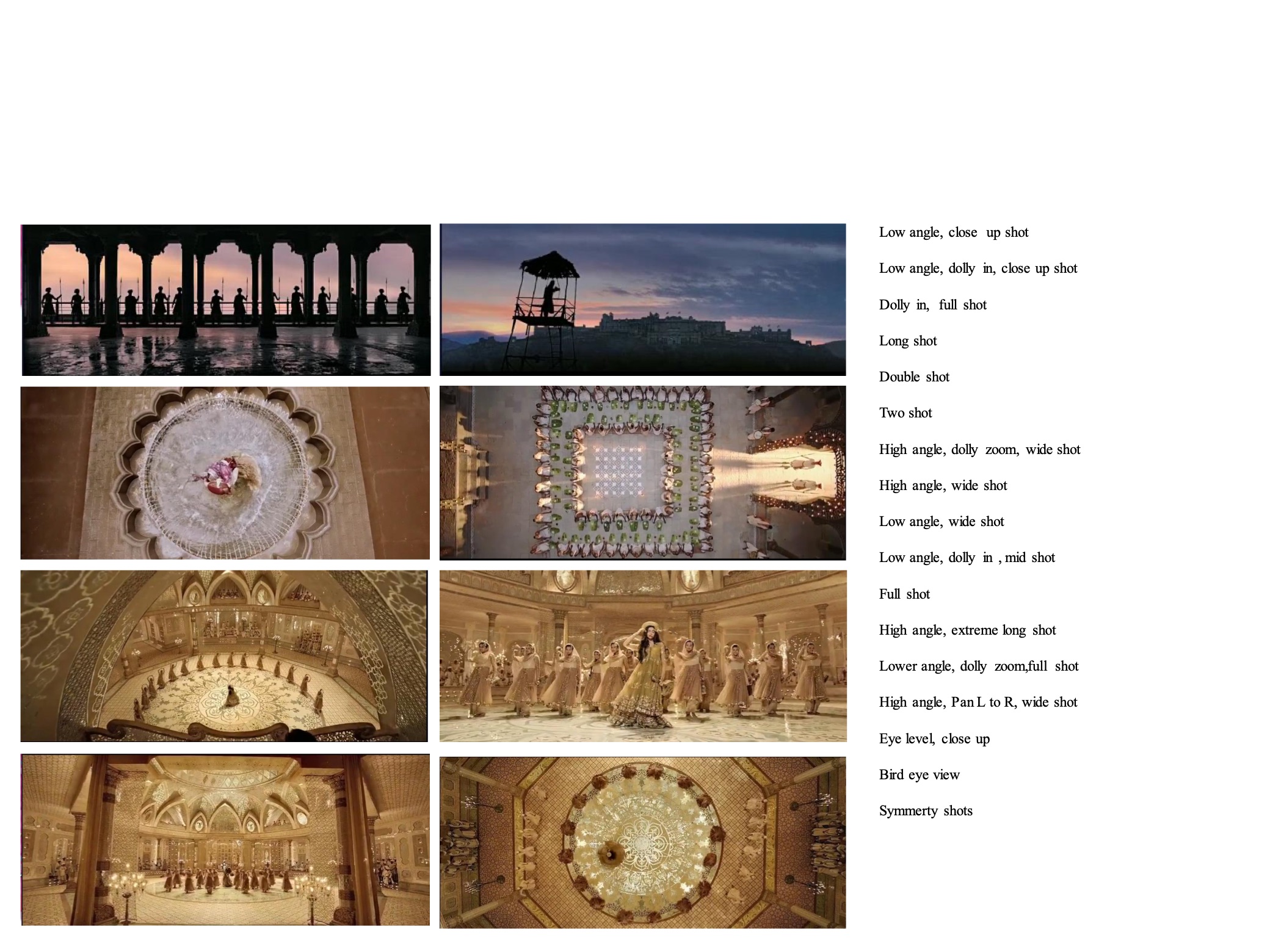
- •Bajirao: deep axial halls enforce hierarchy; thresholds become moral lines.
- •Both: high-key festival daylight vs. chiaroscuro interiors; flame-as-source turns lamps into emotional instruments.
5)Camera Grammar & Blocking
Recurring moves cataloged
- •Axial push-ins for emotional confession.
- •Low-angle wides to confer power at entries and throne scenes.
- •Symmetric tableaux for ritual; asymmetric tracking for rupture.
- •Bird’s-eye establishes to reset geography before dance or battle.
Sequence reads
- •Ram-Leela balcony: eye-level → slow dolly-in; color field behind faces eliminates distraction.
- •Bajirao court: locked symmetry, shallow steps forward; costume glint and percussion carry tension.
6)Music, Lyrics & Semiotics
Score as narrative glue
Leitmotifs index characters and states; song-as-scene externalizes inner conflict.
Ram-Leela
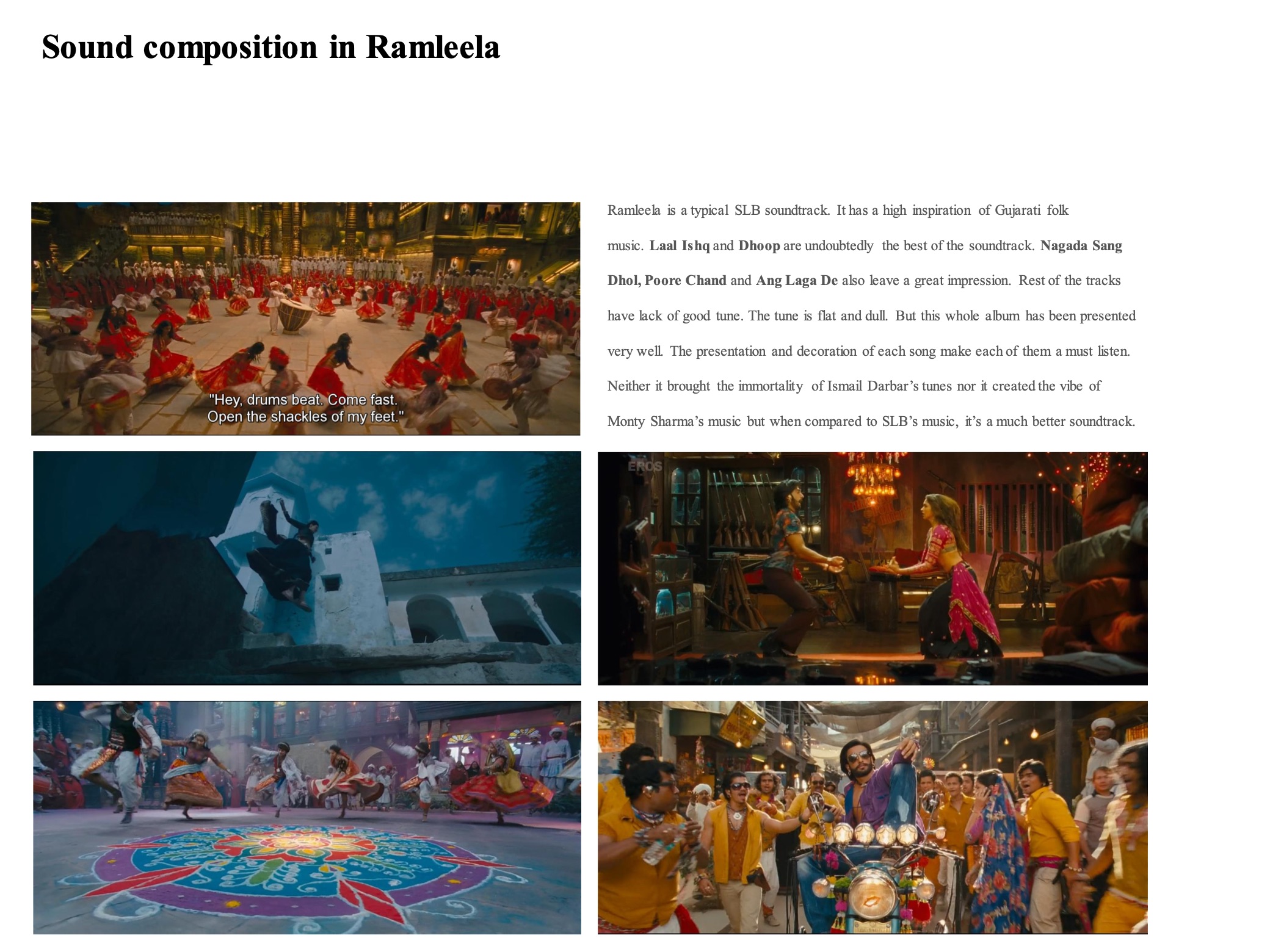
Gujarati folk roots — celebratory rhythms masking dread; percussion cycles in dance sequences.
Bajirao Mastani
Classical and Sufi inflections — ragas, qawwali, and ghazal forms signal devotion, longing, and sanctity.
Audio punctum
Sudden drop to solo vocal, lamp crackle, or bell hit on cut — micro-cues that pierce and fix memory.
7)Synthesis & Takeaways
Director signature
Maximalist mise-en-scène where palette + flame-lit chiaroscuro + symmetric staging + axial camera + song-form cohere into operatic cadence.
Comparative insight
- •Ram-Leela = extroverted color and porous spaces → passion as public spectacle.
- •Bajirao = restrained metallic palette and axial halls → love as transgression within order.
Transferable learnings
- •Build systems, not just scenes — define tokens (color roles, shot types, light sources, music motifs).
- •Use punctum deliberately — one striking detail per frame aids recall in communication design.
- •Align form with stakes: as stakes rise, narrow palette, deepen shadows, stabilize camera.